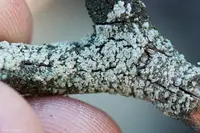
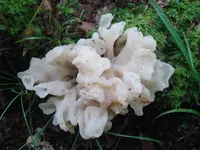
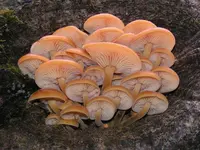
Cross-veined Troop Mushroom Care (Xeromphalina kauffmanii)

Cross-veined Troop Mushroom

About Cross-veined Troop Mushroom

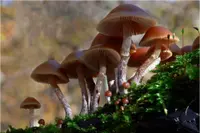
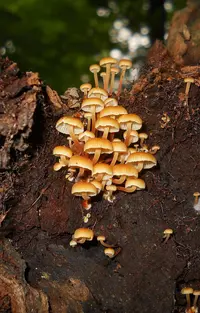
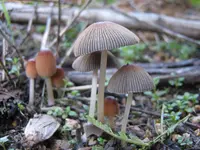
The cross-veined troop mushroom, Xeromphalina kauffmanii, is a small, gilled fungus rather than a true plant. It typically forms dense clusters of slender stems topped with small, orange-brown caps. Fine, darker veins often show through the cap surface, giving it its common name.

This species usually appears on decaying conifer wood or well-rotted forest debris in cool, moist woodlands of North America. It can be challenging to reliably identify, which makes how to care for Cross-veined Troop Mushroom less relevant for casual growers. In cultivation it prefers consistently moist, shaded, wood-based substrates and stable, cool conditions, which limits its use to specialized fungal or terrarium setups.

Main Plant Requirements

Care Difficulty

Hard Care

Light Preference

Shade

Water Requirements

Keep Soil Moist

Temperature Preference

Cool Climate

Hardiness Zone

Unknown

Soil Texture

Loamy, Silty, Organic-rich

Soil pH

Strongly acidic (4.5–5.5), Acidic (5.5–6.5)

Soil Drainage

Moist but well-drained

Fertilization

Minimal (feed rarely)

Get Personalized Care Plan

Scan your plant to receive care tips personalized for your specific plant

Available on iOS and Android

How to Care for the Cross-veined Troop Mushroom

This small saprophytic mushroom prefers cool, shaded forest conditions rather than direct sun.

  • Provide dappled or filtered light under trees, logs, or dense understory; 1–3 hours of soft morning sun is acceptable, but avoid direct midday and afternoon sun.
  • Choose locations with consistent partial to full shade; Cross-veined Troop Mushroom fruiting bodies dry and collapse quickly under strong sun or wind exposure.
  • In summer, favor deeper shade with moist leaf litter; in cooler seasons, slightly brighter but still indirect light supports more reliable sporocarp (fruiting body) formation.

Xeromphalina kauffmanii thrives on consistently moist, not waterlogged, decaying wood or organic litter.

  • Aim for evenly damp substrate; surface leaf litter or wood should feel moist to the touch but not squishy, and never allow it to dry to a brittle state.
  • Increase moisture by misting or gentle watering when the upper 1–2 cm of litter feels dry, especially during warm, windy, or low-humidity periods.
  • Watch for signs of stress: pale, shriveled caps and slow emergence suggest underwatering, while foul odor, slimy mycelium, or standing water indicate overwatering and poor drainage.

This species fruits best in cool to mild conditions typical of shaded woodland floors.

  • Target an active fruiting range of about 50–68°F (10–20°C), with mycelium growth tolerating slightly warmer conditions if moisture and shade remain high.
  • Protect from hard frost; short dips to 32°F (0°C) may be survived in protected litter, but extended freezing sharply reduces fruiting and can damage mycelium near the surface.
  • Limit exposure to heat; above 77–82°F (25–28°C) fruiting declines, and sustained hot, dry weather can desiccate the substrate unless canopy shade and moisture are maintained.

This wood-decaying fungus is not humidity-sensitive in typical outdoor conditions and does not require active humidity management.

This saprobic mushroom grows on well-rotted wood rather than conventional garden soil, so conditions must mimic decaying forest litter.

  • Use a substrate of thoroughly decomposed hardwood chips, sawdust, and fine bark rather than mineral soil, kept evenly moist but never waterlogged.
  • Ensure the substrate is loose and airy so mycelium can spread; avoid compacted mixes that restrict gas exchange and trap stagnant moisture.
  • Maintain a slightly acidic environment around pH 5.0–6.5 by using hardwood-based materials and avoiding lime or alkaline amendments.
  • Keep the decomposing wood substrate shaded and protected from rapid drying, since exposed, sun-baked material will inhibit Xeromphalina kauffmanii fruiting.

This species is not well suited to conventional decorative containers but can be grown experimentally in shallow trays or boxes simulating a rotting log.

  • Use a wide, shallow, rigid container so the woody substrate layer is thin enough to drain yet broad enough for clustered fruiting.
  • Drill extra side ventilation holes above the substrate level to improve gas exchange without allowing the wood-based medium to dry out too fast.
  • Raise the container slightly off the ground so drainage holes do not sit in puddled water, which reduces oxygen around the colonized wood.

Xeromphalina kauffmanii is a saprophytic woodland mushroom that naturally obtains nutrients from decaying organic matter and usually needs no added fertilizer.

Xeromphalina kauffmanii does not require pruning in the usual horticultural sense, since mushroom fruiting bodies are temporary structures.

This species is not managed like a potted plant; instead, it is associated with specific decaying wood or organic substrates.

  • Transplant only by moving colonized substrate rather than trying to move individual mushrooms or mycelium chunks.
  • Plan any relocation during active growth in mild, moist conditions to reduce stress on the fungal network.
  • Keep the original substrate intact and place it onto similar moist, shaded, woody material at the new site.
  • Avoid disturbing or breaking apart the substrate, as this disrupts the mycelium and delays recovery.

Propagation of Xeromphalina kauffmanii is specialized and usually left to natural spore dispersal rather than deliberate cultivation.

This woodland fungus is naturally cold hardy in its native range and generally needs no dedicated winter care from gardeners.

Care Tips

Use decaying conifer wood

Establish cultures on well-decayed conifer sawdust or small rotting logs rather than generic compost, since this species is strongly lignicolous and fruits more reliably on wood-based substrates.

Maintain thin substrate

Spread substrate in a shallow 3–5 cm layer to encourage dense clusters of small fruiting bodies and reduce the risk of anaerobic pockets that can favor molds.

Encourage airflow, not drafts

Provide gentle, continuous air exchange around fruiting trays or logs to prevent bacterial film on caps while avoiding strong drafts that dry the delicate mushrooms too quickly.

Rotate fruiting surfaces

Periodically rotate or shift colonized wood pieces so different surfaces face upward, which exposes fresh, fully colonized areas and can trigger new flushes when growing Cross-veined Troop Mushroom.

Remove spent clusters promptly

Harvest entire clusters as soon as caps fully expand and then trim away any decomposing tissue from the substrate to limit contamination and extend the productive life of the culture.

Common Pests and Diseases

fungus gnat larvae

This pest is attracted to constantly wet, organic-rich substrates and can tunnel through delicate fungal tissue and mycelium. Symptoms include thinning clusters, stalled cap development, and a soft, chewed appearance at the base of fruiting bodies.

Solution

Reduce surface moisture between flushes, use fine-mesh covers on fruiting containers, and remove heavily damaged clusters. For persistent issues, use yellow sticky traps for adults and apply a biological larvicide with Bacillus thuringiensis israelensis (Bti) to the substrate according to label directions.

mushroom mites

These insects are tiny arachnids that feed on mycelium and young fruiting bodies, often introduced with contaminated wood, leaf litter, or other mushrooms. Symptoms include poor pin formation, deformed caps, and a dusty or grainy appearance on stems and substrate.

Solution

Discard heavily infested culture material, then clean and dry all tools and surfaces that contact the fungus. For mild infestations, improve ventilation, reduce debris, and use sticky barriers or traps around culture containers to limit mite movement from surrounding materials.

Trichoderma green mold

This disease is caused by aggressive Trichoderma fungi that overrun mycelium, especially in unsterilized or overly wet wood and leaf substrates. Symptoms include fast-spreading, dense white growth that quickly turns vivid green and suppresses normal fruiting.

Solution

Remove and discard contaminated substrate as soon as the green spores appear, avoiding disturbance that spreads spores. Start new cultures on properly pasteurized or sterilized substrate, keep humidity high but not dripping wet, and provide good airflow to minimize stagnant, mold-prone pockets.

bacterial blotch

This disease develops when bacterial populations build up on persistently wet mushroom surfaces in stagnant air. Symptoms include greasy-looking, yellow to brown spots on caps, sometimes coalescing into sunken, slimy patches that reduce mushroom quality.

Solution

Lower direct water contact on caps by switching from overhead spraying to fine misting of surrounding surfaces, and increase gentle airflow to dry mushroom surfaces between humidification cycles. Discard badly affected fruiting bodies and sanitize nearby surfaces and tools to reduce bacterial load.

competing wood-decay fungi

This problem arises when other lignicolous (wood-decaying) fungi colonize the same logs or woody debris used for Xeromphalina kauffmanii, outcompeting its mycelium. Symptoms include appearance of different mushrooms on the same substrate and reduced or absent fruiting of the intended species.

Solution

Use fresh or properly seasoned wood that has not already been colonized, and inoculate promptly with clean spawn. If competing mushrooms appear, remove those sections of wood, reduce excess moisture, and re-inoculate only sound, uncontaminated pieces under controlled conditions as part of broader Xeromphalina kauffmanii care instructions.

Interesting Facts

Tiny conifer specialist

This species is usually found fruiting on well-decayed conifer wood, especially rotting logs and bark of spruce and fir in cool, moist forests.

Distinctive cross-veined gills

Its pale yellow to whitish gills often show a faint cross-veined pattern near the stem, created by short connecting veins between gills, which helps separate it from similar small brown mushrooms.

Dark-staining stem base

The slender, tough stem often shows a darker, almost blackish base where it attaches to the substrate, a field character useful for distinguishing it from other small Xeromphalina species.

FAQs about Cross-veined Troop Mushroom

This small saprophytic mushroom is not considered a choice edible. It is usually classified as inedible due to its tough texture and very small size, and it should not be collected for food purposes.

Grow Healthy Plants with Botan Care

Keep your plants happy and healthy with plant identification, disease detection, and easy care guidance.

Botan plant care app — identify plants on mobile

Explore More Plants