weak-leaf yucca Care (Yucca flaccida)

Also known as: Spanish bayonet, Adam's needle, Spanish dagger, Flaccid Leaf Yucca
weak-leaf yucca

About weak-leaf yucca

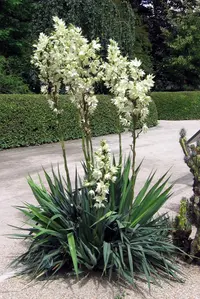
Yucca flaccida, commonly called weak-leaf yucca, is a small, stemless yucca with soft, arching, sword-shaped leaves that form a low, dense clump. Its foliage often has filament-like threads along the edges, giving the plant a distinctive, textured look.

This species is native to the eastern United States, where it grows in open woodlands, rocky slopes, and dry clearings. It produces tall flower spikes with many white, bell-shaped blooms, creating a strong vertical accent in the landscape.

Yucca flaccida is generally hardy, drought-tolerant, and long-lived, which makes it relatively simple to care for weak-leaf yucca in well-drained soil with good light and moderate moisture.

Main Plant Requirements

Care Difficulty

Easy Care

Light Preference

Full Sun

Water Requirements

Low Water

Temperature Preference

Cold Hardy

Hardiness Zone

4–9

Soil Texture

Sandy, Loamy, Rocky

Soil pH

Slightly acidic (6.5–7.0), Slightly alkaline (7.0–7.5)

Soil Drainage

Well-drained

Fertilization

Minimal (feed rarely)

Get Personalized Care Plan

Scan your plant to receive care tips personalized for your specific plant

Available on iOS and Android

How to Care for the weak-leaf yucca

Yucca flaccida grows best in bright outdoor locations with several hours of direct sun each day.

  • Provide 4–6 hours of direct sun, ideally morning to early afternoon, with light shade during the hottest late-afternoon hours in hot summer regions.
  • Tolerates partial shade, but plants in less than 3–4 hours of sun may develop weaker leaves, reduced flowering, and a looser growth habit in weak-leaf yucca.
  • In cooler climates, choose a full-sun site; in hotter zones, use filtered light from high trees or a south/east exposure to limit scorching of foliage.

Yucca flaccida prefers infrequent, deep watering in freely draining soil.

  • Allow the top 3–5 cm of soil to dry before watering again; in many climates this means roughly every 10–21 days, depending on heat and rainfall.
  • Use sharply drained, gritty or sandy soil to prevent water from pooling around the crown, which increases risk of root and crown rot.
  • Reduce watering in cool seasons, watching for yellowing, soft leaves as a sign of overwatering and dry, browning leaf tips as a sign of underwatering.

This hardy yucca tolerates a wide temperature range but still benefits from moderate seasonal conditions.

  • Optimal growing temperatures are 65–80°F (18–27°C) during the growing season, with cooler nights promoting sturdy growth.
  • Plants tolerate winter lows down to about -10°F (-23°C) when established and well drained, though repeated freeze-thaw cycles can stress the crown.
  • In summer, it handles heat up to 95°F (35°C) if soil is not waterlogged; prolonged extreme heat with high humidity may increase stress and disease risk.

This species handles typical home humidity and rarely needs special adjustment.

  • Best kept in 30–50% humidity, similar to most heated or air-conditioned homes.
  • Tolerates dry air well, but very hot, dry drafts can crisp leaf tips on weak-leaf yucca.
  • If leaf tips brown and curl, move away from vents and briefly group plants or place a pebble tray nearby.

Yucca flaccida prefers dry-leaning, airy soil that drains quickly and does not stay wet.

  • Use a sandy or gritty mix, for example 50% cactus mix with 25% coarse sand and 25% fine gravel or perlite.
  • Aim for slightly acidic to neutral pH around 6.0–7.0, avoiding strongly acidic or alkaline blends.
  • Increase aeration by using chunky mineral components (pumice, crushed gravel) rather than fine peat-heavy potting mix.
  • Avoid compacted, clayey, or water-retentive soils that cause root rot and weak, floppy foliage.

This species is well suited to container growing outdoors on patios or balconies.

  • Choose a heavy, wide-based pot to prevent the top-heavy rosette and flower stalk from tipping in wind.
  • Select a container slightly deeper than the root system to allow a stable root mass without trapping excess moisture at the bottom.
  • Use a mineral-rich, fast-draining mix and ensure surplus water can exit freely so the root crown never sits in collected runoff.

Yucca flaccida grows well in lean soil and only benefits from light feeding during the active season.

  • Apply a balanced slow-release fertilizer (around 10-10-10) once in spring for weak-leaf yucca and similar plants in poor or sandy soil.
  • Use a low dose, at about 1/2 label strength, to avoid overly lush, weak growth.
  • In containers, supplement with a diluted balanced liquid feed every 6–8 weeks in spring–summer.
  • Stop feeding in fall and winter, when growth slows and nutrients are less needed.

Yucca flaccida needs only modest pruning to maintain a tidy, safe clump and support healthy foliage.

  • Best time is late winter to early spring, before strong new growth begins.
  • Remove dead, browned, or storm-damaged leaves at the base with clean, sharp pruners.
  • Thin crowded or crossing rosettes to shape the clump and improve air flow around the crown.
  • Cut spent flower stalks near the base once seed pods are finished, directing energy back to roots and leaves.

This species is typically grown in the ground, so focus on transplanting clumps rather than frequent repotting.

  • Consider transplanting when the clump outgrows its space, crowds nearby plants, or shows poor vigor from depleted soil.
  • Move plants in early spring or early fall, allowing mild weather for root recovery.
  • Lift the clump with a spade, keep as many roots as possible, and replant at the same depth in well-drained soil.
  • Water thoroughly after transplanting, then keep soil just lightly moist for several weeks to limit transplant shock and support new root growth.

Yucca flaccida is commonly propagated by division and stem or rhizome cuttings taken from established clumps.

  • Divide offsets or side rosettes in early spring, when growth is starting but heat stress is low.
  • Use a sharp, clean spade or knife to separate sections with several leaves and a good root portion.
  • For rhizome or stem cuttings, allow the cut surface to dry and callus 1–2 days before planting in gritty, fast-draining mix.
  • Keep new divisions slightly moist, in bright light and good air flow, until strong new roots and leaves develop.

Yucca flaccida is generally cold hardy in much of the US and needs only light winter attention in the ground.

  • In zones near its cold limit, add a 5–8 cm mulch layer around the root zone after the ground cools, keeping mulch off the crown.
  • Leave old lower leaves through winter in colder spots to create a bit of extra insulation around the base.
  • For container plants, move pots into a cold, bright, sheltered area where temperatures stay above about 20°F.

Care Tips

Crown debris cleanup

Remove dead leaves and old flower stalks from the crown each spring to reduce hiding places for slugs, weevils, and fungal spores, and to keep new rosettes well ventilated.

Gritted mulch ring

Top-dress around the clump with a 3–5 cm layer of coarse gravel or grit instead of organic mulch to keep the leaf bases dry, discourage rot, and prevent slugs from reaching the foliage easily.

Pup management

Thin out excess offshoots (pups) every 2–3 years by cutting or levering them away with a sharp spade so the remaining rosettes have better light and airflow, and the clump does not become overcrowded.

Winter drainage check

Before winter, confirm that soil around the plant does not hold standing water for more than a day after heavy rain, and if it does, create a low mound or shallow swale to divert water away from the crown.

Slug and weevil patrol

Inspect leaf bases and the soil surface in the evening during moist weather, hand-pick slugs and snout beetles, and use physical barriers such as copper tape or grit bands as the first line of defense when caring for weak-leaf yucca.

Common Pests and Diseases

Yucca weevil

This pest bores into the stem and crown, causing wilting, yellowing, and eventual collapse of rosettes.

Solution

Remove and destroy badly infested crowns, then inspect the base for tunnels and soft tissue. Improve plant vigor with good drainage, avoid overwatering, and use a targeted systemic insecticide labeled for ornamental yucca if fresh frass or active adults are present.

Scale insects

These insects attach to leaves and stems, sucking sap and causing yellow spotting, leaf decline, and sticky honeydew that can lead to sooty mold.

Solution

Scrub or wipe leaves and stems with a soft cloth dipped in mild soapy water, then rinse thoroughly. For persistent colonies, use a horticultural oil spray, ensuring full coverage of leaf bases and the undersides of the foliage, and repeat as the label directs.

Yucca moth larvae

This pest’s caterpillars feed within flower stalks and seed pods, leading to browning, distorted flowers, and reduced seed set.

Solution

Cut off and discard affected flower stalks and pods as soon as browning or frass is seen to break the life cycle. Clean up plant debris around the clump after flowering to reduce sites where larvae might pupate.

Leaf spot

This disease causes tan to brown lesions on leaves, often with darker margins, which can coalesce and give the plant a scorched or patchy appearance.

Solution

Prune and discard affected leaves to reduce inoculum, and water at soil level to keep foliage dry. Improve air circulation around clumps and, if the problem is severe and recurring, apply a fungicide labeled for ornamental leaf spots according to the instructions.

Crown and stem rot

This disease leads to soft, mushy tissue at the crown or along the stem, causing central leaves to yellow, wilt, and pull out easily.

Solution

Remove and discard all soft, rotted tissue and severely affected rosettes, leaving only firm, healthy parts. Improve drainage, avoid water pooling in the crown, and, when planting or dividing, set plants in well-drained soil or raised beds to reduce future infections, which is a key part of Yucca flaccida care instructions.

Interesting Facts

Soft yet hardy leaves

Unlike many other yucca species with rigid, sharp blades, this plant has arching, flexible leaves that droop at the tips, yet it still tolerates frost and cold better than many related species.

Clonal colony growth

It often spreads slowly by underground rhizomes, forming loose clumps or colonies in the wild rather than growing as isolated individuals.

Night-scented flower spikes

The tall summer inflorescences carry many creamy white, bell-shaped flowers that release a stronger fragrance in the evening, which helps attract nocturnal pollinators.

Botan icon

Did you know?

In its native range in the eastern United States, this species participates in a specialized relationship with yucca moths (Tegeticula species), which both pollinate the flowers and lay their eggs in them, making successful seed production and moth reproduction tightly linked.

FAQs about weak-leaf yucca

This species slowly forms clumps by short underground stems and offshoots. It does not run aggressively like some ornamental grasses. Clumps can be enlarged or contained by dividing and removing offsets every few years.

Grow Healthy Plants with Botan Care

Keep your plants happy and healthy with plant identification, disease detection, and easy care guidance.

Botan plant care app — identify plants on mobile

Explore More Plants