Sucker Management
Inspect the root zone 2–3 times per season and cut unwanted root suckers at or just below soil level to prevent an overly thicket-forming colony and keep paths and nearby plantings accessible.

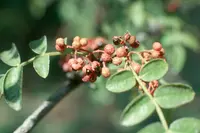
Prickly ash (Zanthoxylum americanum) is a cold-hardy, deciduous shrub or small tree known for its spiny stems and aromatic leaves and bark. It often forms thickets and produces clusters of small yellowish flowers followed by red, warty seed capsules.
This species is native to North America and is commonly found along woodland edges, riversides, and open thickets. It supports wildlife by providing food and shelter for birds and insects.
Z. americanum is generally tough and adaptable, but its thorns and suckering habit require thoughtful placement. It prefers sun to light shade, moderately moist, well-drained soil, and benefits from basic knowledge of how to care for prickly ash.

Care Difficulty
Moderate Care

Light Preference
Partial Sun

Water Requirements
Moderate Water

Temperature Preference
Cold Hardy

Hardiness Zone
3–7

Soil Texture
Sandy, Loamy, Organic-rich

Soil pH
Acidic (5.5–6.5), Slightly acidic (6.5–7.0)

Soil Drainage
Moist but well-drained

Fertilization
Minimal (feed rarely)
Scan your plant to receive care tips personalized for your specific plant
Available on iOS and Android
Zanthoxylum americanum thrives as an outdoor shrub in sites with ample light and moderate protection.
This hardy shrub prefers evenly moist, well-drained soil that never stays waterlogged for long periods.
This species is a cold-hardy shrub adapted to outdoor conditions in many temperate regions.
This species adapts well across a wide humidity range and usually needs no special humidity control outdoors.
Zanthoxylum americanum prefers loose, well-drained, moderately fertile soil that stays evenly moist but not waterlogged.
This species can be grown in containers for several years, though it ultimately prefers open ground.
This hardy native shrub needs modest feeding, mainly to support establishment and growth in poor soils.
Pruning Zanthoxylum americanum is mainly done to maintain structure, safety, and plant health.
This species is usually grown in the ground, so care focuses on careful transplanting rather than frequent repotting.
Propagation of Zanthoxylum americanum is possible from seed and sometimes from semi-hardwood cuttings, but it requires patience.
This cold-hardy shrub tolerates typical winters in much of its range and usually needs minimal winter care.

Plant Health Check
Not sure what's wrong with your plant? Check your plant's health inside the app.
This species is one of the few citrus relatives native to cold North American climates, naturally occurring from the upper Midwest through parts of the Northeast and into southeastern Canada in thickets, woodland edges, and riverbanks.
Chewing the bark or fruits produces a strong tingling and numbing sensation in the mouth due to pungent alkylamides, which historically led to its use by Indigenous peoples and settlers as a traditional toothache remedy.
The shrub serves as a key larval host plant for the giant swallowtail butterfly (Papilio cresphontes), whose caterpillars feed on its leaves while the spiny branches offer some protection from predators.
Although it belongs to the citrus family (Rutaceae), this species tolerates winter cold far beyond that of common citrus, surviving in regions with winter temperatures that can drop well below 0°F, which makes Zanthoxylum americanum care in outdoor plantings very different from typical lemon or orange trees.
The small greenish flowers provide nectar and pollen for many native bees, tiny wasps, and flies. The shrub also hosts larvae of several swallowtail butterflies, so planting it can support local pollinator and caterpillar populations.
Keep your plants happy and healthy with plant identification, disease detection, and easy care guidance.