Early canopy training
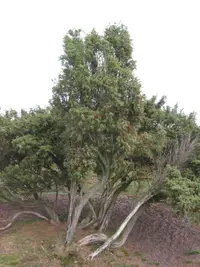
Stake and gently tie young branches outwards rather than upwards during the first 2–3 years to create a broader, more wind-stable canopy that shades its own root zone and reduces moisture stress.


Zygia racemosa is a small to medium tree in the legume family, often grown for its fine, feathery foliage and light, airy canopy. It typically has a graceful, open crown and compound leaves that give it a soft, fernlike look.
This species is native to tropical regions of the Americas, where it usually grows in warm, humid forests and along disturbed edges. It tends to be fast growing but may need space and consistent warmth, which can limit its use to suitable climates or protected collections.
In cultivation, it generally prefers bright light, moderate moisture, and well-drained soil. Understanding how to care for Zygia racemosa starts with providing stable warmth and avoiding waterlogged conditions.

Care Difficulty
Moderate Care

Light Preference
Full Sun

Water Requirements
Moderate Water

Temperature Preference
Tropical / Frost Sensitive

Hardiness Zone
10–12

Soil Texture
Sandy, Loamy, Organic-rich

Soil pH
Acidic (5.5–6.5), Slightly acidic (6.5–7.0)

Soil Drainage
Moist but well-drained

Fertilization
Minimal (feed rarely)
Scan your plant to receive care tips personalized for your specific plant
Available on iOS and Android
This tropical tree prefers high light and benefits from consistent exposure in warm climates.
This species prefers evenly moist, free-draining soil and does not tolerate prolonged waterlogging.
This lowland tropical tree performs best in consistently warm, frost-free conditions.
This species prefers moderately humid air but adapts to many outdoor conditions.
This species grows best in deep, well-structured, moist yet free-draining soil.
This species can be grown in large containers when given ample root volume and stable support.
This leguminous tree usually needs minimal feeding, especially when grown in the ground with healthy soil.
Pruning helps manage size and structure while maintaining a healthy canopy.
This species is most often transplanted outdoors rather than kept long term in containers.
Propagation is usually done from seeds, with vegetative methods used less often.
In frost-prone regions, this tropical to subtropical tree benefits from basic winter protection.

Plant Health Check
Not sure what's wrong with your plant? Check your plant's health inside the app.
This species is naturally associated with seasonally flooded riverbanks and várzea forests in parts of the Amazon and Orinoco basins, tolerating periodic soil saturation that would kill many other trees.
As a legume, it forms symbiotic root nodules with rhizobial bacteria, which convert atmospheric nitrogen into forms that enrich the soil and support both the tree and nearby vegetation.
Its flowers are grouped in racemes with numerous long stamens, creating soft, puffball-like inflorescences that are highly attractive to a range of insect pollinators and sometimes bats in its native range.
This species is considered moderately fast-growing under warm, frost-free conditions, often adding 30–60 cm of height per year. Growth slows in poor soil, cool temperatures, or if roots are restricted by compacted ground or containers.
Keep your plants happy and healthy with plant identification, disease detection, and easy care guidance.