Brown Spots on Plant Leaves: When to Worry and What to Do Next
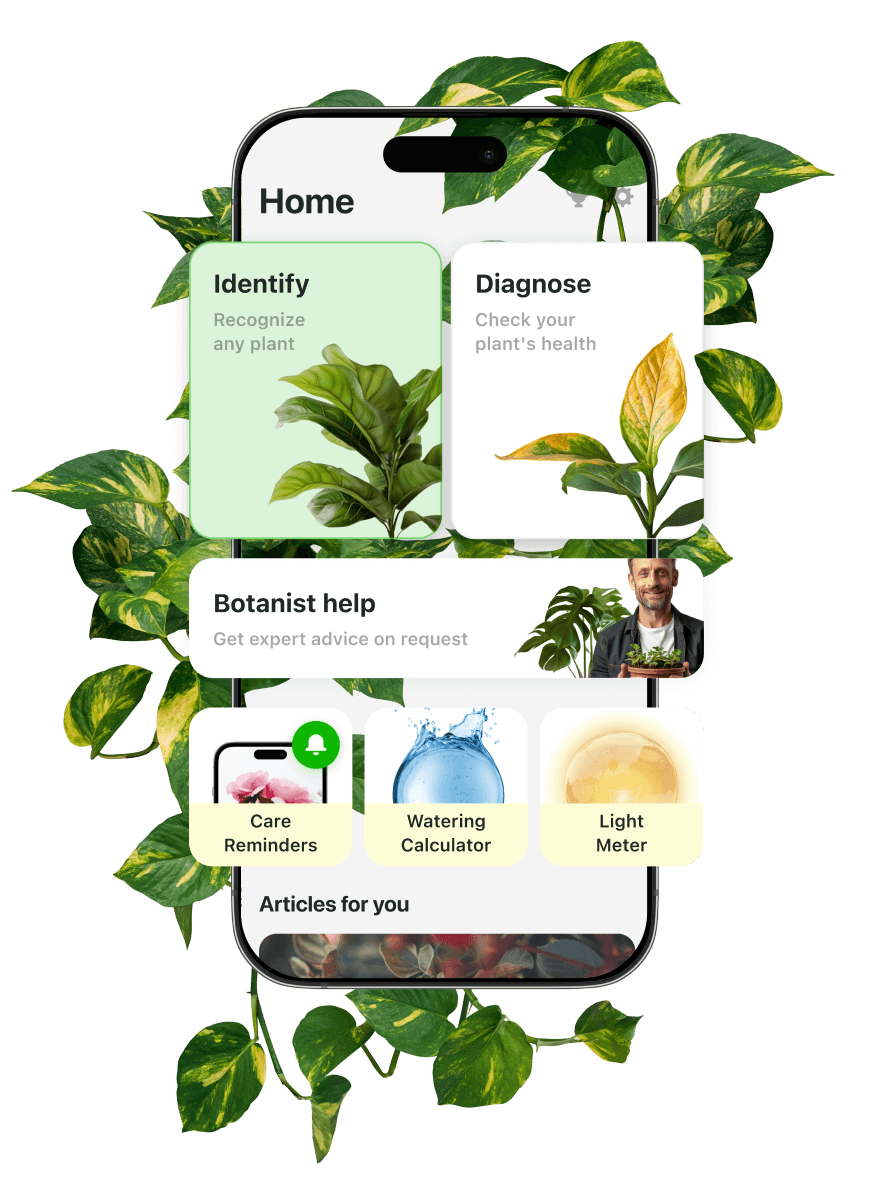
Brown spots on plant leaves usually signal watering, soil, infection, or environmental issues. To fix them, first identify the exact cause — Botan can help diagnose it faster, or you can use this guide to narrow it down yourself.

On this page
- Common Causes of Brown Spots on Leaves
- Watering Problems
- Too Much Direct Sunlight
- Low Humidity or Dry Air
- Pests
- Fungal or Bacterial Leaf Spot
- What the Spots May Be Telling You
- When Brown Spots Are Not a Big Problem
- When You Should Worry
- What to Do Next: A Step-by-Step Plant Check
- How to Prevent This Problem in the Future
Brown spots on plant leaves are just a symptom. They may indicate soil or watering issues, infections, or adverse environmental conditions. The only way to resolve this problem is to correctly identify its underlying cause.
If you'd like a faster answer, the Botan app can analyze your plant's symptoms, tell you exactly what's wrong, and how to treat it. Of course, you can also do your own research — here, we’ll share all the information you may need to narrow down the diagnosis and prevent such problems in the future.

Common Causes of Brown Spots on Leaves
Brown spots on leaves appear as a result of cell collapse, which can be caused by:
- Too much moisture → blocks access to oxygen and nutrients
- Too little moisture → causes cells to die
- Too much sunlight → physically damages the plant
- Fungi → feed on the plant’s cells
- Bacteria → rapidly multiply and damage the tissue
- Pests → feed on the plant
As you can see, the reasons are many. The result is similar.
However, brown spots don’t look exactly the same, and neither do other symptoms. Seeing those differences is the key to finding the right cause.
Watering Problems
Both overwatering and underwatering can cause brown patches on leaves.
In the case of overwatering, spots are soft, mushy, brown to black. They often appear on lower leaves first. Over time, excessive moisture can cause root rot and potentially a fungal infection.
In the case of underwatering, spots are lighter, crispy, and papery. They usually appear on the leaf tips and margins first, and the entire plant starts to wilt.
Too Much Direct Sunlight
When a plant receives too much sunlight and suffers heat damage, its cells become dehydrated and injured. That causes bleached spots on the upper leaf surface, which gradually turn brown or near-black.
Just like spots from underwatering, they don't spread, and sensitive plants are especially at risk, especially when placed in direct sunlight outdoors or right next to a window. For example, these include monstera, pothos, peace lily, and ferns.
Low Humidity or Dry Air
This is also a purely environmental cause. Spots start appearing at the tips and edges of the leaf. They are crispy and papery and often light brown or just brown. Unlike spots from sun damage, they don’t look bleached initially — you can see a darker color right away. Patches have sharp boundaries, while the entire leaf gradually starts curling.
Plants become especially vulnerable to such damage during the winter heating season, near radiators or AC units, or in naturally arid climates.
Pests
Pests such as spider mites, thrips, scale, mealybugs, whiteflies, and others can cause ongoing damage to plant tissue.
The very first signs of their presence don’t usually look like dark spots, but instead appear as many tiny light-colored dots. Over time, they merge into larger, darker, brown or near-black patches. Sometimes, you can also see winding pale trails when holding the leaf up to the light. Many pests also excrete honeydew, leaving sticky residue or scars on the surface.
Insects usually affect new growth first. You can also carefully inspect the underside of the leaves, the stem joints, and the soil. Often, the pests themselves are clearly visible.
Fungal or Bacterial Leaf Spot
Sometimes, black or brown leaf spots indicate a disease.
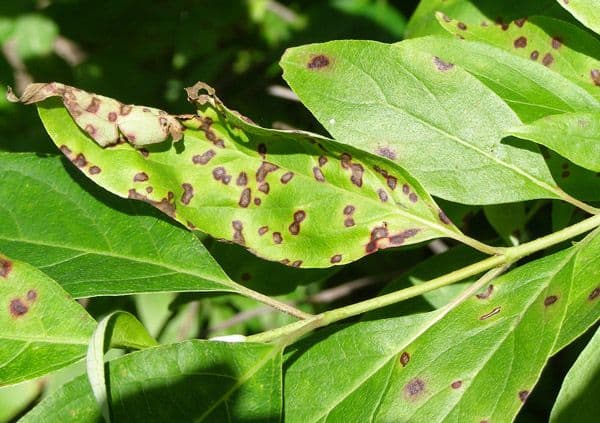
Both fungal diseases and bacterial infections, specifically bacterial leaf spot, can cause this symptom. Both can be triggered by different pathogens, but they always spread. Such infections can seriously damage the entire plant unless you take the right action in time.
Such spots usually have a dark center, a more defined border, and a yellow halo. However, fungal spots tend to be drier and may have tiny black dots at their center. The bacterial ones look water-soaked and have less-defined edges.

.png&w=2880&q=75)
Identify Your Plant's Issues
Identify plant problems before they spread
What the Spots May Be Telling You
Take a look at the table to see the most likely cause of dark spots on your plant. But remember that accurate identification will require deeper research.
What You See | Possible Causes | What to Check First | First Treatment Step |
Brown, crispy, dry spots on the edges | Underwatering, low humidity | Soil dryness | Water at the base, run a humidifier |
Soft, mushy dark spots with a yellow halo (but not water-soaked) | Overwatering, root rot, fungal infection | Roots and stem | Trim rotted roots and damaged leaves, let soil and roots dry out |
Water-soaked, angular dark spots “trapped” in the leaf veins | Bacterial infection | Rapid spread to other leaves | Isolate the plant, remove infected leaves |
Tiny lighter dots merging into brown spots | Pests | Undersides of leaves and leaf joints | Isolate the plant, physically remove insects |
Bleached patches turning dark | Direct sunlight | Sun-facing side of the plant | Remove the plant from the sun |
When Brown Spots Are Not a Big Problem
A single brown leaf spot, or even a few, is not always an issue you must react to immediately. It may also be caused by quite innocent factors, such as:
- Natural aging — spots develop before the leaf dies off.
- Physical damage — bruises can turn dark, but these are just scars.
- One-time stress — that might be cold, heat, or sunlight damage.
So, if spots have a mechanical cause, don’t spread, or stay after the problem is already solved (e.g., after you got rid of pests or fungi), there’s nothing to worry about.
When You Should Worry
If you notice these symptoms, the situation might require action right now:
- Many leaves are affected
- The spots are spreading fast
- They have yellow halos
- There’s a fuzzy or powdery coating
- The problem affects new growth
- There are brown spots on the plant stem
- There are visible insects
- The plant is wilting despite proper care
- There’s a foul or rotten odor
Note that these symptoms, even when combined, don’t necessarily mean the plant can’t be saved. You only need to identify the cause and take the appropriate steps.

What to Do Next: A Step-by-Step Plant Check
Examination and treatment shouldn’t be chaotic. Just follow this simple guide:
- Examine the spots. Evaluate the color, check whether the spot is dry or wet, and pay special attention to the edges and any yellow halo. This helps determine whether it is due to pests, bacteria, fungi, or environmental damage.
- Remove damaged leaves. That’s a universal step. Use sterile tools. The only exception is if you realize that the spots are too small and not spreading.
- Check the roots. Healthy roots are light and firm. If they are dark, wet, or rotten, trim damaged parts, too. Let them dry for at least an hour and repot into dry soil.
- Inspect for pests. Carefully examine the underside of the leaves. Also, check along the stems and at the soil level. Look for tiny moving dots, honeydew, or cottony fluff.
- Treat the cause. After the cause is identified and the plant is clean and trimmed, you may need to apply a solution — insecticide, fungicide, or bactericide.
- Adjust your care plan. Consider watering frequency, lighting, airflow, and fertilization for your specific plant.
- Monitor the situation. Keep an eye on the plant for 2-3 weeks to see whether the treatment works.
It might not be easy to figure out how to act in one or another case, but patience and research are all it takes to help your plant recover.
Alternatively, you can use the Botan leaf identification app to determine the diagnosis and what may have caused the problem. It’s not just a detector. Botan will also provide a step-by-step treatment and care plan, so you’ll know exactly what humidity level, watering frequency, and fertilization your plants need.
How to Prevent This Problem in the Future
You can prevent spots or similar problems by:
- Watering properly. Water the plant at the base to prevent infections that might spread through splashes.
- Using the finger test. Most plants require watering when the soil is 1-3 inches dry. But still check recommendations for your plant.
- Adjusting lighting. Some plants struggle under direct sunlight.
- Ensuring good airflow. There must be space between plants. Consider using a small fan if possible.
- Cleaning tools. Sterilize them to prevent the spread of disease among plants.
- Using the right pot. Ensure your pot has drainage holes — that’s how you prevent root rot.
Also, do monthly checks — inspect the roots, leaves, and look for pests.
FAQ
Yes, this is one of the main features of the Botan scanner. Take a photo of the affected leaf, and you’ll get a diagnosis, a step-by-step treatment plan, and care recommendations specific to your plant.
Dariia Plaksina
Botanist
5 years of botanical research experience
Dariia Plaksina is a biologist, botanist, and writer of informational articles with over 5 years of experience exploring the world of plants, nature, and biology. She studied at Taras Shevchenko National University of Kyiv, Educational and Scientific Center “Institute of Biology and Medicine,” where she built a strong scientific foundation for her future work.
For Dariia, writing is a hobby, a calling, and a way to make reliable knowledge easier to understand. Her articles focus on plant care, plant health, and natural processes, helping readers learn more about the living world through clear, accessible, and science-based explanations.
Related Articles
8 min read · 1 Oct 2026
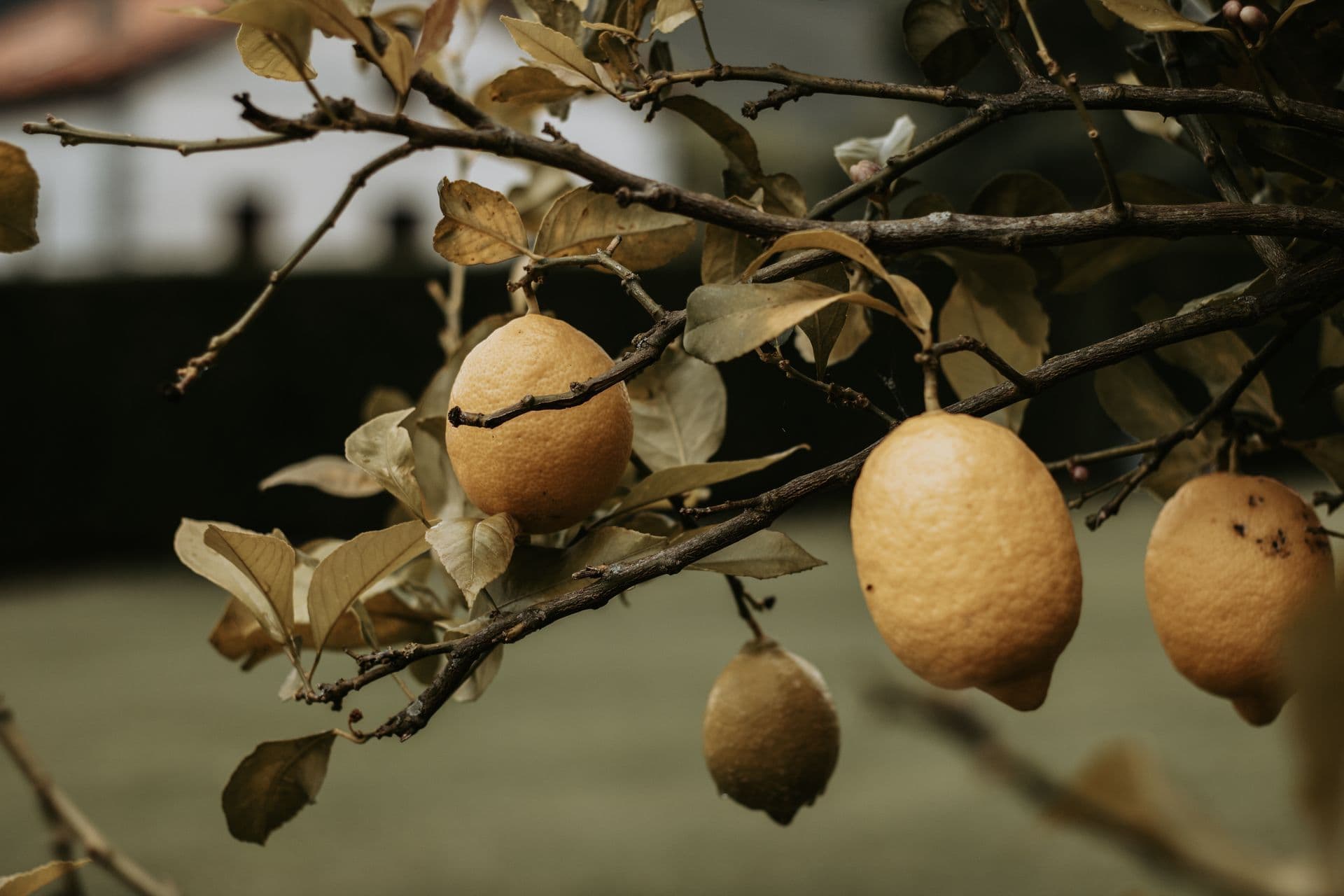
Lemon Tree Leaves Turning Yellow: Causes and How to Fix It
Yellow leaves are one of the most common lemon tree problems. This guide explains eight causes of lemon tree leaves turning yellow, from overwatering to root rot, with a fix for each.
5 min read · 16 Sept 2026
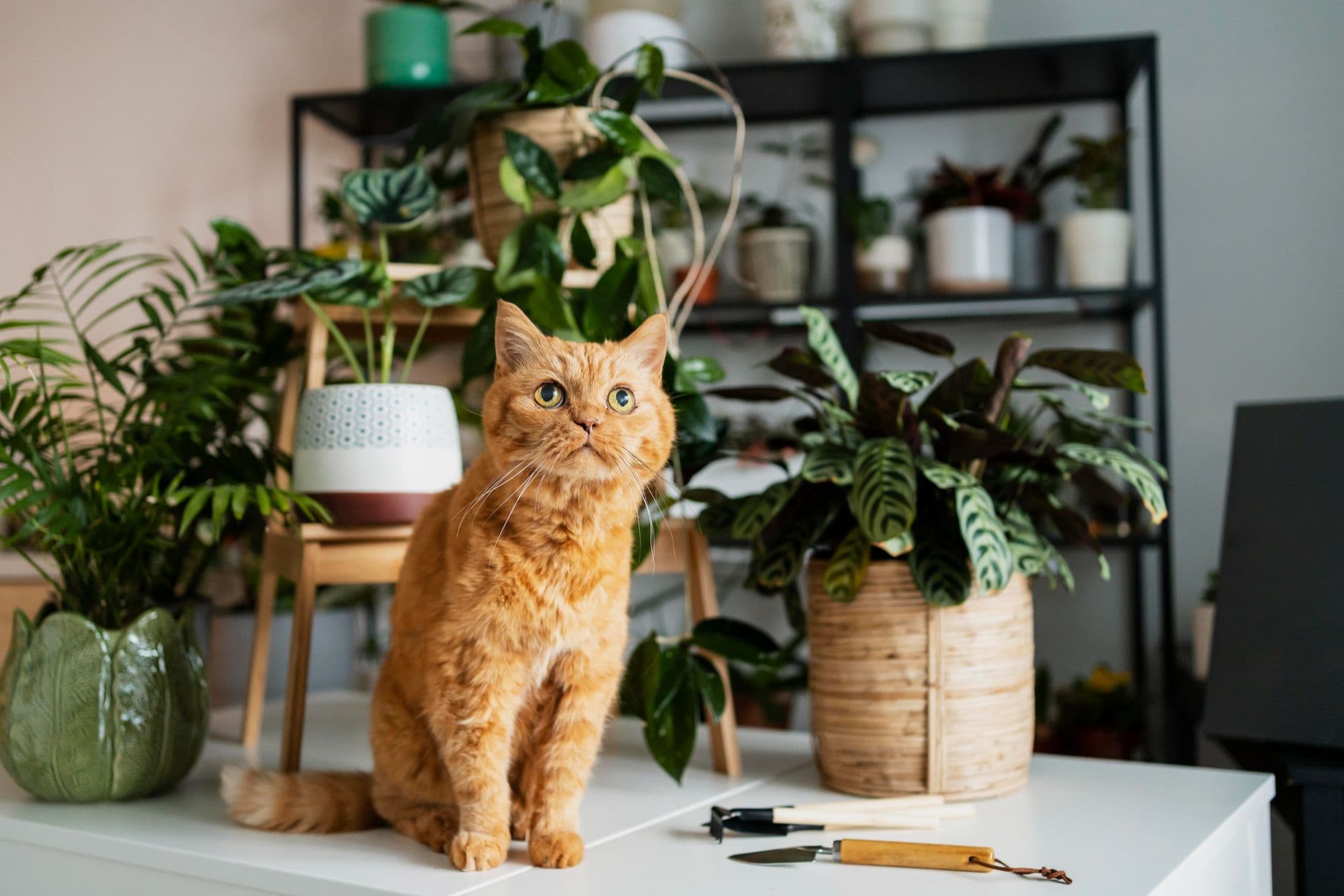
How to Keep Cats Away From Plants: 7 Safe and Effective Methods
Cats may dig in potting soil, chew leaves, or knock containers over. These seven methods combine safer placement, physical protection, a suitable chewing alternative, and play to help protect your plants without putting your cat at risk.
5 min read · 7 Sept 2026
Overwatering vs Underwatering: How to Tell the Difference
Overwatering and underwatering can look almost identical, so they're easy to confuse. In this guide, we'll cover the signs of each, simple ways to tell them apart, and how to treat your plant once you know what's wrong.
Explore Plants by Care Needs
Identify the plant and problem. Help your plant recover
Identify plant problems early, understand what's wrong, and get clear care guidance. Botan helps you turn guesswork into confident plant care