Root flare check
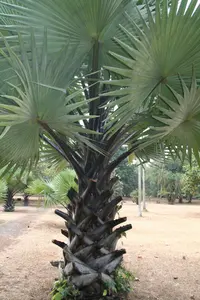
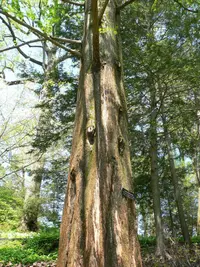
When planting or replanting, locate the root flare and keep it just above soil level to prevent trunk rot and encourage stable anchoring.

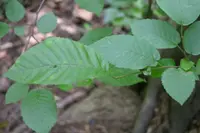
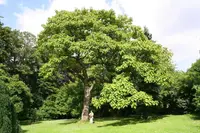
American hornbeam (Carpinus caroliniana) is a small deciduous tree native to woodlands and stream banks in eastern North America. It is often used as an understory or ornamental tree in gardens and parks.
The plant has smooth gray bark, finely serrated leaves, and a dense, rounded crown that gives a refined, compact look. Its leaves turn shades of yellow, orange, or red in autumn.
Growth is slow to moderate, and the tree is long-lived with strong, hard wood. It adapts well to different soils if drainage is reasonable and moisture is consistent.
Once established, it is relatively low-maintenance, which makes it easier to care for American hornbeam in temperate climates with partial shade and evenly moist soil.

Care Difficulty
Moderate Care

Light Preference
Partial Shade

Water Requirements
Regular Water

Temperature Preference
Cold Hardy

Hardiness Zone
3–9

Soil Texture
Loamy, Clay, Organic-rich

Soil pH
Acidic (5.5–6.5), Slightly acidic (6.5–7.0)

Soil Drainage
Moist but well-drained

Fertilization
Minimal (feed rarely)
Scan your plant to receive care tips personalized for your specific plant
Available on iOS and Android
This deciduous tree prefers bright conditions that mimic an open woodland edge.
This species prefers consistently moist, well-drained soil rather than long dry or waterlogged periods.
This tree is naturally adapted to temperate climates with cold winters and warm summers.
This species handles a wide humidity range and rarely needs special humidity management outdoors.
This tree prefers evenly moist, well-structured mineral soil with high organic content.
This species can be grown in containers when young, but long-term cultivation is challenging due to its eventual size.
This native tree usually grows well in average soil, so fertilizer needs for American hornbeam are modest.
Pruning Carpinus caroliniana is mainly done to maintain structure and remove problem wood rather than control size.
This species is most often grown in the ground, so focus on careful transplanting rather than frequent repotting.
Propagation of Carpinus caroliniana is usually done from seed and is moderately slow, so it is less common for casual gardeners.
This species is cold hardy in much of its native range and usually needs minimal winter care once established outdoors.

Plant Health Check
Not sure what's wrong with your plant? Check your plant's health inside the app.
The trunk and older branches develop smooth, bluish-gray bark with strong sinewy ridges that resemble flexed muscles, which is why the tree is often called musclewood or blue beech.
Its small nutlets are attached to papery 3-lobed bracts that act like wings, allowing wind dispersal, and they are also eaten and spread by birds such as finches and wild turkey.
This species commonly grows in rich, moist woods and along streams and floodplains in eastern North America, where its flexible stems and strong root system tolerate periodic flooding and shifting soils.

Indigenous peoples and early European settlers valued the extremely hard, dense wood of this species for making tool handles, wedges, and other small implements that needed to withstand heavy impact and wear.
This species is a deciduous tree. It keeps its foliage through the growing season, then leaves turn yellow to orange-red in autumn and drop, sometimes hanging on into winter as dry brown leaves in colder regions.
Keep your plants happy and healthy with plant identification, disease detection, and easy care guidance.