Southern magnolia Care (Magnolia grandiflora)

Also known as: Bull-bay, Evergreen Magnolia, Big-laurel, great flowered magnolia
Southern magnolia

About Southern magnolia

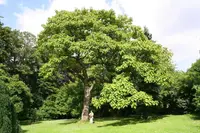
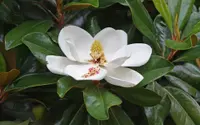
Southern magnolia, Magnolia grandiflora, is a broadleaf evergreen tree valued for its large, glossy leaves and showy white flowers. It typically forms a dense, pyramidal crown and can become a striking focal point in the landscape.

This species is native to the southeastern United States, where it grows in warm, humid climates with mild winters. Its thick, leathery foliage and sturdy structure make it relatively resilient once established, but young trees may need protection in colder or very exposed sites.

It prefers full sun to light shade, evenly moist but well-drained soil, and benefits from mulching to keep roots cool. Understanding these basic needs helps simplify how to care for Southern magnolia in home gardens.

Main Plant Requirements

Care Difficulty

Moderate Care

Light Preference

Full Sun

Water Requirements

Regular Water

Temperature Preference

Warm Climate

Hardiness Zone

6–10

Soil Texture

Sandy, Loamy, Clay

Soil pH

Strongly acidic (4.5–5.5), Acidic (5.5–6.5)

Soil Drainage

Moist but well-drained

Fertilization

Minimal (feed rarely)

Get Personalized Care Plan

Scan your plant to receive care tips personalized for your specific plant

Available on iOS and Android

How to Care for the Southern magnolia

This evergreen tree needs abundant light to flower and maintain dense foliage.

  • Provide 6–8 hours of direct sun daily; full sun is ideal, though light afternoon shade helps in very hot inland sites.
  • Young Southern magnolia trees tolerate partial shade (4–5 hours sun), but flowering and crown density decrease as shade increases.
  • Avoid dense shade near tall buildings or trees, which causes sparse growth; in winter, ensure sites are not shaded all day by low sun angles.

Magnolia grandiflora prefers evenly moist but well-drained soil, especially while establishing.

  • Allow the top 4–6 cm of soil to dry before deep watering, then soak the root zone rather than giving light, frequent splashes.
  • During the first 2–3 years, monitor closely in dry spells; drooping, dull leaves indicate thirst, while yellowing leaves and soggy soil suggest overwatering.
  • Plant in soil that drains within 24 hours after heavy rain; avoid compacted or waterlogged spots that promote root rot.

This species is adapted to warm temperate climates with mild winters and hot summers.

  • Optimal growth occurs around 70–85°F (21–29°C), with active shoot and leaf production in late spring and summer.
  • Mature trees tolerate brief drops to about 5–10°F (-15 to -12°C), but young plants are more vulnerable and benefit from wind protection and mulch.
  • In heat above 95°F (35°C), provide soil moisture and a mulch layer 5–8 cm deep to limit stress and reduce leaf scorch on exposed sites.

This species tolerates a wide humidity range and does not usually need special humidity management outdoors.

  • Target ambient humidity around 40–60% but established Southern magnolia trees handle drier conditions once roots are deep.
  • Leaves that brown at the edges or curl while soil is evenly moist can indicate chronic low humidity combined with heat or wind.
  • In very dry, hot microclimates, shelter trees from strong drying winds and use organic mulch to reduce evaporative stress around the root zone.

Magnolia grandiflora prefers deep, moist, well-drained, slightly acidic soil with ample organic matter.

  • Aim for a loamy structure by blending native soil with 25–40% compost and leaf mold to improve moisture retention and nutrient supply.
  • Ensure drainage by avoiding compacted subsoil; break up hard layers and create a broad, loosened planting area so roots can spread and breathe.
  • Target soil pH around 5.0–6.5; where soil is alkaline, incorporate elemental sulfur or acid-forming fertilizers gradually, not in a single heavy application.
  • Avoid heavy clay that stays waterlogged or extremely sandy soil that dries quickly; amend either type with organic material to balance drainage and aeration.

This tree can be grown in containers only when kept small and managed carefully, mainly in its early years.

  • Choose a wide, heavy container to counter the plant’s top-heavy canopy and reduce the risk of tipping in strong winds.
  • Use a deep pot that allows a strong central taproot and woody lateral roots to develop without circling tightly against the container wall.
  • Select a sturdy, non-porous pot material in hot climates to reduce sidewall drying and keep root-zone moisture more stable between waterings.

This evergreen tree benefits from modest feeding in containers or poor soils but established in-ground Southern magnolia often needs little added fertilizer.

  • Use a balanced slow-release fertilizer (around 8-8-8 or 10-10-10) or well-rotted compost for nutrient-poor sites.
  • Feed once in early spring and again in midsummer during active growth if foliage appears pale or growth is weak.
  • Apply at the labeled rate for trees and shrubs; avoid over-application to prevent root burn and excessive soft growth.
  • Do not fertilize in late fall or winter, as feeding then can stimulate tender growth that may be damaged by cold.

Magnolia grandiflora needs only light, deliberate pruning to maintain structure and remove problem wood.

  • Prune just after flowering or in late winter before growth starts, avoiding heavy cutting during active bloom.
  • Remove dead, diseased, crossing, or storm-damaged branches first to keep the canopy healthy and reduce pest entry points.
  • Thin congested interior branches sparingly to improve light and air movement without over-opening the crown.
  • Use clean, sharp bypass pruners or a pruning saw and make cuts just outside the branch collar to promote proper healing.

This species is usually planted directly in the ground; transplanting young trees carefully is more important than frequent repotting.

  • Transplant in late winter or early spring while dormant, before new growth starts, to reduce shock.
  • Look for signs such as roots circling the pot, water running off quickly, or very slow growth in container-grown plants.
  • Move up only 1 pot size or plant into a permanent site with well-drained soil, keeping the root flare at soil level.
  • Water thoroughly after planting, mulch 5–8 cm deep, and keep soil evenly moist for the first growing season to support root recovery.

Magnolia grandiflora can be propagated, but the process is slow and often better suited to patient or experienced growers.

  • Take semi-ripe cuttings in midsummer, 10–15 cm long, using a rooting hormone and placing them in a warm, humid, bright-but-shaded environment.
  • Use air layering in late spring: wound a semi-mature branch, apply rooting hormone, wrap with moist sphagnum, and cover with plastic until roots form.
  • Sow fresh seeds in autumn after removing the fleshy coat, then stratify in cool, moist conditions for several months to break dormancy.
  • Expect low to moderate success rates and slow early growth; maintain consistent moisture and avoid disturbing developing roots.

This evergreen magnolia is generally hardy in mild to moderately cold climates and often needs only basic winter care once established.

  • Mature trees tolerate short dips near 0°F, but young plants are more vulnerable to freeze damage.
  • Apply 5–8 cm of mulch around the root zone in late fall, keeping it a few cm away from the trunk to limit rot.
  • In exposed sites, shield young trees from drying winds with a burlap screen to reduce leaf scorch.
  • Move container-grown plants into an unheated garage or sheltered area where temperatures stay above about 20–25°F.

Care Tips

Establishing a strong leader

During the first 3–5 years, select a single, straight central stem and remove competing upright shoots in late winter so the tree develops a stable main leader that resists storm damage.

Protecting surface roots

Avoid tilling, heavy foot traffic, or parking under the tree and maintain a wide mulch ring at least to the drip line, because the shallow feeder roots are easily damaged and stressed roots decline slowly over several seasons.

Managing heavy branches

On young trees, thin or shorten long, heavy lateral branches before they exceed 5–7 cm diameter to reduce future limb breakage and the need for large pruning cuts that heal poorly.

Planning for leaf litter

Use the naturally heavy leaf and cone drop as a built-in mulch by raking material into a defined mulch ring rather than removing it completely, which helps conserve soil moisture and recycles nutrients when growing Southern magnolia.

Preventing trunk injury

Install a simple physical barrier or keep string trimmers and lawn mowers well away from the trunk, since repeated bark injury on young trees is a common entry point for decay and can permanently weaken the structure.

Common Pests and Diseases

Scale insects

This pest feeds on sap and appears as small, rounded or oval bumps on leaves and stems, often leading to yellowing foliage and sticky honeydew. Sooty mold may develop on the honeydew, darkening leaf surfaces.

Solution

Prune and discard heavily infested twigs, then gently scrub remaining scales with a soft brush and soapy water on accessible branches. For persistent infestations on outdoor trees, apply a horticultural oil spray during the growing season and a dormant oil in winter, following label rates and ensuring thorough coverage of stems and leaf undersides.

Tuliptree scale

This pest is a large soft scale that clusters on stems and branches, producing heavy honeydew deposits that attract ants and encourage sooty mold. Severe infestations can cause branch dieback and reduced vigor.

Solution

Cut out and destroy branches with dense colonies, and wash accessible stems with water to remove honeydew and mold. For significant infestations, use a properly timed horticultural oil spray or a systemic insecticide labeled for scale on magnolia, applied according to local guidelines and only when the tree is actively growing.

Magnolia leaf spot

This disease causes tan to dark brown spots or blotches on leaves, sometimes with yellow halos, and may lead to premature leaf drop in humid conditions. Symptoms include cosmetic damage more than structural injury but can stress young trees.

Solution

Rake and remove fallen leaves to reduce the source of fungal spores, and avoid overhead watering to keep foliage as dry as possible. Improve air circulation by thinning crowded branches, and in severe or recurring cases, consult local extension guidance about using a labeled fungicide in early spring as part of broader Magnolia grandiflora care instructions.

Algal leaf spot

This disease appears as gray-green to reddish, slightly raised patches on upper leaf surfaces that may roughen or crack over time. Symptoms include mostly cosmetic injury but can be extensive in warm, humid climates.

Solution

Prune and discard heavily affected branches to reduce inoculum, and promote faster drying of foliage by improving light penetration and airflow through selective thinning. If the tree is otherwise healthy, chemical treatment is usually unnecessary; focus on sanitation and avoiding prolonged leaf wetness.

Magnolia scale

These insects are large, dome-shaped scales that attach to twigs and branches, producing abundant honeydew and leading to black sooty mold and branch weakening. Infested trees may show thinning foliage and stunted growth over time.

Solution

Physically remove individual scales on small trees by gently scraping with a fingernail or soft brush, and prune out badly infested shoots. For larger outdoor specimens, apply horticultural oil at the correct seasonal timing to target vulnerable life stages, and consider a professional arborist for systemic treatment if the infestation is widespread.

Interesting Facts

Ancient flower structure

Magnolia grandiflora has large, waxy flowers with a spiral arrangement of many tepals and stamens, a primitive floral structure that closely resembles early angiosperm fossils from more than 90 million years ago.

Beetle-based pollination

Its thick, tough carpels and tepals evolved to withstand chewing by beetles, which remain the primary pollinators, making this tree an example of an ancient beetle-pollinated lineage rather than a bee-specialized flowering plant.

Evergreen in mild climates

Unlike many magnolia species, this tree is broadleaf evergreen in warm regions, keeping its dense, glossy foliage year-round and providing important cover for birds and other urban wildlife.

Botan icon

Did you know?

In parts of the southeastern United States, individual Magnolia grandiflora trees planted in early European settlement periods are still alive today, with documented specimens surpassing 150–200 years in age and functioning as local historic landmark trees.

FAQs about Southern magnolia

Lack of flowers often comes from too little light, excessive nitrogen fertiliser, recent transplanting, or very heavy pruning. Young trees may need several years to mature before regular flowering begins, even in otherwise good conditions.

Grow Healthy Plants with Botan Care

Keep your plants happy and healthy with plant identification, disease detection, and easy care guidance.

Botan plant care app — identify plants on mobile

Explore More Plants