

eastern redbud Identification (Cercis canadensis)

Recognize eastern redbud by its rounded, heart-shaped leaves with smooth edges and alternate placement on the twig.

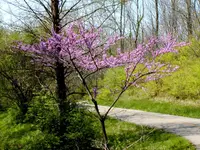
It usually grows as a small tree with several short trunks, and its pea-like pink flowers appear in tight clusters directly on older branches and the trunk.

Cercis canadensis Identification

Identify a Plant by Photo

Check your plant ID by uploading a clear photo to Botan.

Clear images work best. Avoid photos taken too close or too far away

Use a few easy shape checks before looking closer.

  • Leaves are simple, alternate, and broadly heart-shaped with smooth edges, usually 3-5 inches (8-13 cm) wide.
  • Small pink to rosy-purple flowers have 5 petals and sit in tight clusters along bare twigs and older branches.
  • Flat, bean-like pods hang from the branches, usually about 2-4 inches (5-10 cm) long.
  • The plant often forms a short trunk or several trunks with a wide, rounded crown.

Check for both heart-shaped leaves and flowers borne on branches, not just at the tips.

Eastern redbud shows clear visual shifts from seedling form to flowering and pod-bearing stages.

  • Seedling: Seedlings have two seed leaves, then small alternate true leaves that quickly become rounded to heart-shaped on a thin, upright stem.
  • Young plant: Young plants form a vase-like outline with slender green-brown stems and widely spaced branches; leaves broaden noticeably, often reaching 3-5 inches (8-13 cm) across.
  • Flowering stage: Flowers appear in tight clusters on bare twigs and older branches, so the branching pattern stands out before leaves hide it.
  • Fruiting stage: After flowering, flat hanging pods replace the clusters and remain visible among foliage, adding a thin, pendulous texture unlike the earlier blossom stage.

Several named selections of eastern redbud are easy to separate by leaf color and branching habit.

  • 'Forest Pansy': Leaves emerge deep purple to burgundy instead of green, often fading toward bronzy green later in the season.
  • 'Hearts of Gold': New leaves open apricot-orange, then turn bright golden yellow, creating a much lighter canopy than the typical form.
  • 'Ruby Falls': A strongly weeping form with cascading branches and purple leaves, usually staying smaller at about 6-8 feet (1.8-2.4 m) tall.
  • 'Ace of Hearts': A compact, rounded plant with smaller, dense leaves and a tighter crown, often about 10-12 feet (3-3.7 m) tall and wide.
  • 'Appalachian Red': Flowers are a stronger rosy red than the usual pink-lavender bloom of the species.

In early spring, eastern redbud is often identified by clusters of pink to rosy-purple flowers opening on bare branches before the leaves. By late spring, rounded heart-shaped leaves fill in. In fall, the foliage usually turns yellow, and after leaf drop the flat, beanlike pods may remain visible into winter.

A few spring-flowering small trees can be mistaken for eastern redbud at a glance.

Chinese redbud(Cercis chinensis)

Often confused because it also has pink flowers on bare branches and rounded leaves. It is usually a denser, multi-stem shrub or small tree, while Cercis canadensis more often forms a broader single-trunk tree.

Oklahoma redbud(Cercis reniformis)

Similar heart-shaped leaves and magenta-pink flowers can mislead buyers. Its leaves are more kidney-shaped, thicker, and glossier, with less of the deep heart-shaped notch typical of eastern redbud.

Cercis canadensis is native to eastern and central North America, from southern Ontario and the northeastern and central United States south into northern Florida and eastern Texas. In the wild it is most often found along woodland edges, in open deciduous woods, and beside streams. Seeing it in these edge or understory settings helps narrow identification, especially in eastern North American landscapes where it commonly appears as a small tree below taller canopy species.

Not Sure About the ID?

Use Botan to identify or confirm the plant from a photo, helping avoid mix-ups with similar trees.

FAQ

The clearest field mark is its rounded, heart-shaped leaves with smooth edges, usually 3 to 5 inches (8 to 13 cm) wide, plus clusters of pea-like pink to lavender flowers that open on bare branches.

Everything About eastern redbud

More Plant Identification Guides

Identify It. Learn More About It.

Identify a plant from a photo with Botan, then get species-specific care information, plant details, and common problems.

Botan app identifying a plant from a photo
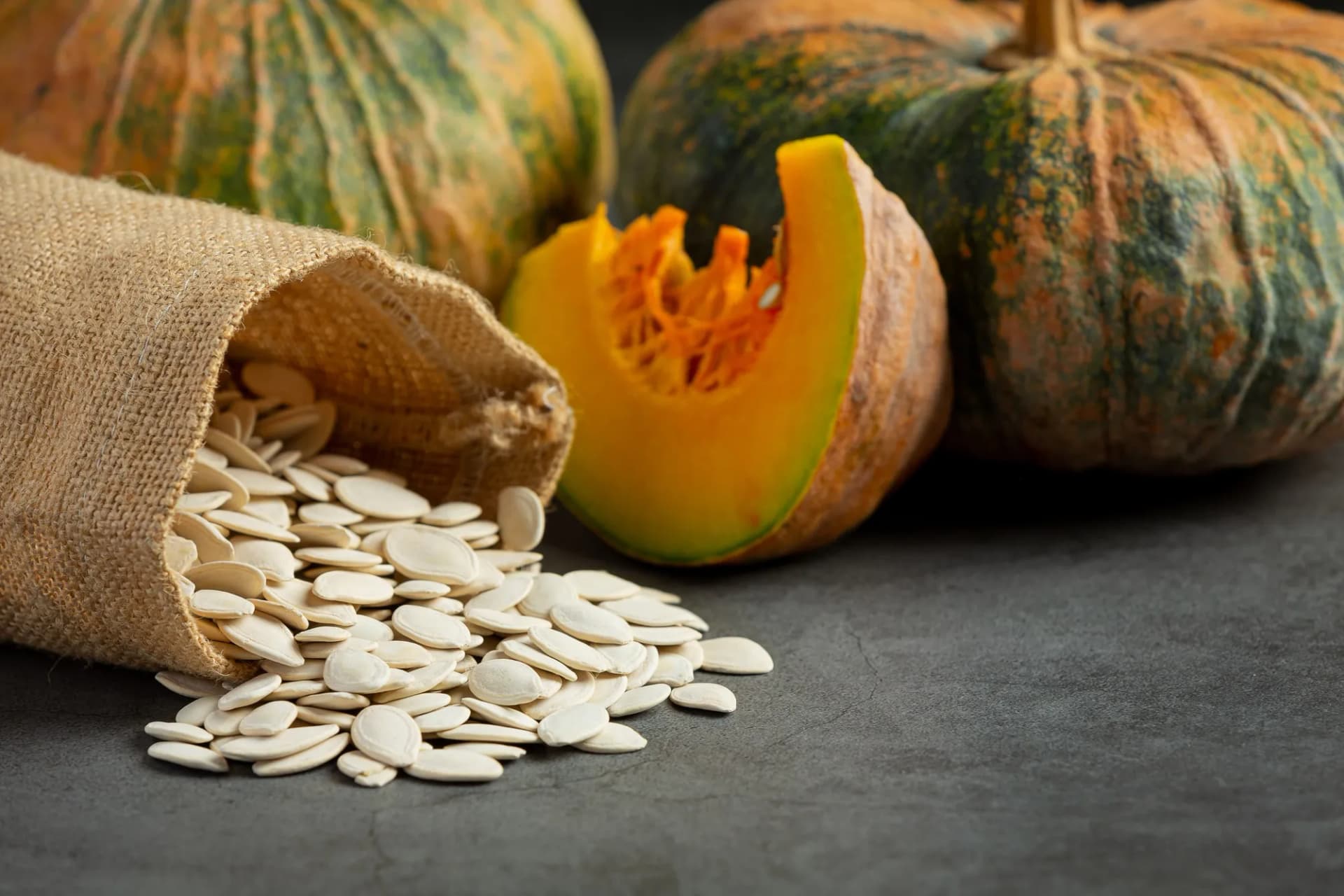
How to Plant Pumpkin Seeds for a Fall Harvest and Grow Your Own Patch

7 min read · 4 Nov 2026

How to Plant Pumpkin Seeds for a Fall Harvest and Grow Your Own Patch

A backyard pumpkin patch starts months before the first leaves turn: the harvest that ends up on the porch in October is decided by what a gardener does in late spring.

Beginner Guides
How to Plant Pumpkin Seeds for a Fall Harvest and Grow Your Own Patch
Plant Pot Sizes: How to Choose the Right Plant Container

7 min read · 20 Aug 2026

Plant Pot Sizes: How to Choose the Right Plant Container

Plant pot sizes can be confusing because the number on the label only tells you part of the required information. A container may look spacious but actually be too shallow. So, how to choose pot size for plant species?

Beginner Guides
Plant Pot Sizes: How to Choose the Right Plant Container
How to Group Plants in Landscaping: A Practical Layout Guide

8 min read · 31 Aug 2026

How to Group Plants in Landscaping: A Practical Layout Guide

Good plant grouping can mean the difference between a well-planned garden and one that looks sloppy. This guide explores layers, spacing, cluster shapes, and the plants that thrive when you group them.

Plant Care
How to Group Plants in Landscaping: A Practical Layout Guide