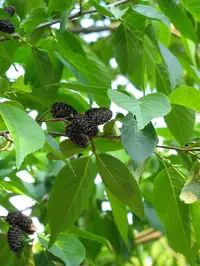
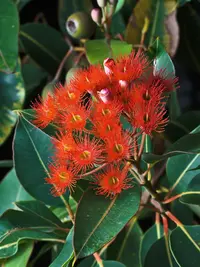
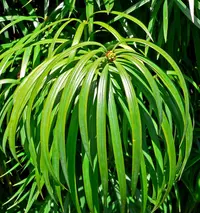
Blueberry Bush Care (Diospyros glabra)

Also known as: Cape Starapple, Crowbush, Fynbos Star-Apple
Blueberry Bush

About Blueberry Bush

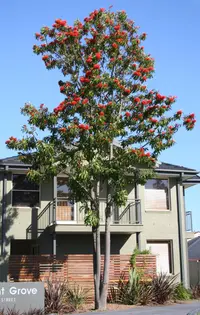
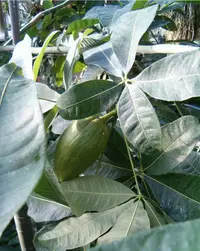
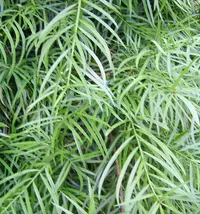
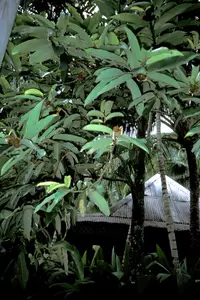
Blueberry bush in this context refers to Diospyros glabra, an evergreen shrub or small tree grown mainly for its glossy foliage and ornamental value, not for edible berries. It typically forms a dense, rounded crown with small, dark green leaves and a tidy, structured appearance that suits landscape planting or larger containers.

This species is native to parts of Asia and prefers mild to warm climates, where it grows in well-drained, moderately fertile soils. It is generally moderate in difficulty, as it dislikes waterlogged roots and benefits from consistent moisture and bright light. Understanding how to care for Blueberry Bush starts with providing stable conditions and avoiding extremes in dryness or shade.

Main Plant Requirements

Care Difficulty

Moderate Care

Light Preference

Partial Sun

Water Requirements

Moderate Water

Temperature Preference

Warm Climate

Hardiness Zone

10–11

Soil Texture

Sandy, Loamy, Organic-rich

Soil pH

Slightly acidic (6.5–7.0)

Soil Drainage

Well-drained

Fertilization

Minimal (feed rarely)

Get Personalized Care Plan

Scan your plant to receive care tips personalized for your specific plant

Available on iOS and Android

How to Care for the Blueberry Bush

Diospyros glabra prefers bright outdoor conditions with moderate, not extreme, sun exposure.

  • Provide 4–6 hours of direct morning sun with light afternoon shade, or bright dappled light under taller trees.
  • Tolerates partial shade, but prolonged low light leads to sparse growth, weak new shoots, and reduced flowering or fruiting, even on Blueberry Bush relatives.
  • In hot climates, protect from intense sun between 1–4 p.m. to prevent leaf scorch; in winter, choose the brightest available, wind-sheltered spot.

Watering for Diospyros glabra aims for steady soil moisture without waterlogging the root zone.

  • Allow the top 3–5 cm of soil to dry before deep watering, so moisture reaches 15–20 cm down, then drain freely.
  • In spring and summer, monitor weekly; in fall and winter, extend intervals, using leaf droop and slightly dry surface soil as cues instead of fixed schedules.
  • Watch for overwatering signs such as yellowing leaves, soft new growth, and sour-smelling soil, and underwatering signs like crisp edges and premature leaf drop.

This species grows best in warm, frost-free climates with moderate seasonal shifts.

  • Aim for 65–85°F (18–29°C) during active growth, as this range supports steady root and shoot development.
  • Short dips to about 40°F (4°C) are usually tolerated, but prolonged exposure below 35°F (2°C) risks cold damage and dieback.
  • In hot regions, trees handle brief heat up to 95°F (35°C) if soil moisture is stable; avoid planting in frost pockets or exposed, drying wind corridors.

Humidity plays a minor role for this species, which adapts well to typical 30–50% indoor levels when otherwise well watered.

  • Tolerates relatively dry air but benefits from 40–60% humidity, especially for young Blueberry Bush plants.
  • Crisping leaf edges and slow new growth can indicate prolonged low humidity combined with underwatering.
  • Increase local humidity by grouping plants together or placing the pot near, but not over, a shallow water tray.

Diospyros glabra prefers slightly acidic, well‑structured mineral soil with reliable drainage.

  • Use a loamy mix with 40–60% mineral content (garden loam or sandy loam) plus 20–30% compost and 10–20% coarse sand or fine grit.
  • Aim for pH 5.5–6.5, avoiding strongly alkaline substrates that can cause micronutrient lockout and chlorotic leaves.
  • Ensure sharp drainage by incorporating coarse sand, small gravel, or perlite so water moves through the root zone within minutes after watering.
  • Avoid heavy clay, peat‑only, or waterlogged mixes, which reduce aeration, promote root rot, and restrict deeper root development.

This species can be grown in containers if the pot is chosen to support its deep, woody root system.

  • Select a pot deeper than it is wide to accommodate the developing taproot and reduce circling roots near the surface.
  • Use a heavier material such as clay or concrete in windy sites to stabilize the trunk and prevent tipping as the canopy enlarges.
  • Fill the container with a free‑draining, slightly acidic mix and elevate the pot on feet so drainage holes never sit in standing water.

Diospyros glabra responds well to modest, targeted feeding rather than heavy fertilization, similar to a Blueberry Bush in light, acidic soil.

  • Use a balanced, slow-release fertilizer (around 8-8-8 or 10-10-10) or well-rotted compost in early spring as new growth begins.
  • Apply fertilizer 1–2 times during the growing season, lightly scratching it into the topsoil and watering in thoroughly.
  • Reduce or stop feeding in late summer to allow wood to harden before winter, and do not fertilize during winter dormancy.
  • Use products at 1/2 the label rate for young or container-grown plants to avoid root burn and overly lush, weak growth.

Pruning Diospyros glabra is mainly about maintaining structure and plant health rather than heavy reshaping.

  • Carry out pruning in late winter or very early spring before new growth begins.
  • Remove dead, diseased, crossing, or inward-growing branches first to open the canopy and improve airflow.
  • Shorten or thin crowded shoots to maintain a balanced framework and stable central leader if grown as a tree.
  • Use clean, sharp bypass pruners or a fine-toothed saw, making smooth cuts just outside the branch collar.

This species is usually grown in the ground, so transplanting Diospyros glabra is more relevant than frequent repotting.

  • Transplant in late winter or early spring while the plant is still dormant for the least stress.
  • Look for signs such as poor vigor, stunted growth, or roots circling a container if temporarily pot-grown.
  • Move the plant into a hole 2–3 times wider than the root ball, keeping the root flare at soil level and backfilling with native soil.
  • Water deeply after transplanting, maintain even moisture for the first growing season, and use a 5–8 cm mulch layer to limit stress.

Propagation of Diospyros glabra is possible but slower than many shrubs, so planning and patience are important.

  • Use fresh seeds in autumn or early winter, allowing natural cold stratification outdoors or in a refrigerator for 2–3 months.
  • Sow seeds in a well-drained, slightly acidic medium, keeping it just moist at 65–75°F for gradual germination.
  • Take semi-hardwood cuttings in midsummer, use rooting hormone on the cut base, and place in a humid, bright, indirect light environment.
  • Maintain good air movement, avoid waterlogging, and expect a long rooting period before transplanting young plants.

Mature Diospyros glabra is generally cold hardy in suitable climates and needs only modest winter care once established.

  • Apply a 5–8 cm mulch layer around the root zone in late fall, keeping it away from direct contact with the trunk.
  • Young or container plants benefit from a sheltered spot out of harsh wind and from avoiding waterlogged soil in winter.
  • In colder regions or exposed sites, wrap young trunks with breathable tree wrap to limit frost cracking and sunscald.

Care Tips

Early framework training

In the first 2–3 years, select 3–4 strong primary branches and remove closely competing shoots to create an open, vase-like framework that supports heavier fruit loads and reduces disease pressure later.

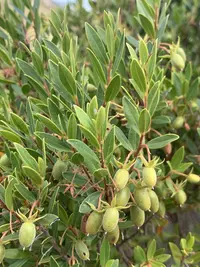
Fruit thinning strategy

Once young fruits reach marble size, thin clusters so that fruits are spaced 7–10 cm apart along the branch, which improves final fruit size, reduces limb breakage, and prevents biennial bearing.

Targeted wind support

In exposed sites, use low, flexible staking or soft guy-lines on young trunks and heavily fruiting limbs to prevent wind rock, which can damage roots and cause micro-cracks that invite disease.

Mulch management ring

Maintain a 5–8 cm deep ring of organic mulch that stops 10–15 cm short of the trunk flare to conserve moisture, cool roots, suppress weeds, and avoid bark rot at the base.

Routine pest scouting

Inspect undersides of leaves and young shoots every 1–2 weeks during active growth, looking for scale insects, mites, or leaf spots, and address issues early with targeted treatments as part of consistent Diospyros glabra plant care.

Everything About Blueberry Bush

Common Pests and Diseases

Leaf spot

This disease causes small brown to black lesions on leaves that may merge into larger dead patches, sometimes with a yellow halo. Symptoms include premature leaf drop on stressed or shaded trees.

Solution

Prune to open the canopy and improve air movement, then remove and discard fallen and heavily spotted leaves to reduce spores. In humid regions, avoid overhead watering, water at soil level in the morning, and consider a labeled copper-based fungicide during wet periods if the problem recurs severely.

Anthracnose

This disease produces irregular dark, sunken spots along leaf veins and young shoots, which can lead to distorted new growth and twig dieback. Symptoms include more severe damage during cool, wet spring weather.

Solution

Collect and dispose of infected leaves and twigs and thin crowded branches to reduce humidity within the canopy. For repeated yearly infections, start a preventive fungicide program with a suitable broad-spectrum product at budbreak and repeat according to label directions during prolonged wet weather.

Scale insects

These insects appear as small, immobile bumps on stems and leaf undersides and feed on sap, causing yellowing, leaf drop, and general decline. This pest often excretes sticky honeydew that can support black sooty mold on leaves and nearby surfaces.

Solution

Prune out heavily infested twigs and wipe accessible stems with a cloth dipped in diluted insecticidal soap or horticultural oil. For larger trees, apply a horticultural oil spray to thoroughly coat branches during mild weather, repeating as needed according to label instructions and monitoring for natural predators such as lady beetles.

Mealybugs

These insects form white, cottony clusters in leaf axils, on young stems, and around roots in containers, where they suck sap and weaken the plant. This pest can stunt new growth and promote sticky honeydew and sooty mold.

Solution

Isolate affected plants, then dab visible clusters with cotton swabs dipped in isopropyl alcohol and follow with regular applications of insecticidal soap or light horticultural oil, ensuring good coverage of hidden areas. For persistent infestations, combine repeated treatments with improved plant vigor through correct watering, balanced fertilization, and reduced overcrowding around the plant.

Sooty mold

This disease is a black, powdery fungal growth that develops on leaves and stems where honeydew from sap-feeding insects has accumulated, reducing light reaching the leaf surface. Symptoms include dull, blackened foliage that may look dirty but the tissue underneath is usually still alive.

Solution

Control honeydew-producing insects such as scale or mealybugs first to stop new mold from forming, then gently wash affected leaves with lukewarm water and a mild soap solution to remove the fungal layer. Improve airflow and light penetration by thinning dense branches so foliage dries faster and remains less favorable for mold growth while following standard Diospyros glabra plant care guidelines.

Interesting Facts

Evergreen tropical ebony

This species is an evergreen tree native to Southeast Asia and is one of the true ebony-producing Diospyros species, valued locally for its dense, dark heartwood. Its wood is typically used on a small, regional scale rather than in large international timber trade.

Small, pale flowers

It produces small, pale, bell-shaped flowers that are often overlooked in the canopy but are important for local insect pollinators. Like many Diospyros species, it is usually functionally dioecious, meaning male and female flowers occur on separate trees.

FAQs about Blueberry Bush

Yellowing leaves often indicate nutrient imbalance, especially iron deficiency, or unsuitable soil pH. Poor drainage, compacted soil, or recent overwatering also cause chlorosis. Check pH, improve aeration, and adjust fertilization rather than adding random supplements.

Grow Healthy Plants with Botan Care

Keep your plants happy and healthy with plant identification, disease detection, and easy care guidance.


Botan plant care app — identify plants on mobile

Explore More Plants