

Polka Dot Plant (Hypoestes phyllostachya) Light Needs

Polka Dot Plant grows best in bright, indirect light with brief gentle morning sun tolerated.

Light Preference

Bright Indirect Light

Hypoestes phyllostachya Light Requirements

In its native Madagascar habitat, Hypoestes phyllostachya grows in warm, humid areas where nearby vegetation softens the sun. It is often exposed to filtered light, broken shade, and occasional mild sun rather than open, all-day sun.

This pattern explains why cultivated plants keep better color and compact growth in bright conditions without harsh direct rays. Preferred light is bright, indirect or filtered light.

  • Ideal exposure:

    Polka Dot Plant needs about 6–8 hours of bright, indirect or filtered light daily, including up to 2–3 hours of gentle direct morning sun.

  • Direct sun:

    Soft morning sun is tolerated, but hot midday or afternoon rays can scorch the thin leaves.

  • Lower light:

    It can survive in shade or lower indoor light, but growth often stretches and leaf color fades.

  • Seasonal changes:

    Winter light is weaker, so a brighter position may be needed to maintain compact growth.

Indoors, the right window gives bright light without prolonged hot sun.

NConditional
North-facing window:

Use only a very bright, unobstructed north window, and keep the plant close to the glass.

EBest
East-facing window:

Place it within 1–3 ft of the window for bright morning light and softer afternoon conditions.

SConditional
South-facing window:

Set it 3–6 ft back or behind a sheer curtain so direct midday rays do not hit the leaves.

WConditional
West-facing window:

Use a sheer curtain or place it 4–6 ft from the glass to avoid hot afternoon sun.

Adjust the position if leaf color fades, stems lean, or sun marks appear.

Strong direct sun usually shows on exposed leaves first.

Bleached patches:

Pink, red, or green areas may look washed out after sudden bright exposure.

Tan scorch spots:

Dry pale-tan marks can appear where leaves faced a hot window or afternoon sun.

Flattened color:

The patterned foliage may lose contrast when light is intense enough to stress the leaf surface.

Wilting in sun:

Leaves may droop during direct sun even when the potting mix is not dry.

Move Hypoestes phyllostachya out of harsh rays and keep it in bright filtered light. A sheer curtain or a few feet of distance from the glass usually reduces stress.

Low light often affects shape and color before severe decline appears.

  • Stretched stems:

    New growth may become longer and looser as the plant reaches toward the brightest side.

  • Wider spacing:

    Leaves can sit farther apart on the stems, giving the plant a thinner look.

  • Weaker spotting:

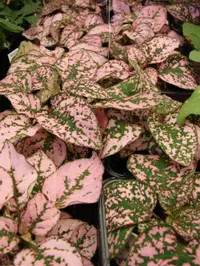
    The pink, white, or red markings may fade when light is too dim for strong coloration.

  • Small new leaves:

    Fresh growth may come in smaller during the active season if light stays weak.

Move Hypoestes phyllostachya to brighter indirect light, making the change over several days. Rotate the pot after the move so new growth develops more evenly.

If ideal light is not available, choose the brightest spot that avoids hot direct rays. Place the plant close to the light source, then filter harsh sun with a sheer curtain.

Rotate the pot a quarter turn every week to reduce leaning and keep the spotted foliage evenly colored.

A dim corner is a poor setup because it usually causes stretching and faded markings.

Get Personalized Care Plan

Scan your plant to receive care tips personalized for your specific plant

FAQ

The best light for Polka Dot Plant is bright, indirect light for about 6–8 hours daily. Gentle morning sun is fine, but harsh afternoon sun is more likely to cause scorch.

Everything About Polka Dot Plant

More Plant Light Guides

Get the Botan App

Discover how to care for your plants with Botan.

Botan app identifying a plant with a phone camera
Best Fertilizer for Grass in Summer: How to Choose the Right One

6 min read · 18 Aug 2026

Best Fertilizer for Grass in Summer: How to Choose the Right One

The right fertilizer in summer can make a lawn thrive. The wrong one can damage it. Here, you’ll learn the best NPK ratios by grass type, when and how to apply your formula, and how to recognize the signs of over- or under-fertilizing.

Plant Care
Best Fertilizer for Grass in Summer: How to Choose the Right One
Banana Peel Water for Plants: 5 Things to Know Before Trying It

5 min read · 9 Jul 2026

Banana Peel Water for Plants: 5 Things to Know Before Trying It

Banana water can provide potassium and some nutrients that may support plant growth, but it is not a universal fix. Use it carefully and only when the plant actually shows signs of nutrient deficiency rather than as a routine treatment.

Plant Care
Banana Peel Water for Plants: 5 Things to Know Before Trying It
Rice Water for Plants – Which Plants Love It and How to Make It

8 min read · 14 Jul 2026

Rice Water for Plants – Which Plants Love It and How to Make It

Rice water can be an ideal DIY solution for orchids, roses, or fruiting plants. It supports growth, leaf count, and height. We’ll share how to make and apply it correctly for your plant.

Plant Care
Rice Water for Plants – Which Plants Love It and How to Make It