Install sturdy support
Provide a strong trellis, fence, or wire system before planting so the vines can be tied in loosely as they grow, which prevents stem breakage and tangled, unmanageable growth later.

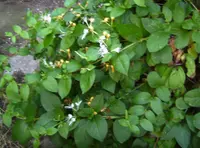
Japanese honeysuckle, Lonicera japonica, is a vigorous woody vine known for its fragrant, tubular flowers and fast, twining growth. It is often grown on fences, trellises, and arbors.
This species is native to East Asia but is now widespread in many temperate regions, including parts of North America, where it can naturalize easily. Its evergreen or semi-evergreen foliage in mild climates and long flowering season make it attractive but sometimes invasive outdoors.
The plant tolerates a range of soils and light levels, grows quickly, and recovers well from pruning, which makes it generally easy to maintain. Understanding how to care for Japanese honeysuckle starts with recognizing its vigorous growth and need for regular control in suitable climates.

Care Difficulty
Easy Care

Light Preference
Full Sun

Water Requirements
Moderate Water

Temperature Preference
Cold Hardy

Hardiness Zone
4–10

Soil Texture
Sandy, Loamy, Clay

Soil pH
Acidic (5.5–6.5), Slightly acidic (6.5–7.0)

Soil Drainage
Moist but well-drained

Fertilization
Minimal (feed rarely)
Scan your plant to receive care tips personalized for your specific plant
Available on iOS and Android
This vigorous climber prefers ample direct sun but tolerates some shade, with bloom quality strongly linked to light levels.
Watering should keep soil steadily moist but never saturated, especially during the first 1–2 growing seasons.
This hardy vine adapts to a wide temperature range but performs best in moderate conditions during the growing season.
Humidity is rarely a limiting factor for Lonicera japonica in typical outdoor conditions.
Lonicera japonica grows reliably in a range of mineral soils if they are not compacted or waterlogged.
This species can be grown in containers if the pot is large and stable enough to support its vigorous climbing habit.
This vigorous climber usually needs only light feeding in most garden soils.
Pruning helps manage Lonicera japonica growth, maintain shape, and support flowering.
This vine is more often transplanted in the ground than kept as a long-term container plant.
Lonicera japonica is commonly propagated to expand coverage or replace older vines.
This species is generally cold hardy in much of its range and needs only modest winter care outdoors.

Plant Health Check
Not sure what's wrong with your plant? Check your plant's health inside the app.
The flowers release much stronger fragrance and nectar at night, an adaptation that targets nocturnal pollinators such as moths rather than daytime insects.
This species combines twining stems with rapid growth, allowing it to blanket shrubs and trees in dense layers that can reduce light penetration and suppress native vegetation in many regions.
The black, berry-like fruits are eaten by birds, which spread the seeds over long distances, helping the plant escape gardens and establish persistent wild populations far from where it was planted.

In parts of eastern North America, this species has been documented forming near-monoculture ground layers in forests, where its dense mats alter soil temperature and moisture patterns and can reduce tree seedling recruitment over time.
Poor flowering is often linked to heavy pruning at the wrong time, excess shade, or overfertilizing with high-nitrogen products. Allow mature stems to remain, provide enough light, and use balanced or low-nitrogen fertilizer to support bud formation.
Keep your plants happy and healthy with plant identification, disease detection, and easy care guidance.