



Cactus (Parodia scopa) Light Needs

Cactus grows best in full sun to very bright light, with several hours of direct sun each day.

Light Preference

Full Sun

Parodia scopa Light Requirements

Parodia scopa is native to sunny, open rocky grasslands and slopes in parts of Uruguay and southern Brazil. In these exposed habitats, it receives strong light, moving air, and periods of direct sun rather than deep shade.

Cultivated plants grow most naturally when light is bright for much of the day and direct sun is introduced gradually. Preferred light is full sun to very bright partial sun.

  • Ideal exposure:

    Cactus needs about 6–8 hours of full sun or very bright light daily, including 4–6 hours of direct sun when acclimated.

  • Direct sun:

    Strong direct sun is tolerated well, but new or indoor-grown plants should be introduced to it gradually.

  • Lower light:

    Partial sun is tolerated, but long-term dim conditions usually lead to stretched, weaker growth.

  • Afternoon heat:

    Hot afternoon sun behind glass can be intense, so watch for pale scarring after any sudden move.

Indoors, this plant needs the brightest available spot and some direct sun to keep compact growth.

NPoor
North-facing window:

A north-facing window is usually too dim unless supplemented by a strong grow light close enough to maintain compact growth.

ESuitable
East-facing window:

An east-facing window is suitable if it gives 3–5 hours of direct morning sun and bright light for the rest of the day.

SBest
South-facing window:

A south-facing window is usually best, especially within 1–2 ft of the glass where it receives long, bright exposure.

WSuitable
West-facing window:

A west-facing window is suitable when the plant is acclimated; filter or set it back 1–2 ft if afternoon sun overheats the stem.

Increase exposure gradually after purchase or after winter to reduce surface scorch.

Strong sun usually causes damage after a sudden increase in exposure.

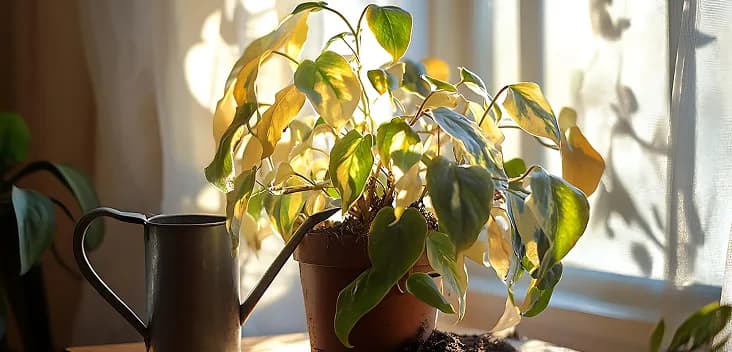
Bleached patches:

Pale cream or whitish areas on the sun-facing side can be sunburn, especially after moving Parodia scopa outdoors or nearer glass.

Tan scarring:

Burned spots may dry into corky tan scars that do not turn green again.

Red stress color:

A reddish or bronze cast can appear when light and heat are stronger than the plant was used to.

Surface puckering:

The ribs may look tight or slightly puckered on the exposed side during intense heat and sun.

Move the plant out of harsh afternoon sun and give bright filtered light for recovery. Reintroduce direct sun over 1–2 weeks.

Low light changes the shape before the plant fails.

  • Narrow new growth:

    New growth may become thinner or taller than the older body, a stretched pattern called etiolation.

  • Leaning stem:

    The stem may angle toward the strongest light source instead of staying evenly upright.

  • Weak spines:

    New spine pads, called areoles, may produce shorter, softer-looking spines when light is too dim.

  • Few flowers:

    A mature plant may flower poorly if active-season light is consistently weak.

  • Slow active growth:

    During spring and summer, very little firm new growth can suggest that light is below this species' needs.

Move it to brighter sun gradually. Avoid an abrupt shift from shade to full sun, which can scorch the surface.

If ideal full sun is not available, choose the brightest area that provides at least 3–4 hours of direct morning sun. This is the best compromise for compact growth.

Rotate the pot a quarter turn every 1–2 weeks so the stem receives light evenly. Clean dusty glass to improve usable light.

A spot several feet from any direct sun is unsuitable because it usually produces stretched, weaker growth.

Get Personalized Care Plan

Scan your plant to receive care tips personalized for your specific plant

FAQ

The best light for Cactus is full sun to very bright light, with about 6–8 hours of exposure daily and several hours of direct sun.

More Plant Light Guides

Get the Botan App

Discover how to care for your plants with Botan.

Botan app identifying a plant with a phone camera
12 Best Landscaping Trees for Your Garden

8 min read · 6 Oct 2026

12 Best Landscaping Trees for Your Garden

Choosing the landscape tree depends on what your garden needs most. These 12 options include compact flowering specimens, colorful deciduous trees, shade varieties, and evergreens suitable for screening and year-round structure.

Plant Recommendations
12 Best Landscaping Trees for Your Garden
20 Funny Plant Names That Make You Laugh

8 min read · 16 Oct 2026

20 Funny Plant Names That Make You Laugh

Some plants carry names that sound like jokes. This guide explains the origins of 20 funny plant names. You will also see which of these plants you can grow at home.

Plant Recommendations
20 Funny Plant Names That Make You Laugh
15 Best Scary Halloween Plants and Fungi for a Spooky Garden

8 min read · 9 Oct 2026

15 Best Scary Halloween Plants and Fungi for a Spooky Garden

Want a garden that looks eerie in October? Here are 15 Halloween plants and fungi, from carnivorous traps to bleeding mushrooms. For each species, we cover its appearance, care requirements, and potential uses in your landscape.

Plant Recommendations
15 Best Scary Halloween Plants and Fungi for a Spooky Garden