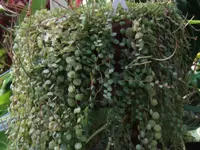



String of Turtles (Peperomia prostrata) Light Needs

String of Turtles grows best in bright, indirect light with brief gentle morning sun if introduced gradually.

Light Preference

Bright Indirect Light

Peperomia prostrata Light Requirements

String of Turtles grows naturally in humid tropical forests of Brazil, where trailing stems creep over shaded surfaces and receive broken light through the canopy. It is not adapted to exposed, all-day sun, but it can use brief soft sun when filtered by leaves or morning cloud cover.

In cultivation, this translates to bright light without harsh midday or afternoon rays. Preferred light is bright, indirect or filtered light.

  • Ideal exposure:

    Ideal exposure: String of Turtles needs about 6–8 hours of bright, indirect or filtered light daily, including up to 1–2 hours of gentle direct morning sun.

  • Direct sun:

    Harsh midday or afternoon sun can scorch the small, patterned leaves, especially through hot glass.

  • Lower light:

    It tolerates shade or medium light, but growth becomes thinner and leaf patterning may fade.

  • Best timing:

    Morning sun is safer than late-day sun because it is cooler and easier to control indoors.

Indoor placement is easiest near a bright window where direct sun is mild or filtered.

NConditional
North-facing window:

Use the brightest north window available, close to the glass, and watch for stretching.

EBest
East-facing window:

Place it within 1–3 ft of the glass for bright morning light and gentle direct sun.

SSuitable
South-facing window:

Keep it 3–6 ft back or behind a sheer curtain so midday sun does not hit the leaves directly.

WConditional
West-facing window:

Use a sheer curtain or place it several feet back because afternoon sun can overheat the trailing stems.

A spot with clear sky view but no hot afternoon rays usually gives the most balanced growth.

Excess light usually shows first on the most exposed vines.

Bleached patterning:

Leaf markings may look pale or washed out after strong sun, especially on window-facing strands.

Sunken scorch spots:

Small leaves can develop tan, dry patches where direct rays hit the surface.

Curling leaves:

Leaves may cup or curl slightly when light and heat are too intense at the glass.

Faded top growth:

Upper vines may look dull while shaded inner growth stays greener, suggesting uneven sun stress.

Move Peperomia prostrata out of direct afternoon sun right away. Use a sheer curtain or increase the distance from the window before exposing it to brighter light again.

Low light usually changes the shape of the trailing growth before it causes obvious decline. Check new vines first.

  • Long gaps:

    Stems may stretch with wider spaces between leaves as they reach toward the light source.

  • Leaning growth:

    Vines may grow strongly on the window side while the back of the pot stays sparse.

  • Fainter markings:

    The turtle-shell pattern can look less defined when light stays too dim for steady growth.

  • Smaller leaves:

    New leaves may emerge smaller than older ones during the active growing season.

Move the plant gradually into brighter indirect light. Avoid shifting it from shade straight into direct sun, which can stress the leaves.

When ideal light is not available, choose the brightest spot that avoids hot direct rays; steady filtered light is a better compromise than deep shade.

Rotate the pot every 1–2 weeks so all trailing stems receive similar exposure and grow evenly.

Avoid placing it on a dark shelf across the room because the compact leaves usually stretch and lose definition there.

Get Personalized Care Plan

Scan your plant to receive care tips personalized for your specific plant

FAQ

The best light for String of Turtles is bright, indirect or filtered light for most of the day. A short period of soft morning sun is usually tolerated.

Everything About String of Turtles

More Plant Light Guides

Get the Botan App

Discover how to care for your plants with Botan.

Botan app identifying a plant with a phone camera
Top 15 Fast-Growing Trees For Your Garden

13 min read · 28 Jul 2026

Top 15 Fast-Growing Trees For Your Garden

Learn which of the 15 fastest-growing trees will suit your area. We’ll share detailed information on each: growth rate, mature spread, key tree demands, and main vulnerabilities. Read on and make the best choice possible.

Plant Recommendations
Top 15 Fast-Growing Trees For Your Garden
Best Time to Mow Lawn – A Complete Guide

5 min read · 10 Aug 2026

Best Time to Mow Lawn – A Complete Guide

Explore when to mow your lawn for its health and a pleasant green color. Find out the best time for this task during the summer heat, and follow practical tips for correctly cutting the grass, and learn common mistakes to avoid.

Plant Care
Best Time to Mow Lawn – A Complete Guide
How Fast Does Bamboo Grow Per Day, Month, and Year

10 min read · 7 Jul 2026

How Fast Does Bamboo Grow Per Day, Month, and Year

Bamboo grows extremely fast: some species can reach 5-6 m in just 3-4 months under the right conditions. This guide explains how much bamboo can grow per day, week, and year, and what affects its growth rate.

Plant Recommendations
How Fast Does Bamboo Grow Per Day, Month, and Year