Time field operations
Schedule mowing, grazing, or traffic on stands when foliage is dry to reduce fungal disease spread and physical damage to the stems.

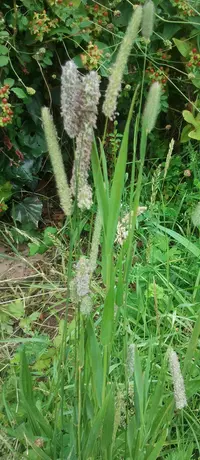
Timothy, Phleum pratense, is a cool-season perennial grass widely grown as hay and pasture, especially for horses and small animals. It forms dense clumps with upright, cylindrical flower spikes that give it a characteristic brush-like look.
This grass is native to Europe and western Asia but is now common in temperate regions across North America. It thrives in open fields and meadows rather than shaded areas.
Timothy prefers cool conditions, moist but not waterlogged soil, and full sun exposure. It is generally easy to maintain once established, so basic knowledge of how to care for timothy is usually enough for reliable growth.

Care Difficulty
Easy Care

Light Preference
Full Sun

Water Requirements
Regular Water

Temperature Preference
Cold Hardy

Hardiness Zone
3–7

Soil Texture
Sandy, Loamy, Clay

Soil pH
Acidic (5.5–6.5), Slightly acidic (6.5–7.0)

Soil Drainage
Moist but well-drained

Fertilization
Minimal (feed rarely)
Scan your plant to receive care tips personalized for your specific plant
Available on iOS and Android
Phleum pratense grows best in open, bright conditions that support dense, upright foliage.
Phleum pratense prefers consistently moist, not saturated, soil that allows air around the roots.
This cool-season grass grows best in moderate temperatures and slows during heat or extreme cold.
Humidity is rarely critical for timothy, which adapts well to typical outdoor air conditions.
Phleum pratense performs best in cool, well-structured mineral soil that drains freely yet holds consistent moisture.
This grass can be grown in containers, but it is less durable than in open ground and needs careful moisture management.
Phleum pratense benefits from moderate feeding on productive pasture or in cut-flower stands.
Phleum pratense needs only simple cutting management rather than detailed pruning.
Timothy is mainly field grown, so care focuses on transplanting or establishing new swards rather than container repotting.
Phleum pratense is most commonly propagated from seed for pasture, forage, or habitat plantings.
Phleum pratense is cold hardy in most temperate climates and generally needs little dedicated winter care.

Plant Health Check
Not sure what's wrong with your plant? Check your plant's health inside the app.
Timothy is one of the most important cool-season hay grasses for horses and small livestock, valued for its relatively high fiber content and moderate protein that supports digestive health without excessive energy.
This grass is strongly adapted to cool, moist climates and overwinters as a perennial, surviving freezing temperatures and resuming active growth in spring from its basal stem and root system.
The species is easily recognized by its dense, cylindrical flower spike, which consists of many tightly packed spikelets that shed wind-dispersed pollen and seed.

The common name timothy comes from an American farmer, Timothy Hanson, who promoted the grass as a valuable forage crop in the mid-18th century along the Atlantic coast, leading to its widespread cultivation and lasting agricultural importance.
This grass is widely used as forage and hay for horses, rabbits, guinea pigs, and other grazing animals. It is not typically eaten by humans, but casual contact or small accidental ingestion is generally considered safe.
Keep your plants happy and healthy with plant identification, disease detection, and easy care guidance.