Controlled self‑seeding
If you want a small colony but not a full infestation, allow a few healthy plants to set seed, then cut and bag the rest before they detach and tumble so you keep seed spread within a defined strip or bed.

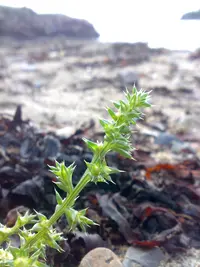
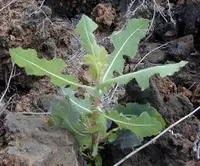
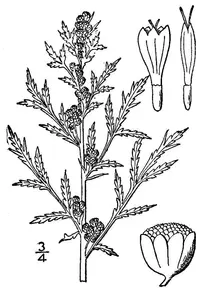
Russian thistle (Salsola kali) is an annual, bushy plant best known as the classic tumbleweed of dry, open landscapes. It forms a rounded, branching mound that later breaks off at the base and rolls with the wind, scattering seeds over large areas.
This species is native to Eurasia but is now widespread in arid and semi-arid regions of North America, where it often behaves as a weed. It tolerates poor, sandy, or salty soils and dry conditions, which makes it easy to establish but hard to control.
Those who choose to care for Russian thistle should note its spiny foliage, fast growth, and strong self-seeding habit, which can quickly lead to unwanted spread.

Care Difficulty
Easy Care

Light Preference
Full Sun

Water Requirements
Low Water

Temperature Preference
Warm Climate

Hardiness Zone
4–9

Soil Texture
Sandy, Loamy, Rocky

Soil pH
Neutral (7.0), Slightly alkaline (7.0–7.5)

Soil Drainage
Well-drained

Fertilization
Minimal (feed rarely)
Scan your plant to receive care tips personalized for your specific plant
Available on iOS and Android
This sun-loving annual thrives in open, exposed sites typical of dry rangelands and disturbed soils.
This highly drought-tolerant species is adapted to very dry, well-drained soils.
This annual is built for wide temperature swings typical of open, arid landscapes.
Humidity is rarely a concern for Salsola kali, which is adapted to very dry air.
Salsola kali prefers very lean, fast-draining, often sandy soil that mimics coastal or disturbed dry sites.
This species can be grown in containers but only with very sharp drainage and a dry, exposed position.
Salsola kali grows well on poor, dry soils and usually needs no added fertilizer in the ground.
Pruning Salsola kali focuses on safety, tidiness, and limiting unwanted spread rather than long-term shaping.
This species is rarely grown in pots; care centers on transplanting young plants outdoors with minimal root disturbance.
Most Salsola kali populations spread by abundant seed, so deliberate propagation is usually unnecessary and often discouraged.
Salsola kali is typically an annual that dies after setting seed, so established outdoor plants need no winter care.

Plant Health Check
Not sure what's wrong with your plant? Check your plant's health inside the app.
Salsola kali is one of the main Eurasian species responsible for the classic rolling tumbleweed form, where the whole dry plant breaks off at the base and is driven by wind, scattering seeds over large distances in arid landscapes.
This species is a halophyte, meaning it can grow in soils with high salt content, and often colonizes coastal dunes, salt-affected fields, and roadsides that many other plants cannot tolerate.
Introduced from Eurasia into North America, Salsola kali has become an agricultural and rangeland weed, competing with crops and native vegetation and sometimes increasing fire risk when large dry plants accumulate.

In several arid and semi-arid regions, dense growths of Salsola kali have been studied as an early-stage colonizer of disturbed, nutrient-poor soils, where its decaying biomass can gradually add organic matter and alter soil conditions enough for other plant species to establish afterward.
Browning leaves usually mean age, drought stress, or salt buildup in very dry soils. This species naturally dries and browns as it matures. Check that soil drains well, avoid overwatering, and remove dead material to reduce fire risk.
Keep your plants happy and healthy with plant identification, disease detection, and easy care guidance.