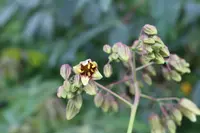
Use sturdy staking
Install a strong stake or cage at planting time and tie stems loosely with soft ties as they grow, so the heavy fruits stay off the soil and stems do not snap in wind or under crop weight.

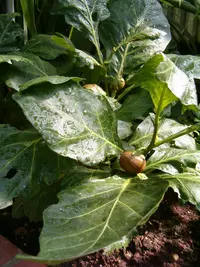
Solanum macrocarpon, often called African eggplant or Gboma eggplant, is a soft-stemmed perennial usually grown as an annual food crop. It forms a bushy plant with large, sometimes prickly leaves and rounded, glossy fruits that resemble small eggplants.
This species is native to tropical Africa but is now cultivated in many warm regions for its edible leaves and fruits. It tends to be fairly robust but can be sensitive to cold and pests, which slightly complicates how to care for nightshade.
It generally prefers warm conditions, regular moisture, and well-drained, moderately fertile soil, making it manageable for growers who can provide stable warmth and consistent watering.

Care Difficulty
Moderate Care

Light Preference
Full Sun

Water Requirements
Regular Water

Temperature Preference
Tropical / Frost Sensitive

Hardiness Zone
10–12

Soil Texture
Loamy, Sandy, Organic-rich

Soil pH
Acidic (5.5–6.5), Slightly acidic (6.5–7.0)

Soil Drainage
Moist but well-drained

Fertilization
Moderate (every 2–4 weeks)
Scan your plant to receive care tips personalized for your specific plant
Available on iOS and Android
Solanum macrocarpon needs strong light to produce sturdy growth and good fruit set.
This species prefers evenly moist, well-drained soil without long dry spells or standing water.
This warm-season crop performs best in stable, frost-free conditions.
This species prefers moderate humidity but adapts to many household conditions when watered correctly.
This plant prefers deep, loose, well-drained soil that still retains steady moisture.
This species is suitable for large, sturdy containers outdoors.
Solanum macrocarpon responds well to moderate, consistent nutrition during the warm growing season.
Pruning Solanum macrocarpon helps manage size, increase branching, and support healthy fruiting.
This species grows fast in warm conditions and benefits from timely transplanting or pot-size increases.
Solanum macrocarpon is most commonly propagated from seed for uniform, vigorous plants.
This warm-season plant is frost-sensitive and needs protection in regions with cold winters.

Plant Health Check
Not sure what's wrong with your plant? Check your plant's health inside the app.
This species is widely cultivated in West and Central Africa as the African garden egg, with both its small, rounded fruits and its young leaves eaten as vegetables in many local cuisines.
Its fruits can be white, green, striped, yellow, or purple depending on the cultivar, and some traditional selections are grown more for ornamental and cultural value than for flavor.
In addition to the fruit, the tender leaves are commonly harvested and cooked as a leafy green, making the plant a dual‑purpose crop in smallholder farming systems.

In several West African cultures, especially in Ghana and Nigeria, the fruit of this species is used in social rituals and ceremonies, such as being offered to guests to symbolize hospitality and goodwill.
The fruit and leaves are edible only from properly identified, cultivated forms and must be cooked, as they contain irritating glycoalkaloids when raw. Unripe fruits and foliage should not be eaten in large amounts, especially by children or sensitive individuals.
Keep your plants happy and healthy with plant identification, disease detection, and easy care guidance.