poison sumac Care (Toxicodendron vernix)

Also known as: thunderwood, Poison Shumake, White shoe-make
poison sumac

About poison sumac

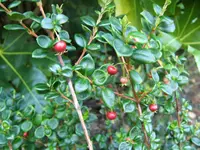
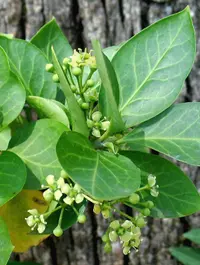
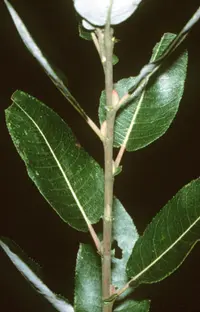
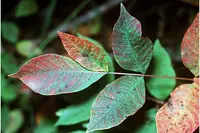
Poison sumac, Toxicodendron vernix, is a woody shrub or small tree best known for causing skin irritation through its oily sap. It typically grows 2–8 m tall with smooth gray bark and feather-like leaves that turn bright red or orange in fall.

This species is native to wet habitats such as swamps, bogs, and wet woods across eastern North America. It is not recommended for home landscapes, so most people do not need to learn how to care for poison sumac.

In the wild, it prefers consistently moist, acidic, poorly drained soils and full sun to partial shade. It spreads by seed and root suckers, which can make it persistent where established.

Main Plant Requirements

Care Difficulty

Moderate Care

Light Preference

Full Sun

Water Requirements

Aquatic

Temperature Preference

Cold Hardy

Hardiness Zone

3–8

Soil Texture

Loamy, Silty, Organic-rich

Soil pH

Strongly acidic (4.5–5.5), Acidic (5.5–6.5)

Soil Drainage

Waterlogged tolerant

Fertilization

Minimal (feed rarely)

Get Personalized Care Plan

Scan your plant to receive care tips personalized for your specific plant

Available on iOS and Android

How to Care for the poison sumac

This wetland shrub prefers bright outdoor exposure with some protection from extreme afternoon sun.

  • Provide 4–6 hours of direct morning sun with light afternoon shade; open woodland edges and bog margins suit poison sumac well.
  • Tolerates partial shade (2–4 hours direct sun) but foliage may be thinner and fall color less intense in deeper shade.
  • Avoid all‑day harsh sun in dry, exposed sites, which can scorch leaves, and watch for shading changes as nearby trees leaf out seasonally.

This species naturally grows in saturated, poorly drained soils and prefers consistently moist conditions.

  • In the ground, soil should stay moist to wet year‑round; avoid letting the top layer dry out beyond 1–2 cm, especially in sandy or peat soils.
  • Toxicodendron vernix handles brief standing water but declines in dry upland sites, where wilting, dull foliage, and leaf drop signal chronic drought stress.
  • Yellowing leaves, dieback of new shoots, or sour‑smelling, blackened roots indicate prolonged stagnant water without oxygen in compacted, non‑organic soils.

This shrub is cold‑hardy but grows best in moderate temperate climates with distinct seasons.

  • Active growth is strongest around 65–80°F (18–27°C), with good vigor and leaf development through spring and early summer.
  • Mature plants tolerate winter lows near -20°F (-29°C); repeated freeze–thaw around the root zone can still damage young plants.
  • Heat up to 90–95°F (32–35°C) is tolerated if soil stays moist; prolonged hot, dry wind can scorch leaf edges and slow growth.

This wetland shrub prefers consistently high humidity similar to swamp edge conditions.

  • Aim for 60–90% humidity, as poison sumac naturally grows in saturated, foggy, or marshy air conditions.
  • Dry air can slow growth and cause marginal leaf browning and premature leaf drop, especially in hot, windy sites.
  • Increase local humidity outdoors by positioning near ponds or boggy areas or by using dense companion planting to reduce wind exposure.

This species is adapted to saturated, oxygen-poor soils and is not suited to typical garden beds.

  • Use fine-textured, organic-rich, mucky or clayey soil that holds water, such as a mix of 60% heavy clay or loam with 40% leaf mold or peat-type material.
  • Soil should stay wet to periodically flooded with very slow drainage, mimicking swamps or bog margins where Toxicodendron vernix naturally occurs.
  • Slightly acidic to strongly acidic conditions (roughly pH 4.5–6.0) support nutrient uptake and discourage competing upland plants.
  • Avoid sandy, fast-draining, alkaline, or frequently drying soils, and do not add coarse grit or perlite that would increase aeration and drainage.

This species is generally unsuitable for long-term container growing except as a short-term, controlled specimen for study or restoration projects.

  • Use a deep, heavy container that resists tipping when the shrub develops tall, uneven top growth and saturated soil weight.
  • Select a pond-style or non-draining outer container with an inner pot to maintain the constant waterlogged conditions this plant prefers.
  • Place the container in a secondary containment tray or lined pit to safely capture overflow and prevent uncontrolled spread into nearby soil.

Toxicodendron vernix usually thrives in natural, low-nutrient soils and needs little to no fertilization in the landscape.

  • For container-grown poison sumac, use a dilute balanced NPK fertilizer (such as 10-10-10) at 1/2 strength.
  • Feed only during active growth in spring–mid-summer, about every 6–8 weeks if growth is poor.
  • Stop feeding in late summer so new growth can harden before cold weather and dormancy.

Toxicodendron vernix needs minimal pruning and is usually shaped naturally.

  • Limit work to late winter or very early spring, before new growth starts.
  • Remove dead, storm-damaged, crossing, or crowded branches to maintain structure and safety.
  • Use clean, sharp bypass pruners or a pruning saw for thicker wood, making smooth cuts outside the branch collar.
  • Avoid heavy structural cuts, which can stimulate excessive, weakly attached new shoots.

This species is usually grown in the ground, so focus on careful transplanting rather than frequent repotting.

  • Move young plants in early spring or late fall, when growth is dormant and stress is lower.
  • Transplant if growth is stunted, roots circle the nursery pot, or the plant dries out very quickly.
  • Dig a wide root ball, keep roots shaded and moist, and replant at the same depth in moist, acidic soil.
  • Water thoroughly after planting, then keep soil evenly moist for the first season to support root recovery.

Propagation of Toxicodendron vernix is possible but less common outside specialized or restoration settings.

  • Collect ripe seeds in fall, then use cold stratification at 34–41°F for several months to break dormancy.
  • Sow stratified seeds in moist, acidic, well-drained medium and maintain cool, bright, outdoor conditions.
  • Take semi-hardwood cuttings in mid-summer, using rooting hormone and high humidity to encourage rooting.
  • Label and handle all material carefully due to the allergenic sap, and avoid unnecessary contact.

Established plants are cold hardy through typical temperate winters and need little specific winter care in the ground.

  • In colder regions, add 5–7 cm of mulch over the root zone to moderate soil temperature and moisture.
  • Avoid piling mulch directly against the stem to reduce rot risk.
  • For container-grown plants, move pots into an unheated garage or sheltered area to prevent root freeze-thaw damage.

Care Tips

Strategic siting

Plant in a low-traffic, clearly separated area and add discreet marker stakes or signage so people and pets do not brush against the foliage when growing poison sumac.

Dedicated tools

Use a specific set of pruners, loppers, and gloves only for this shrub, and clean them with soap and water followed by isopropyl alcohol after use to avoid spreading urushiol to other plants or surfaces.

Safe debris handling

Seal all pruned branches, leaves, and fallen fruit in heavy-duty trash bags and dispose through municipal waste; never burn or shred debris because the sap and smoke can cause severe reactions.

Access management

Maintain a clear, mowed or mulched buffer strip 1–2 m around the planting area so people can move nearby without accidental contact with stems or roots.

Wildlife buffer use

If used as a wildlife or privacy screen, position the plant behind a fence or dense non-irritant shrubs so birds benefit from cover and berries while people remain physically separated from contact-prone areas.

Everything About poison sumac

Common Pests and Diseases

Leaf spot fungi

This disease causes small brown to dark purple spots on leaves that may merge into larger blotches, sometimes leading to early leaf drop in wet seasons.

Solution

Remove and discard heavily spotted fallen leaves to reduce inoculum, avoid overhead irrigation near plantings, and maintain good spacing so foliage dries quickly after rain; in high-value conservation or landscape settings, a registered copper or chlorothalonil fungicide can be applied preventively during prolonged wet periods if leaf loss is severe and recurrent.

Rust fungi

This disease produces yellow to orange pustules or powdery spots on the undersides of leaves, occasionally leading to distortion or premature leaf drop.

Solution

Prune out and destroy heavily affected shoots if practical, remove and dispose of infected leaf litter in autumn, and avoid dense thickets in ornamental or managed settings so air can move freely through the canopy; fungicide use is rarely necessary and is usually reserved for nursery stock or research plantings following local label directions.

Leaf-chewing caterpillars

These insects feed on foliage, leaving irregular holes or partially eaten leaves, and can cause noticeable but usually temporary defoliation on young shrubs or saplings.

Solution

Handpick and destroy visible caterpillars on accessible plants, encourage local predators and birds by maintaining diverse nearby vegetation, and, if defoliation is heavy on valued specimens, use a targeted product based on Bacillus thuringiensis (Bt) applied only to actively feeding larvae according to label instructions.

Leaf beetles

These insects chew small to medium holes in leaves, sometimes skeletonizing the tissue between veins during population peaks.

Solution

Inspect plants regularly during the growing season and physically remove beetles from reachable branches, limit nearby weedy hosts that harbor large populations, and, if damage becomes extensive in nursery or restoration plantings, consider a narrow-spectrum insecticide or horticultural oil applied directly to feeding beetles while avoiding drift to non-target plants.

Scale insects

These pests appear as small, immobile bumps on stems or leaf petioles and may cause localized yellowing or reduced vigor when populations are high.

Solution

Prune out and dispose of heavily infested twigs, gently scrub reachable stems with a soft brush and water to dislodge scales, and, for persistent infestations, apply a dormant-season horticultural oil to smother overwintering stages, following timing and rates on the product label.

Interesting Facts

Specialized wetland habitat

This species is native to acidic peat bogs, swamps, and wet thickets, and in many regions it serves as a strong indicator that soils are both very wet and nutrient-poor.

Potent urushiol chemistry

Its sap contains high concentrations of urushiol, an oily compound that binds to skin proteins and can trigger delayed allergic contact dermatitis in most humans after even slight contact.

Wildlife food and cover

Although hazardous to people, its white, waxy berries and twig buds are eaten by some birds and mammals, and dense thickets provide shelter for wetland wildlife.

Botan icon

Did you know?

Toxicodendron vernix is so closely tied to saturated, acidic soils that in some US wetland classification systems, its consistent presence helps confirm jurisdictional wetland boundaries for regulatory and conservation work.

FAQs about poison sumac

All parts of this species contain an oily resin called urushiol, which triggers allergic skin reactions in most people and can irritate pets. Avoid direct contact, smoke from burning wood, and contaminated tools or clothing.

Grow Healthy Plants with Botan Care

Keep your plants happy and healthy with plant identification, disease detection, and easy care guidance.

Botan plant care app — identify plants on mobile

Explore More Plants