


Bird's nest fern (Asplenium australasicum) Light Needs

Bird's nest fern grows best in bright, indirect or filtered light with only gentle morning sun.

Light Preference

Bright Indirect Light

Asplenium australasicum Light Requirements

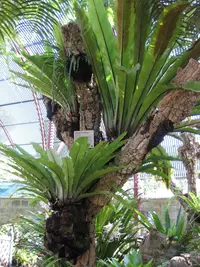
Bird's nest fern is native to humid tropical and subtropical forests of eastern Australia, where it often grows on trees or rocks beneath a broken canopy. In that position, the fronds receive bright filtered light, shade, and brief soft sun rather than open midday exposure.

This natural pattern explains why cultivated plants tolerate shade but grow best with steady brightness. Preferred light is bright, indirect or filtered light.

  • Ideal exposure:

    Bird's nest fern needs about 6–8 hours of bright, indirect or filtered light daily, including up to 1–2 hours of gentle direct morning sun.

  • Direct sun:

    Harsh midday or afternoon sun is risky and can scorch the broad fronds.

  • Lower light:

    Partial shade is tolerated, but growth is usually slower and new fronds may stay smaller.

  • Best timing:

    Morning sun is safer than late-day sun because it is cooler and less intense.

Indoors, place it where bright daylight reaches the fronds without hot, direct sun.

NConditional
North-facing window:

Use a bright, unobstructed north window; move it closer if growth becomes sparse in winter.

EBest
East-facing window:

Set it within 1–3 ft of the glass, where morning sun is soft and short.

SConditional
South-facing window:

Keep it 4–8 ft back or behind a sheer curtain so midday sun does not strike the fronds.

WConditional
West-facing window:

Use only with filtering and several feet of distance, because late afternoon sun can be hot.

A sheer curtain, nearby wall, or slight distance from the glass can turn strong exposure into usable filtered light.

Excess light usually shows first on the most exposed fronds.

Bleached patches:

Pale, washed areas may appear on fronds facing the window or open sky.

Tan scorch:

Dry tan spots can form where direct sun strikes the broad frond surface.

Crisp exposed tips:

Tips or upper edges may crisp when hot light hits them for several hours.

Tender new fronds:

New central fronds may mark quickly because they are thinner and less hardened.

Dull green color:

Asplenium australasicum may lose its fresh green tone after repeated harsh exposure.

Move the plant out of direct afternoon sun right away. Keep it in bright filtered light, and leave damaged tissue unless it becomes fully dry.

Low light problems develop gradually, especially during short winter days. Shade tolerance does not mean the plant can thrive far from daylight.

  • Leaning rosette:

    The plant may angle its fronds toward the nearest bright source instead of growing evenly.

  • Small new fronds:

    New fronds may emerge narrower or shorter than older healthy fronds.

  • Open center growth:

    The center can look looser because new growth lacks enough energy to fill out.

  • Slow active growth:

    During spring and summer, very little new growth can signal that light is too weak.

Move it to a brighter filtered position over several days. Avoid switching from deep shade straight into direct sun, which can cause scorch.

Use the brightest available spot that avoids harsh afternoon rays when ideal filtered light is not possible. Keep the plant close enough to daylight that the fronds cast a soft shadow for part of the day.

Rotate the pot a quarter turn every 1–2 weeks so the rosette develops evenly.

Avoid a dim interior corner with no clear daylight; shade tolerance does not replace steady brightness.

Get Personalized Care Plan

Scan your plant to receive care tips personalized for your specific plant

FAQ

The best light for Bird's nest fern is bright, indirect or filtered light for most of the day. A little soft morning sun is fine, but harsh direct sun can scorch the fronds.

Everything About Bird's nest fern

More Plant Light Guides

Get the Botan App

Discover how to care for your plants with Botan.

Botan app identifying a plant with a phone camera
Plants That Repel Mosquitoes – 10 Effective Choices

8 min read · 6 Jul 2026

Plants That Repel Mosquitoes – 10 Effective Choices

Plants that repel mosquitoes can help mask human scent naturally and make outdoor spaces more comfortable. Explore the most effective options, their benefits and drawbacks, and choose the right plant for your space.

Plant Recommendations
Plants That Repel Mosquitoes – 10 Effective Choices
What Plants Don't Like Epsom Salt?

11 min read · 29 Jul 2026

What Plants Don't Like Epsom Salt?

Learn which plants can be seriously damaged by Epsom salt and which will thrive on it. We’ll explain when and how to use it properly, provide tips for indoor & outdoor plants — read on and enjoy a healthy garden.

Plant Care
What Plants Don't Like Epsom Salt?
How To Revive a Dying Plant: 6 Steps To Bring A Plant Back To Life

6 min read · 1 Sept 2026

How To Revive a Dying Plant: 6 Steps To Bring A Plant Back To Life

Drooping leaves and brown tips don't always mean the end, and a weakened plant can often recover with a little help. These six simple steps will help you revive a dying plant and restore its health.

Plant Care
How To Revive a Dying Plant: 6 Steps To Bring A Plant Back To Life