


Polka Dot Begonia (Begonia maculata) Light Needs

Polka Dot Begonia grows best in bright, indirect light with brief, gentle morning sun if acclimated.

Light Preference

Bright Indirect Light

Begonia maculata Light Requirements

Begonia maculata is native to southeastern Brazil’s Atlantic Forest, where it grows in warm, humid forest understory and edge habitats. Light is usually broken by taller vegetation rather than open all-day sun.

In cultivation, this explains its need for brightness without harsh exposure. It can use soft seasonal or morning sun, but strong afternoon sun is more stressful. Preferred light is bright, indirect or filtered light.

  • Ideal exposure:

    Ideal exposure: Polka Dot Begonia needs about 6–8 hours of bright indirect or filtered light daily, including up to 1–2 hours of gentle direct morning sun.

  • Direct sun limit:

    Direct midday or afternoon sun can scorch the thin leaves, especially through hot glass.

  • Lower-light tolerance:

    Shade is tolerated for short periods, but growth may slow and leaf contrast may fade.

  • Best direct sun:

    If direct rays are used, choose early morning or late winter sun and increase exposure gradually.

Indoors, place it where the leaves receive steady brightness without long periods of hot direct sun.

NConditional
North-facing window:

Use a bright, unobstructed north-facing window, and move it closer to the glass if growth becomes stretched.

EBest
East-facing window:

Place it near an east-facing window where it receives bright morning light and protection from stronger afternoon sun.

SConditional
South-facing window:

Keep it several feet back from a south-facing window or filter the light with a sheer curtain.

WConditional
West-facing window:

Use a west-facing window only with filtering or distance, since late-day sun can be too intense.

Adjust placement if the brightest leaves show scorch or the stems begin stretching toward the light.

Excess light usually shows first on the most exposed leaves.

Bleached patches:

Leaves facing the window may develop pale tan areas where direct sun hits most strongly.

Crisp spots:

Sun-exposed sections can turn dry and papery, especially after sudden exposure to stronger rays.

Faded color:

The leaf surface may look washed out rather than richly green and spotted.

Daytime droop:

Leaves may sag during the brightest hours even when the rest of the plant looks normal later.

Move the plant out of direct afternoon sun right away. Use filtered light or increase distance from the window before placing it back in a brighter position.

Weak light often changes the growth habit before it causes obvious leaf damage.

  • Stretched stems:

    New growth may become longer between leaves as stems search for stronger light.

  • Leaning growth:

    Stems may angle strongly toward the nearest window instead of growing evenly.

  • Smaller leaves:

    New leaves may develop smaller than normal when light is not strong enough to support full growth.

  • Softer pattern:

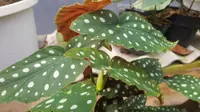
    The silver spots and red leaf backs may look less distinct in weak light.

  • Fewer flowers:

    Flowering may be reduced or absent when the plant lacks enough bright exposure.

Move it to a brighter filtered position, making the change gradually over several days. Avoid moving it straight from shade into strong direct sun.

When ideal light is not available, choose the brightest spot that does not receive hot afternoon rays. Move the pot 1–3 ft back from intense glass or add a sheer curtain if leaves face direct sun.

Rotate the pot a quarter turn every 1–2 weeks to keep stems balanced. Avoid a dim corner several feet from any window, because it will not meet Begonia maculata light needs.

Get Personalized Care Plan

Scan your plant to receive care tips personalized for your specific plant

FAQ

The best light for Polka Dot Begonia is bright, indirect or filtered light for about 6–8 hours daily. Gentle morning sun can help, but hot direct sun is risky.

Everything About Polka Dot Begonia

More Plant Light Guides

Get the Botan App

Discover how to care for your plants with Botan.

Botan app identifying a plant with a phone camera
Best Fertilizer for Grass in Summer: How to Choose the Right One

6 min read · 18 Aug 2026

Best Fertilizer for Grass in Summer: How to Choose the Right One

The right fertilizer in summer can make a lawn thrive. The wrong one can damage it. Here, you’ll learn the best NPK ratios by grass type, when and how to apply your formula, and how to recognize the signs of over- or under-fertilizing.

Plant Care
Best Fertilizer for Grass in Summer: How to Choose the Right One
How to Clean Plant Leaves: A Simple Care Guide

6 min read · 4 Aug 2026

How to Clean Plant Leaves: A Simple Care Guide

Dusty leaves look dull and don't absorb light well. Below, you'll find simple ways to clean them, which tools are truly effective, how often you should do it, and what causes damage.

Beginner Guides
How to Clean Plant Leaves: A Simple Care Guide
Plants That Repel Bugs – 20 Effective Options

12 min read · 16 Jul 2026

Plants That Repel Bugs – 20 Effective Options

Mosquitoes on the patio? Gnats in the kitchen? Some plants keep them away with the scent of their own leaves. Here are 20 that deal with mosquitoes, flies, aphids, and more, plus where to put them so they help.

Plant Recommendations
Plants That Repel Bugs – 20 Effective Options