



Corn Plant (Dracaena fragrans) Light Needs

Corn Plant grows best in bright, indirect light with some tolerance for lower light and gentle morning sun.

Light Preference

Bright Indirect Light

Dracaena fragrans Light Requirements

In its native tropical African habitats, Dracaena fragrans grows in warm, humid forest margins and understory conditions where taller vegetation filters the sun. Light is often bright but broken, with short periods of softer direct sun rather than open, all-day exposure.

This background explains its indoor tolerance of shade, but stronger filtered light supports steadier growth. Preferred light is bright indirect light.

  • Ideal exposure:

    Corn Plant needs about 6–8 hours of bright indirect or filtered light daily, including up to 1–2 hours of gentle direct morning sun.

  • Direct sun limit:

    Harsh midday or afternoon sun can scorch leaves, especially through hot glass or after a sudden move.

  • Lower-light tolerance:

    It can tolerate shade or low indoor light, but growth becomes slower and leaf color may dull.

  • Morning advantage:

    East-facing light is usually safer than west-facing sun because early rays are cooler and shorter.

Indoors, place it where daylight is bright but direct sun stays gentle or filtered.

NConditional
North-facing window:

Use a north-facing window only if the room is bright and unobstructed; growth may slow several feet from the glass.

EBest
East-facing window:

Place it within 1–3 ft of an east-facing window where it receives bright light and gentle morning sun.

SSuitable
South-facing window:

Keep it 4–8 ft back from a south-facing window or use a sheer curtain to soften direct sun.

WConditional
West-facing window:

Use a west-facing window only with filtering or distance, since late-day sun can be hot enough to scorch leaves.

If leaf markings fade or the cane leans, move the plant gradually toward brighter indirect light.

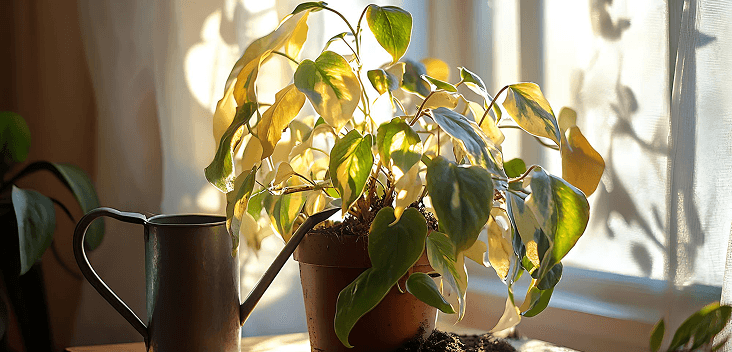
Strong sun usually shows on the most exposed leaves first.

Bleached patches:

Pale beige or washed-out areas can appear where direct rays hit the leaf surface.

Scorched streaks:

Tan, papery marks may form along the upper side of leaves facing the window.

Sudden spotting:

Damage is more likely after Dracaena fragrans is moved quickly from shade into brighter sun.

Sunward damage:

Leaves shaded by other foliage often look normal while exposed leaves show stress.

Move it out of direct afternoon sun and keep light bright but filtered. A sheer curtain or a few feet of distance from hot glass usually reduces further damage.

Low light develops gradually and is easiest to see in new growth.

  • Leaning canes:

    The stem or leaf crown may angle toward the nearest window instead of staying upright.

  • Faded striping:

    Variegated leaves can lose contrast, with lighter bands becoming duller or less defined.

  • Small new leaves:

    New leaves may emerge narrower or shorter than older leaves formed in better light.

  • Long gaps:

    Growth points can look stretched, with more space between leaf clusters.

  • Seasonal stall:

    Little or no growth during spring or summer can suggest that light is too weak.

Move Dracaena fragrans closer to a bright window, but avoid sudden direct afternoon sun. Increase exposure over 1–2 weeks so the leaves adjust.

When ideal brightness is not available, choose the brightest spot that avoids harsh afternoon rays rather than a dim corner. Accept slower growth in moderate shade, but move it closer to natural light if leaf color fades.

Rotate the pot every few weeks so the leaf crowns do not lean strongly toward one side.

Avoid placing it against hot glass in direct afternoon sun, because exposed leaves can scorch.

Get Personalized Care Plan

Scan your plant to receive care tips personalized for your specific plant

FAQ

The best light for Corn Plant is bright, indirect light for most of the day. Gentle morning sun is usually tolerated, while strong afternoon sun is too intense.

Everything About Corn Plant

More Plant Light Guides

Get the Botan App

Discover how to care for your plants with Botan.

Botan app identifying a plant with a phone camera
Dill Companion Plants – What to Grow Next to Dill

9 min read · 17 Jul 2026

Dill Companion Plants – What to Grow Next to Dill

Dill is an easy-to-grow plant that gets along well with many vegetables. This guide describes 15 plants that can be planted alongside it, a few to avoid, and mistakes that can quietly sabotage the entire process.

Plant Recommendations
Dill Companion Plants – What to Grow Next to Dill
How to Mist Plants – Proper Technique and Common Mistakes

7 min read · 30 Jul 2026

How to Mist Plants – Proper Technique and Common Mistakes

Find out when misting works well and when to avoid it. Here, you’ll find detailed information about compatible and incompatible species, tips on how often to mist plants and do it correctly, and some great alternatives for raising humidity.

Beginner Guides
How to Mist Plants – Proper Technique and Common Mistakes
Planting Grass Seed in Summer – What Works and What Fails

7 min read · 6 Aug 2026

Planting Grass Seed in Summer – What Works and What Fails

Summer seeding succeeds when the grass type suits the season, and the soil stays moist. Find out how to prepare the seedbed and choose a safe window for planting.

Plant Care
Planting Grass Seed in Summer – What Works and What Fails