bleeding heart Care (Lamprocapnos spectabilis)

Also known as: Asian Bleeding-heart, Lady in a Bath
bleeding heart

About bleeding heart

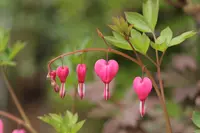
Bleeding heart, Lamprocapnos spectabilis, is a shade-loving perennial grown for its arching stems of pink or white, heart-shaped flowers in spring. The foliage forms a soft, fern-like clump that often goes dormant in summer after flowering, especially in warmer or drier sites. Native to woodland areas of East Asia, it prefers cool, sheltered garden spots with consistent moisture and rich, well-drained soil. Once established in a suitable location, it is relatively low-maintenance, but can struggle in hot sun, compacted soil, or very dry conditions, so understanding how to care for bleeding heart helps keep it long-lived.

Main Plant Requirements

Care Difficulty

Moderate Care

Light Preference

Partial Shade

Water Requirements

Regular Water

Temperature Preference

Cold Hardy

Hardiness Zone

3–9

Soil Texture

Loamy, Silty, Organic-rich

Soil pH

Acidic (5.5–6.5), Slightly acidic (6.5–7.0)

Soil Drainage

Moist but well-drained

Fertilization

Minimal (feed rarely)

Get Personalized Care Plan

Scan your plant to receive care tips personalized for your specific plant

Available on iOS and Android

How to Care for the bleeding heart

This shade-loving perennial prefers cool, filtered light to support healthy flowering and foliage.

  • Provide dappled shade or morning sun with afternoon shade, aiming for 2–4 hours of gentle direct light per day.
  • Plant bleeding heart on the north or east side of buildings or under open-canopy trees to avoid harsh midday and afternoon sun that can scorch leaves.
  • In hotter summers, increase shade as light intensity rises; in cooler climates, allow a bit more morning sun to maintain bloom strength.

This plant prefers evenly moist, cool soil that never stays soggy for long periods.

  • Water when the top 3–5 cm of soil feels slightly dry, then soak the root zone thoroughly so moisture reaches 15–20 cm deep.
  • Use humus-rich, well-draining soil so Lamprocapnos spectabilis roots stay moist but not waterlogged; amend heavy clay with compost and fine bark.
  • Watch foliage for cues: drooping, dry leaves and crumbly soil suggest underwatering, while yellowing leaves, blackened stems, or mushy crowns point to overwatering.

This cool-climate perennial grows best in mild conditions and naturally goes dormant in summer heat or winter cold.

  • Optimal growth occurs around 55–70°F (13–21°C), especially in spring; new shoots emerge as soil warms but before strong summer heat.
  • The plant tolerates winter cold down to about -20°F (-29°C) in the ground, provided the crown is insulated by mulch and snow cover.
  • In hot regions, sustained heat above 85°F (29°C) may trigger early dormancy; keep roots cool with mulch and light shade to reduce stress.

This woodland perennial grows best in moderately moist air but usually adapts to typical home and garden humidity.

  • Aim for 40–60% humidity to reduce leaf browning on bleeding heart foliage, especially in heated homes.
  • In very dry indoor air, watch for crisp leaf edges and premature yellowing as signs of humidity stress rather than underwatering.
  • Increase local humidity with grouped plants, a pebble tray kept just damp, or a humidifier placed nearby rather than misting leaves.

Lamprocapnos spectabilis prefers moist, structured soil that stays aerated yet never waterlogged.

  • Use a loose loam rich in organic matter with high compost content to mimic woodland leaf litter.
  • Ensure drainage is steady by avoiding heavy clay alone; lighten dense ground with compost plus 20–30% sharp sand or fine grit.
  • Target a slightly acidic to neutral pH around 6.0–7.0, where nutrients remain available and roots avoid stress.
  • Avoid compacted, sticky, or constantly soggy conditions, which promote root rot and reduce oxygen in the root zone.

This species can grow successfully in containers if moisture and root depth are managed carefully.

  • Choose a deep pot that allows the root crown to sit a few cm below the rim so mulch can be added without spilling.
  • Select a heavier material such as ceramic or clay to keep the tall, arching stems stable in wind.
  • Use a container wide enough for the clump to spread slightly, which helps maintain even moisture across the root zone.

Lamprocapnos spectabilis benefits from modest, well-timed feeding during its active growth phase.

  • Apply a balanced, water-soluble fertilizer (for example 10-10-10) at 1/2 strength every 4–6 weeks in spring and early summer.
  • Alternatively, top-dress with a thin layer of compost around the root zone each spring.
  • Use slow-release granules only in fertile, well-drained garden soil to avoid excess nitrogen and weak growth.
  • Stop feeding once foliage begins yellowing and the plant enters dormancy, usually by midsummer, and do not fertilize in winter.

Pruning Lamprocapnos spectabilis is light and mainly focused on hygiene and managing its natural arching shape.

  • In late spring to early summer, remove spent flower stems at the base to keep the plant tidy and reduce seed formation.
  • Cut back yellowing or dead foliage to soil level once the plant naturally goes dormant.
  • Trim only damaged or crowded stems at the clump edge to maintain airflow without altering the graceful form.
  • Use clean, sharp hand pruners or snips, disinfecting blades before and after use to limit disease spread.

This species is usually grown in the ground, and moving it should be done infrequently and with care.

  • Transplant in early spring or early fall, when growth is minimal and soil is cool and moist.
  • Look for signs such as slow vigor, congested crowns, or container roots circling and emerging from drainage holes.
  • Plan to divide or shift clumps only every 4–6 years to limit disturbance of the brittle, fleshy roots.
  • Lift the plant with a wide soil ball, handle roots gently, replant at the same depth, and water thoroughly to reduce stress.

Lamprocapnos spectabilis is most often propagated by division, with seed and cuttings used less commonly.

  • Divide mature clumps in early spring just as new shoots emerge, keeping several buds and roots per division.
  • Replant divisions immediately into moist, well-drained soil, then water to settle air pockets around roots.
  • Sow fresh seeds outdoors in fall so natural winter chilling improves germination the following spring.
  • Take soft basal cuttings in spring, root them in a light, consistently moist medium, and maintain high humidity and gentle shade.

This plant is cold hardy in many temperate climates and usually needs only minimal winter preparation.

  • Allow foliage to die back naturally after frost, then cut stems to ground level once fully brown and dry.
  • Apply a 5–8 cm layer of leaf mold, compost, or bark mulch over the root zone in late fall, keeping mulch off crowns.
  • In very cold or exposed sites, add an extra mulch layer or evergreen boughs for insulation against severe freeze–thaw cycles.
  • Container plants in cold regions should be moved into an unheated garage or cold frame to prevent rootball freezing solid.

Care Tips

Cool-root mulching

Apply a 5–8 cm layer of shredded bark or leaf mold over the root zone each spring, keeping it a few cm away from the crown, to keep roots cool and moist and reduce weed competition without rotting the base.

Gentle clump division

Divide mature clumps only in early spring as new shoots emerge or in early fall after dieback, using a sharp spade to separate large sections and replanting them immediately at the same depth to avoid transplant shock.

Temporary stem support

Install low ring supports or discreet stakes around emerging shoots in early spring, before they elongate, so the arching, brittle stems stay upright and are less likely to snap in wind or heavy rain.

Summer dormancy management

Mark the planting spot with an unobtrusive label before foliage dies back, then avoid deep cultivation in that area and allow nearby plants or groundcovers to fill visual gaps without disturbing the shallow rhizomes.

Slug and snail control

Inspect new shoots frequently in early spring and, if slug or snail damage appears, use physical barriers like copper tape or hand-picking in the evening to protect tender growth without relying on harsh chemicals when growing bleeding heart.

Common Pests and Diseases

Aphids

These insects cluster on tender stems and underside of leaves, sucking sap and causing distortion, yellowing, and sticky honeydew that can lead to sooty mold.

Solution

Spray colonies off with a firm stream of water, then treat remaining insects with insecticidal soap or a ready-to-use neem oil product, repeating every 5–7 days until control is achieved; remove heavily infested shoot tips to reduce population pressure when growing bleeding heart in mixed borders.

Slugs and snails

These pests chew irregular holes in leaves and young shoots, often leaving slimy trails around damaged areas, especially in cool, moist conditions.

Solution

Hand-pick at dusk or dawn, use iron phosphate slug baits around but not touching the crowns, and reduce hiding places by clearing debris and mulching lightly so the soil stays moist but the crown is not constantly damp.

Powdery mildew

This disease causes a white to gray powdery coating on leaves and stems, often starting on lower foliage and leading to yellowing and early leaf drop in crowded, shaded sites.

Solution

Improve air circulation by thinning nearby plants, water at soil level rather than overhead, remove and discard affected foliage, and use a labeled fungicidal spray (such as sulfur or potassium bicarbonate) if the plant experiences recurring infections year after year.

Leaf spot

Symptoms include brown, tan, or purplish spots on the leaves that may merge into larger blotches, causing premature yellowing and defoliation in wet, cool weather.

Solution

Remove and dispose of spotted leaves promptly, avoid wetting foliage, apply a mulch layer to reduce splash from soil, and in persistent cases consider a preventive fungicide labeled for ornamental leaf spots early in the season.

Verticillium wilt

This disease leads to sudden wilting and yellowing of one side or section of the plant, with stems collapsing even when soil moisture is adequate.

Solution

Remove and destroy affected stems and decline-prone plants, avoid replanting other susceptible species in the same spot, improve soil structure with organic matter, and choose healthy nursery stock since there is no reliable chemical cure for infected crowns.

Interesting Facts

Unique floral architecture

The heart-shaped outer petals and protruding inner petals of this species form a precise nectar guide for pollinating insects, with the inner petals protecting reproductive organs from rain and cold.

Spring ephemeral strategy

In many temperate gardens and woodlands it behaves as a spring ephemeral, producing lush foliage and flowers early in the season, then yellowing and going dormant in summer heat to conserve energy in its fleshy roots.

Taxonomic reclassification history

This plant was long known as Dicentra spectabilis, but molecular and morphological studies led botanists to place it in the separate genus Lamprocapnos in the early 2000s due to distinct floral and vegetative characteristics.

Botan icon

Did you know?

The species originated in East Asia and was introduced to Europe in the 19th century through plant-collecting expeditions, quickly becoming a Victorian-era favorite and inspiring many of the common English names still used today, which is an important historical note for Lamprocapnos spectabilis plant care in traditional gardens.

FAQs about bleeding heart

Lack of blooms usually comes from too little light, immature plants, or recent division. Avoid heavy spring pruning, keep soil evenly moist but not soggy, and be patient; strong flowering often improves in the plant’s 3rd–4th year.

Grow Healthy Plants with Botan Care

Keep your plants happy and healthy with plant identification, disease detection, and easy care guidance.

Botan plant care app — identify plants on mobile

Explore More Plants