

sage Identification (Salvia patens)

To recognize Salvia patens, look for opposite, ovate to heart-shaped leaves on upright square stems, usually forming a clump about 2 to 3 feet (60 to 90 cm) tall.

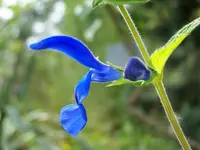
Its flowers are large, two-lipped, and widely spaced on vertical spikes, with a broad lower lip and a distinct hooded upper lip.

Salvia patens Identification

Is This sage?

Take a photo and use Botan to confirm your plant identification.

Clear images work best. Avoid photos taken too close or too far away

Check Salvia patens for a clumping habit with broad opposite leaves and large blue flowers.

  • Stems rise upright from the base, forming a leafy clump about 2-3 feet (0.6-0.9 m) tall.
  • Leaves occur in opposite pairs, are ovate to heart-shaped, and often 3-6 inches (8-15 cm) long with toothed edges.
  • Flowers are deep gentian blue, two-lipped, and relatively large for a Salvia, about 2 inches (5 cm) long.
  • Blooms are spaced along upright spikes, with each flower projecting outward from the stem.

The large, intense blue flowers and broad paired leaves are the quickest field marks to confirm it.

Salvia patens shows clear visual shifts from low leafy growth to conspicuous flowering stems.

  • Juvenile plant: Early growth stays as a low clump of opposite leaves near the base, with soft green stems and little vertical extension.
  • Young plant: Plants begin sending up upright, sparsely branched stems above the basal foliage, giving a looser outline than the earlier compact clump.
  • Flowering stage: The most distinctive change is tall flowering stems, often 2-3 feet (60-90 cm), carrying spaced whorls of broad, deep blue tubular flowers.
  • Fruiting stage: After petals drop, the showy blue display is replaced by small enclosed nutlets within persistent calyces, making the stems look drier and less colorful.

In late spring to summer, Salvia patens becomes much easier to recognize when the large, vivid blue flowers open above the foliage. The bloom display is the clearest seasonal clue, since the flowers are unusually broad for a salvia. After flowering, the showy display fades and the plant may die back in colder seasons, leaving little or no top growth visible during dormancy.

A few blue-flowered salvias can be mistaken for Salvia patens at a glance.

gentian sage(Salvia guaranitica)

Often confused because both carry rich blue tubular flowers. This species is usually much taller, often 4 to 6 feet (1.2 to 1.8 m), and has darker stems and narrower leaves; S. patens stays lower and shows broader, more triangular leaves.

bog sage(Salvia uliginosa)

Similar for its clear blue flowers and loose habit. It differs by having many smaller blooms on airy stems and very narrow lance-shaped leaves; S. patens has larger, fewer flowers and noticeably broader leaves.

Salvia patens is native to central and eastern Mexico, especially mountain regions. In the wild it is found in moist upland habitats, including open pine-oak woodland edges and grassy clearings. That setting can help with identification. A plant matching Salvia patens is more plausible in Mexican highland flora than in lowland tropical or desert habitats, which helps separate it from some other blue-flowered salvias.

Confirm the Species with Botan

Upload a photo to help identify the plant or double-check your result before labeling, buying, or comparing similar plants.

FAQ

The clearest Salvia patens identification feature is its unusually deep gentian-blue flowers. They are two-lipped, tubular blooms spaced along upright stems, with broad, pointed leaves below that help confirm the plant.

Everything About sage

More Plant Identification Guides

Identify First. Learn What Comes Next.

Use a photo to identify the plant, then get species-specific care information, safety notes, and common problems in Botan.

Botan app identifying a plant from a photo
Best Water for Plants – How to Choose the Right Type

7 min read · 13 Aug 2026

Best Water for Plants – How to Choose the Right Type

Rainwater, filtered, distilled, and tap water affect plants differently. Learn which types support healthy growth and which cause slow damage. Match each to your plants and discover how to easily improve tap water quality.

Plant Care
Best Water for Plants – How to Choose the Right Type
How to Bottom Water Plants: Complete Guide

6 min read · 13 Jul 2026

How to Bottom Water Plants: Complete Guide

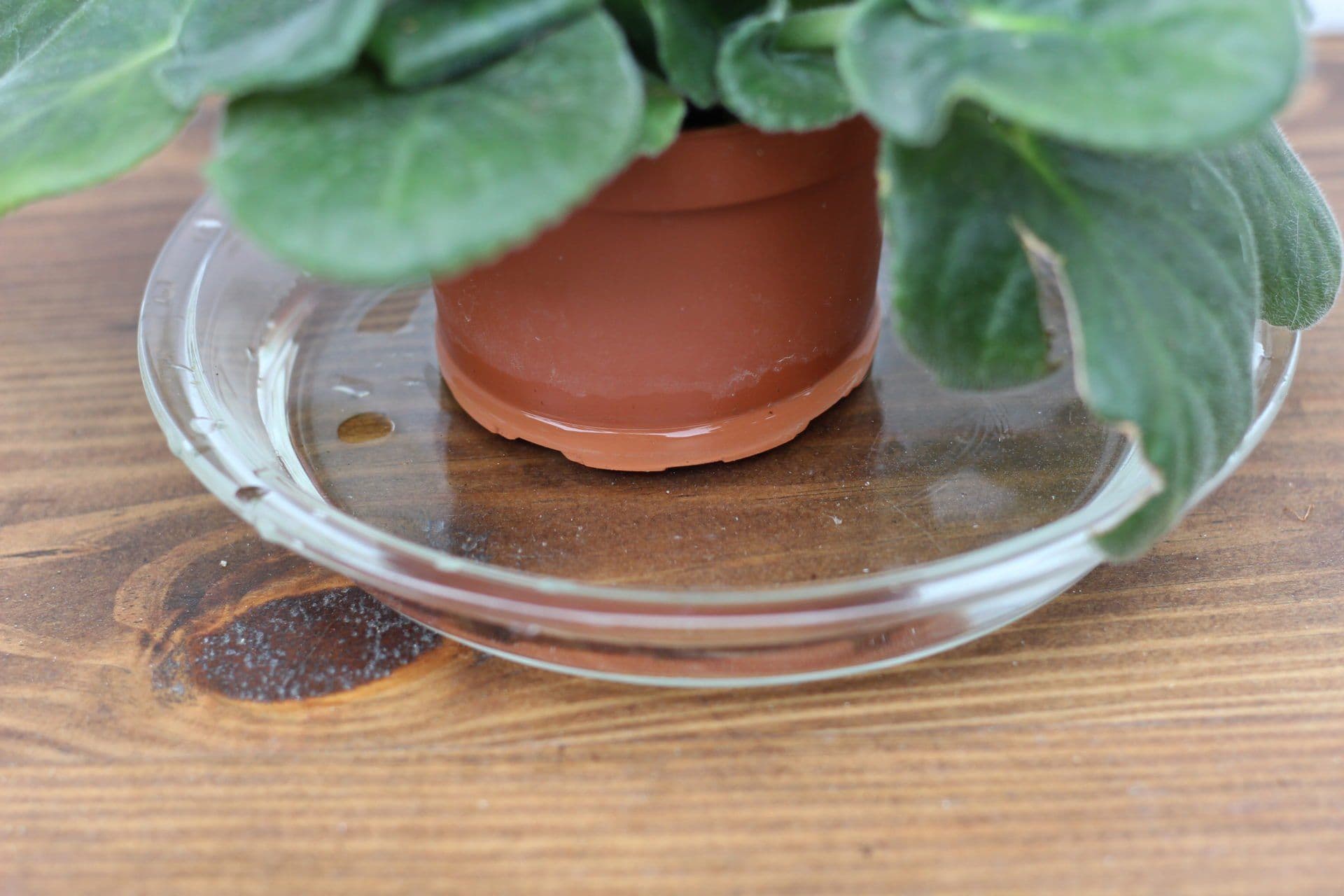
Bottom watering helps soil absorb moisture evenly and keeps foliage dry, reducing the risk of missed dry spots or root problems. Place the pot in a tray of water for a short time, then let it drain well.

Plant Care
How to Bottom Water Plants: Complete Guide
How to Mist Plants – Proper Technique and Common Mistakes

7 min read · 30 Jul 2026

How to Mist Plants – Proper Technique and Common Mistakes

Find out when misting works well and when to avoid it. Here, you’ll find detailed information about compatible and incompatible species, tips on how often to mist plants and do it correctly, and some great alternatives for raising humidity.

Beginner Guides
How to Mist Plants – Proper Technique and Common Mistakes