



Best Soil for dragon fruit (Selenicereus undatus)

Selenicereus undatus grows best in a loose, fast-draining mix that supports healthy roots while holding some moisture and organic matter.

Soil Texture

Sandy, Loamy, Organic-rich

Soil pH

Acidic (5.5–6.5), Slightly acidic (6.5–7.0)

Soil Drainage

Well-drained

Selenicereus undatus Soil Guide

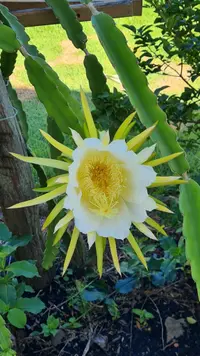
Native to tropical regions of the Americas, Selenicereus undatus grows as a climbing cactus in warm, humid settings where water moves through the root zone quickly. That background explains why dragon fruit soil should be airy and well drained rather than dense or heavy.

Its roots are relatively shallow and benefit from a sandy or loose loamy texture with some organic matter. This balance gives enough moisture retention for steady growth, while keeping oxygen around the roots and preventing soggy conditions that a cactus root system does not handle well.

A simple homemade mix can give Selenicereus undatus the balance of airflow and moisture retention it needs in containers.

100% total mix = 20 scoops
20%
perlite or pumice4 scoops
20%
compost or fine orchid bark4 scoops
25%
coarse sand5 scoops
35%
cactus potting mix7 scoops

The finished blend should feel crumbly and airy, with some body but no sticky heaviness, and water should pass through without pooling for long.

A good target is about 5.5–7.0 pH, with slightly acidic soil often working best. This range helps keep key nutrients available without pushing the root zone too far acidic or neutral.

Dragon fruit is fairly adaptable within that window, but strongly alkaline or very acidic conditions can reduce nutrient uptake over time. If growth seems stalled, checking pH can help rule out a hidden soil imbalance.

Root stress usually starts below the surface, especially when the mix stays dense for too long. Dragon fruit is more vulnerable to that than to slightly imperfect texture.

Compacted mix:

Compacted mix: Soil that stays tight and slow to drain can limit root oxygen, so loosen the top layer gently and check whether the container is draining freely.

Soggy root zone:

Soggy root zone: A heavy, wet lower layer can linger out of sight, so slide a finger deeper into the mix and let excess moisture escape fully after watering.

Salt buildup:

Salt buildup: A white crust on the surface or pot rim may point to mineral accumulation, so scrape off the crust and flush the soil thoroughly once if drainage is good.

Old broken-down mix:

Old broken-down mix: Soil that has turned fine and dusty often holds moisture unevenly, so replace part or all of the medium with a fresher, more open blend.

Scan for Better Soil

Botan can help identify the plant and guide a more suitable soil choice based on how this species typically grows in containers.

FAQ

Yes. Drainage holes let excess water leave the container instead of collecting around roots. That matters for airflow as much as moisture control, especially in a chunky dragon fruit soil mix.

More Plant Soil Guides

Could It Be the Soil?

A photo check in Botan can help determine whether soil conditions may be part of the problem and what to review next.

Botan app helping with soil and plant care
Best Time to Mow Lawn – A Complete Guide

5 min read · 10 Aug 2026

Best Time to Mow Lawn – A Complete Guide

Explore when to mow your lawn for its health and a pleasant green color. Find out the best time for this task during the summer heat, and follow practical tips for correctly cutting the grass, and learn common mistakes to avoid.

Plant Care

Best Time to Mow Lawn – A Complete Guide
Frozen vs Fresh Vegetable Nutrients: Which Option Is Healthier?

6 min read · 8 Sept 2026

Frozen vs Fresh Vegetable Nutrients: Which Option Is Healthier?

Frozen and fresh vegetables are nutritionally comparable: frozen produce often retains vitamins just as well as fresh and may sometimes contain more. Here’s how blanching and storage affect nutrients—and when to choose each.

Plant Recommendations
Frozen vs Fresh Vegetable Nutrients: Which Option Is Healthier?
How to Bottom Water Plants: Complete Guide

6 min read · 13 Jul 2026

How to Bottom Water Plants: Complete Guide

Bottom watering helps soil absorb moisture evenly and keeps foliage dry, reducing the risk of missed dry spots or root problems. Place the pot in a tray of water for a short time, then let it drain well.

Plant Care
How to Bottom Water Plants: Complete Guide