


3 min read · 13 Nov 2026
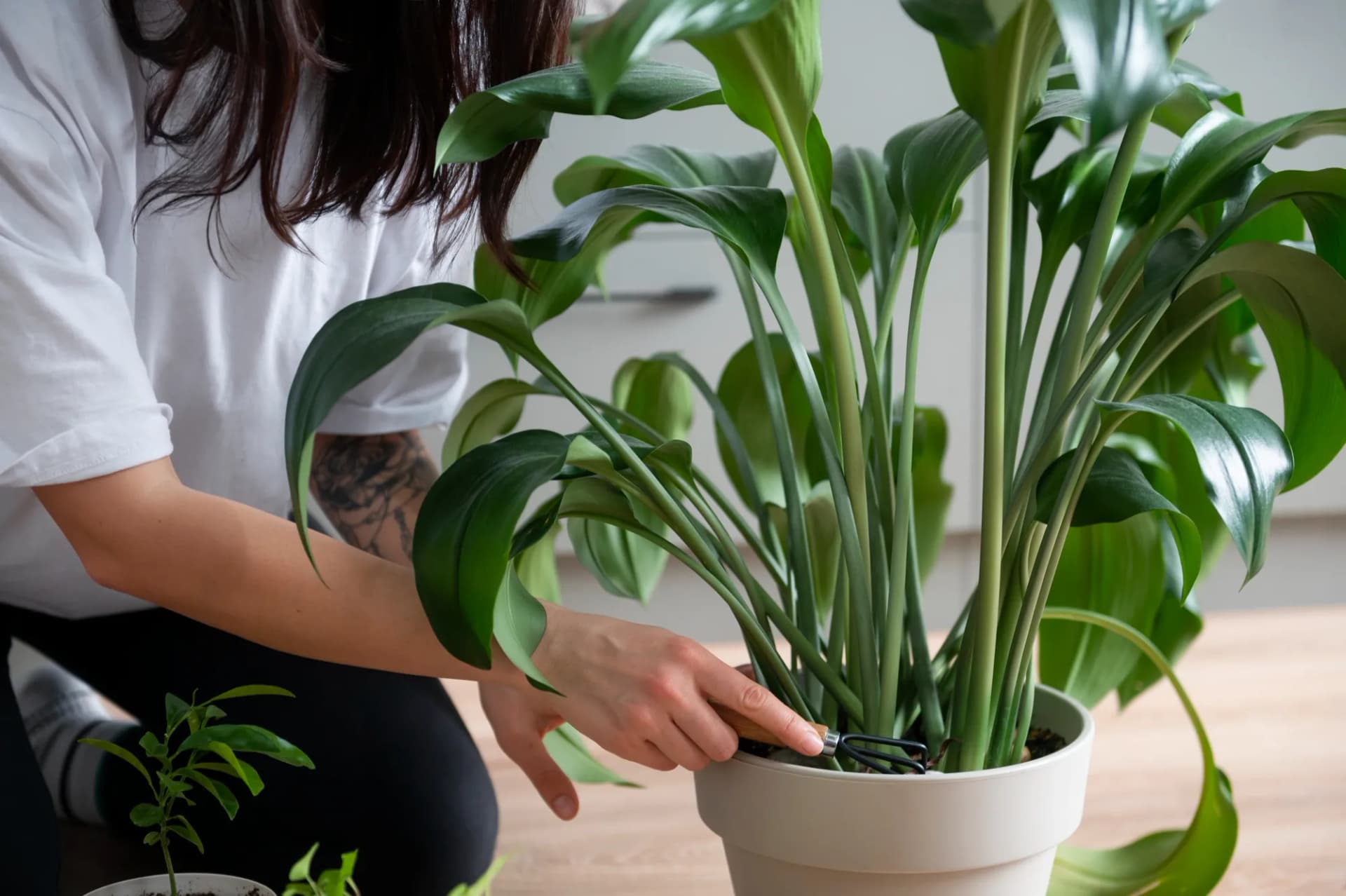
15 Best Indoor Plants for Your Home
Every plant lover has a small graveyard behind them. Here is the twist... most of those plants did not die from bad care.
Plant Recommendations


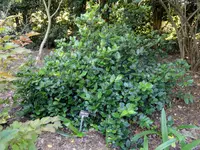
To recognize Viburnum suspensum, look for opposite, leathery leaves that are oval to oblong with shallowly scalloped edges, paired along the stems.
It usually forms a dense, many-branched evergreen shrub, often 6 to 12 feet tall (1.8 to 3.7 m), with small white flowers held in flat-topped clusters.
Take a photo and use Botan to confirm your plant identification.
Clear images work best. Avoid photos taken too close or too far away
Check Viburnum suspensum for a dense, rounded shrub form and simple opposite leaves.
Fruit, when present, is a small oval drupe that darkens as it matures.
Viburnum suspensum shows clear visual shifts from a compact young shrub to fruiting maturity.
In spring, Viburnum suspensum becomes easier to spot when small white flower clusters appear against its dense, glossy evergreen foliage. Those blooms add a brief but clear identification cue. By late summer to fall, the flowers give way to red berries that later darken toward black. Because the leaves usually stay on through winter, fruit color and persistence are the main seasonal changes to look for.
Several evergreen shrubs can be mistaken for viburnum at a glance.
sweet viburnum(Viburnum odoratissimum)
Similar because both are dense evergreen shrubs with opposite, glossy leaves. Sweet viburnum usually has larger leaves, often 4-8 inches (10-20 cm) long, and a taller, more upright habit. Its flower clusters are also larger and showier.
Walter's viburnum(Viburnum obovatum)
Confusion happens because both can form rounded evergreen shrubs with small, leathery leaves. Walter's viburnum typically has smaller, more spoon-shaped leaves and a finer twiggy texture. It also often shows a looser branching pattern than the heavier foliage mass of Viburnum suspensum.
Viburnum suspensum is native to the Ryukyu Islands of Japan. In the wild it is found in coastal thickets and woodland margins, especially in the warm, humid subtropical belt of islands such as Okinawa. That range can help with identification because this species is tied to a fairly narrow island region, unlike many other viburnums with broader East Asian distributions. A plant labeled as native to inland Japan or mainland China is likely a different species.
Confirm Your Plant Species
Use Botan to double-check your plant ID
Use Botan to compare a photo and help confirm the plant, which can reduce mix-ups before you label it or make decisions.
Flower clusters are usually visible in late winter to spring. They are small, white, and borne in branched clusters at stem tips, a useful timing cue for Viburnum suspensum identification alongside the evergreen leaves.
Identify it from a photo with Botan, then review plant details, care information, and common problems for that species.

3 min read · 13 Nov 2026
Every plant lover has a small graveyard behind them. Here is the twist... most of those plants did not die from bad care.
11 min read · 20 Jul 2026
Here, you’ll find the right fertilizer formula for vegetables in your garden. Learn how to adjust feeding correctly throughout the growing cycle, spot nutrient deficiencies by their symptoms, and keep your plants healthy and prolific.
6 min read · 19 Aug 2026
A plant can lose its leaves, stop growing, or collapse and still remain alive. A closer look at the stems, roots, bulbs, and tubers can show whether the plant still has a chance to recover.