The Mountain Plant That Eats Insects and Vindicates Darwin
In 1875, Charles Darwin suggested that some Saxifraga species might be carnivorous after observing their insect-trapping hairs. A 2026 study finally confirmed his 150-year-old hypothesis.
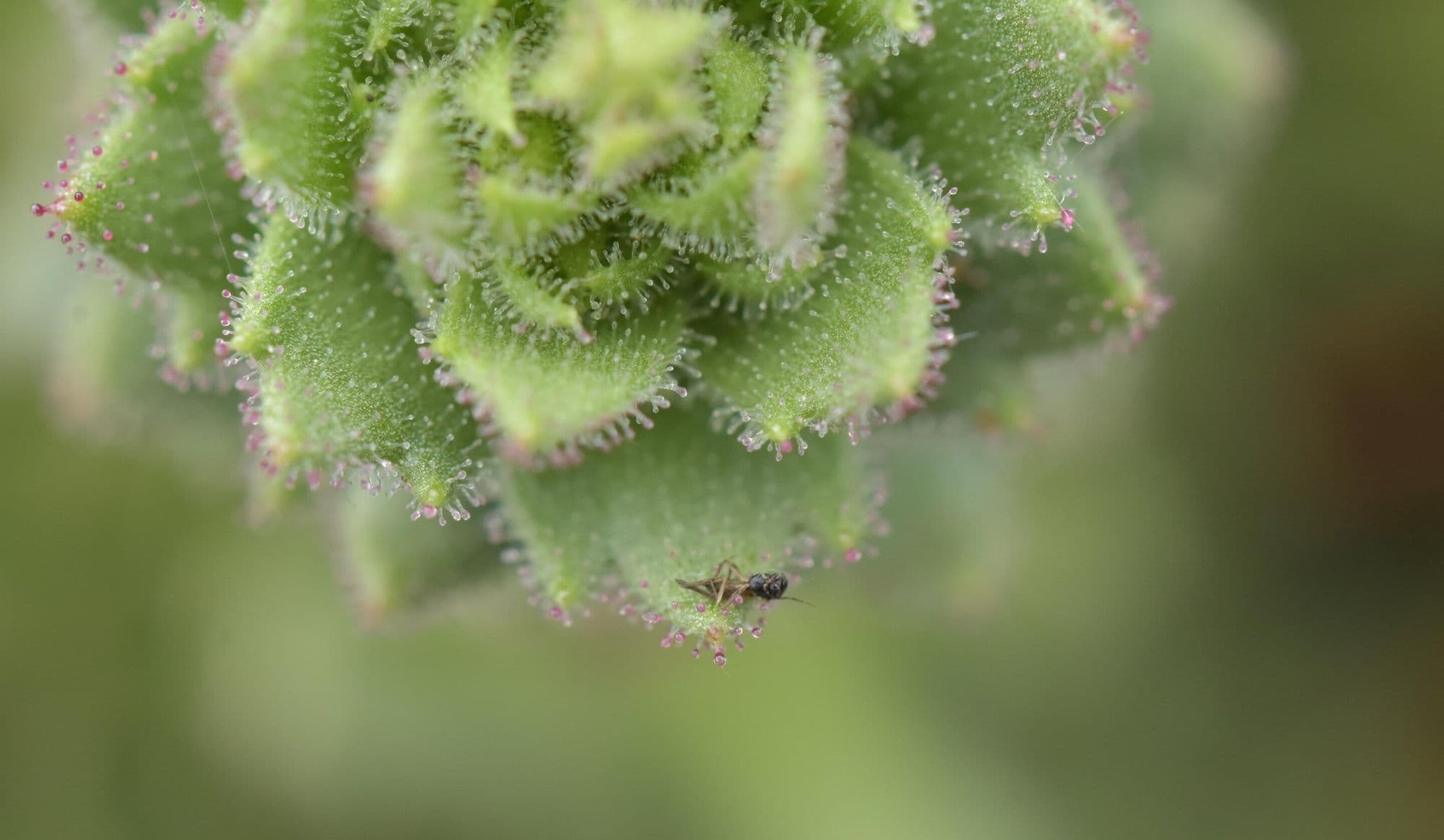
In 1875, Charles Darwin published Insectivorous Plants — a book dedicated entirely to plants that eat animals. Buried within its pages was a bold hypothesis: that certain species of Saxifraga, a genus of small flowering plants common in rocky alpine environments, might also be capable of carnivory.
Darwin was fascinated by their sticky glandular hairs, which he observed trapping insects with ease. He attempted to test the idea himself, but the technology of his era could not deliver a conclusive answer. The question was left open for 150 years.
Now, a landmark 2026 study published in Nature Communications has finally closed that chapter — and Darwin was right.
A Plant That Hunts in the Highlands
Saxifraga candelabrum is a monocarpic perennial herb native to the alpine regions of the Qinghai–Tibet Plateau and the Hengduan Mountains in southwest China, growing at elevations between 2,500 and 3,300 meters.
It forms a basal rosette and sends up flowering stems covered in small, sticky glandular hairs — the very feature that caught Darwin's attention in related species more than a century ago.
A research team led by Hang Sun of the Kunming Institute of Botany (Chinese Academy of Sciences) and Douglas Soltis of the Florida Museum of Natural History set out to determine whether those hairs do more than just trap insects.
Field surveys and herbarium specimen reviews revealed that 43 out of 45 sampled plants had insects caught in their hairs. Mature specimens averaged 71 trapped insects each — predominantly nonbiting midges. The plant secretes a viscous substance that coats the hairs, acting as a flypaper-style trap.


Identify Your Plant
Scan the plant and get a result with 98% accuracy
The Science of Digestion
To confirm digestion, the researchers used fluorescence tagging to detect phosphatase activity directly in the plant's secretions. The enzyme was present.
For nutrient absorption, the team fed the plant fruit flies (Drosophila) labeled with a stable isotope of nitrogen (¹⁵N). Levels of that labeled nitrogen rose measurably in S. candelabrum tissues.
Finally, a genomic analysis revealed that S. candelabrum shares genes with other independently evolved carnivorous plants — genes linked to prey attraction, digestion, and nutrient uptake. This points to convergent evolution: nature arriving at the same solution through separate evolutionary paths, at least six times across the flowering plant family tree.
Broader Implications: Carnivory May Be Far More Widespread
Unlike most known carnivorous plants like Venus flytraps, Small Sundew, Green Pitcher Plant — which typically grow in waterlogged bogs and wetlands, S. candelabrum thrives in dry, rocky, seasonally arid conditions.
The findings add Saxifraga and, with it, the order Saxifragales to the known roster of carnivorous plant lineages. They also open the door to a significant reclassification effort: how many other plant species, currently dismissed as merely "protocarnivorous" (able to trap but not digest insects), might be full carnivores that haven't been tested with modern methods?

Darwin Vindicated
"Although untested at the time, Darwin's hypothesis provided an important inspiration for our study," said lead researcher Hang Sun.
The confirmation of S. candelabrum's carnivory is more than a historical footnote. It is a demonstration of how scientific hypotheses can be revisited and validated with the right tools. Darwin lacked isotope labeling, fluorescence microscopy, and genomic sequencing. The researchers of 2026 did not.
The study was published in Nature Communications on August 4, 2026, and was highlighted in Nature Plants the same month.

Alex Yar
Plant Expert
7+ years of experience studying plants, researching their diseases, and examining their characteristics.
Alex is a plant expert and writer with more than 7 years of experience studying plants, their growing requirements, and their responses to environmental conditions. His areas of expertise include plant care, disease recognition, stress diagnosis, pest-related problems, and the distinctive characteristics of different species.
Over the years, Alex has developed a strong practical understanding of how light, temperature, humidity, watering, soil conditions, and nutrition affect plant health. He combines careful observation with in-depth research to explain effective care and recovery methods.
Alex has extensive hands-on experience caring for houseplants. His articles translate complex botanical topics into clear guidance that helps you better understand your plants and recognize early warning signs.
Related Articles
4 min read · 15 Sept 2026
How Microbes Shape Plant Growth and Health
Every plant, from a windowsill Monstera to a field of wheat, hosts billions of microorganisms that influence its health and growth. These ancient partnerships also play a critical role in global food security.

3 min read · 11 Sept 2026
How Plant Roots Could Protect Crops from Drought
Plant roots push the soil, and as droughts intensify, this underground machinery holds the key to feeding the world.
3 min read · 8 Sept 2026
Cacti Could Help Solve a Long-Standing Evolutionary Mystery
A new study of cactus flowers suggests that the speed of evolutionary change may help explain why some lineages produce far more species than others.
Explore Plants by Care Needs

-1-200x132.webp)



Identify the plant and problem. Help your plant recover
Identify plant problems early, understand what's wrong, and get clear care guidance. Botan helps you turn guesswork into confident plant care