


Japanese maple Identification (Acer palmatum)

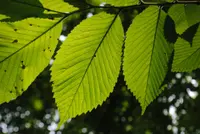
To recognize Japanese maple, check for opposite leaves with 5 to 7 deep lobes radiating from one point, each leaf on a long stalk.

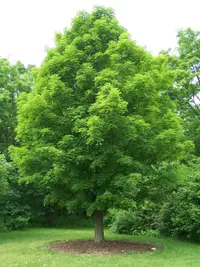
It usually forms a small tree with a short trunk and a broad, layered crown of fine twigs.

Acer palmatum Identification

Identify a Plant by Photo

Upload a clear image to check whether your plant ID is correct.

Clear images work best. Avoid photos taken too close or too far away

Use these quick checks for Acer palmatum.

  • Leaves are opposite on the twig, with one leaf pair at each node.
  • Each leaf is simple and palm-shaped, usually with 5-7 pointed lobes cut deeply toward the center.
  • Leaf blades are about 2-5 inches (5-13 cm) wide, on long, slender stalks.
  • The plant often forms a small tree or large shrub with a broad, layered crown and fine branching.
  • Fruits are paired winged samaras, with the two wings spreading at a wide angle.

Check several leaves and twigs, since lobe depth and overall habit can vary.

Acer palmatum shows clear visual shifts from seedling growth to flowering and fruiting maturity.

  • Seedling: Seedlings first show paired seed leaves, then small opposite true leaves with shallow lobes; stems are thin, green to reddish, and little branched.
  • Young plant: Young plants develop a layered outline with slender opposite branches; leaves become more deeply divided and typically reach 2-4 inches (5-10 cm) across.
  • Flowering stage: On established plants, small reddish to purple flower clusters appear on bare twigs or with new leaves, adding visible hanging stalks absent earlier.
  • Fruiting stage: After flowering, paired winged samaras replace the clusters; the joined fruits hang beneath leaves and make branch tips look finer and more pendant.

Japanese maple has many named forms with stable leaf color or shape differences that are easy to recognize.

  • 'Atropurpureum': Leaves emerge and remain deep red to purple through much of the growing season instead of the usual green.
  • 'Sango-kaku': Young stems are bright coral-red, especially in winter, while the leaves are light green with yellow to red fall color.
  • 'Dissectum': Leaves are deeply cut into narrow lobes, giving a lace-like texture; plants often have a low, mounding to weeping habit.
  • 'Butterfly': Small leaves are irregularly edged in creamy white to pale pink, creating clear variegation not seen in the typical form.

In spring, Acer palmatum leafs out with soft, finely divided leaves that are often red, bronze, or light green, depending on the form. Small reddish flowers may also be visible. By fall, the foliage usually turns bright red, orange, or yellow before dropping. After leaf fall, the layered branching and opposite buds become easier to see through winter.

Several maples outside Japanese maple can cause confusion.

full moon maple(Acer japonicum)

Often confused because both are small trees with rounded, deeply lobed leaves. A. japonicum usually has broader leaves with more lobes, often 9 to 13, while Acer palmatum commonly has 5 to 9 narrower lobes.

Korean maple(Acer pseudosieboldianum)

It resembles the same delicate, dissected leaf outline and small-tree form. The leaves are usually hairier, especially on the veins beneath, and the lobes are often more finely serrated than in Acer palmatum.

Acer palmatum is native to Japan, Korea, China, eastern Mongolia, and southeastern Russia. In the wild it occurs in temperate forests, especially woodland edges, ravines, and lower mountain slopes. This setting helps with identification because true wild plants are associated with moist, mixed woodland rather than wetlands, open grassland, or desert habitats. Finding a small maple in shaded forest margins within its East Asian range supports Acer palmatum over unrelated look-alikes.

Check Your Plant ID

Upload a photo to Botan to identify it or confirm your result before you label, buy, or troubleshoot the plant.

FAQ

The clearest marker is the leaf: usually 5 to 9 pointed lobes radiating from one point like a hand. Fine serrations on the edges and opposite leaf arrangement support Japanese maple identification.

More Plant Identification Guides

Identify Your Plant and Learn More

Use a photo with Botan to identify it, then get plant details, care information, and common problems for that species.

Botan app identifying a plant from a photo
How to Increase Humidity for Plants – 8 Simple Ways That Work

8 min read · 14 Aug 2026

How to Increase Humidity for Plants – 8 Simple Ways That Work

Dry indoor air stresses a lot of houseplants. You usually notice it first in the browning leaf tips. This guide describes 8 simple ways to raise the moisture around your plants, from humidifiers to pebble trays.

Plant Care
How to Increase Humidity for Plants – 8 Simple Ways That Work
How to Repot a Plant: A Step-by-Step Guide

7 min read · 28 May 2026

How to Repot a Plant: A Step-by-Step Guide

In spring, many plants need repotting—an essential part of care. To avoid stress, consider the plant’s type and size. This article offers a step-by-step guide for repotting indoors or outdoors and shows how to check plant health and get care tips using the Botan app.

Plant Care
How to Repot a Plant: A Step-by-Step Guide
How to Mist Plants – Proper Technique and Common Mistakes

7 min read · 30 Jul 2026

How to Mist Plants – Proper Technique and Common Mistakes

Find out when misting works well and when to avoid it. Here, you’ll find detailed information about compatible and incompatible species, tips on how often to mist plants and do it correctly, and some great alternatives for raising humidity.

Beginner Guides
How to Mist Plants – Proper Technique and Common Mistakes