



Is Rubber Tree Toxic to Cats?Ficus elastica

Toxicity level

Toxic to Cats
Toxic compound
proteolytic enzyme, psoralen
Toxic parts
sap

The rubber tree is toxic to cats, though its sap typically causes mild effects. Chewing its thick leaves can release the irritating sap, so contact a veterinarian if a cat chews it or gets sap on its skin.

The sap of Ficus elastica contains a proteolytic enzyme and psoralen, which account for its toxicity to cats. Proteolytic means protein-breaking: the enzyme can disrupt proteins in tissues that the sap touches, irritating the mouth and digestive tract when chewed or swallowed.

Direct sap contact can also irritate skin. Psoralen is a light-sensitive compound that can damage skin cells when activated by ultraviolet light.

Toxic componentWhere foundHow it acts
Proteolytic enzyme
Found in: Sap
SapBreaks down proteins, irritating tissues that come into contact with sap.
Psoralen
Found in: Sap
SapCan damage skin cells when activated by ultraviolet light.

A rubber tree releases irritating milky sap when its leaves or stems are damaged. Effects are usually mild, but contact a veterinarian if signs persist or worsen after the cat’s exposure.

  1. Wipe the lips

    Gently wipe visible milky sap from the lips with a damp cloth if the cat allows it. Do not make the cat vomit unless a vet directs it.

  2. Clean affected fur

    Use plain water and a damp cloth to wipe sap from the coat and paws before grooming spreads it to the mouth.

  3. Remove further access

    Move the upright houseplant out of the cat’s reach. Pick up fallen leaves and wipe away sap from broken stems or damaged leaves.

Signs of exposure to the plant’s sap generally involve the mouth, stomach, or skin. A cat may also show changes in its usual activity level or become less interested in play and interaction.

  • Drooling

    Saliva may drip from the mouth or leave the chin and chest noticeably wetter than usual.

  • Vomiting

    The cat may heave and bring up food, fluid, or foam, rather than simply cough.

  • Lethargy

    The cat may seem unusually sluggish, move around less, or show less interest in familiar toys and activities.

  • Skin irritation

    Affected skin may look red, and the cat may lick, scratch, or rub that area more than usual.

Early and Later Signs

  1. 0–2 hours

    Sap contact may cause early drooling or localized skin irritation.

  2. 2–24 hours

    Vomiting and lethargy may develop, while drooling or irritation continues.

  3. 1–2 days

    Mild signs usually ease within a day or two.

In living rooms, a rubber tree may stand within reach of a climbing cat. Chewed leaves or freshly cut stems can expose the cat to irritating sap.

  • Choose a closed room

    Keep this upright houseplant in a room the cat cannot enter. A raised stand alone may leave its leaves accessible from nearby furniture.

  • Inspect new arrivals

    Unpack new plants away from the cat. Check for broken leaves or stems that could leak sap before placing the pot in its designated room.

  • Contain pruning waste

    Keep the cat out during pruning. Bag cuttings immediately, and clean sap from tools and work surfaces before returning them to areas the cat can access.

Let Identification Guide Your Purchase

At nurseries, Botan App instantly reveals plant names and cat toxicity from one photo.

Available on iOS and Android

FAQ

Yes, a single bite can expose a cat to enough irritating sap to cause a reaction. A small bite does not guarantee illness, and bite size alone cannot reliably predict how severely a cat will react.

More Plant Toxicity Guides for Cats

Which of Your Plants Need Boundaries?

Upload a windowsill plant’s photo to Botan App for identification and cat toxicity details.

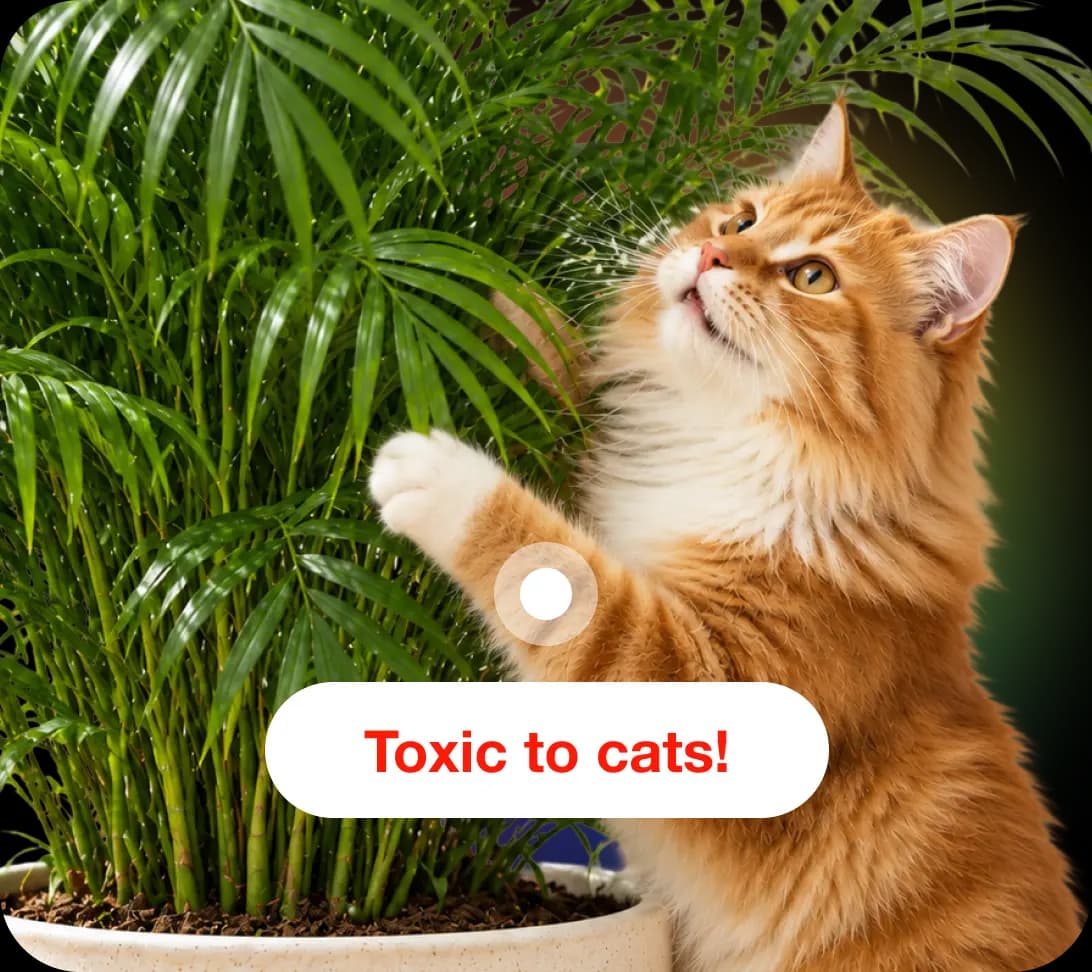
An orange cat reaching for a houseplant

Toxic to cats!

How to Water Succulents: When, How Often, and How Much

7 min read · 18 Nov 2026

How to Water Succulents: When, How Often, and How Much

Yellowing, mushy, or shriveled leaves can all point to a watering problem, yet each can have a different cause. This guide explains how to water succulents, when to wait, and how soil, pots, and seasons change the routine.

Plant Care
How to Water Succulents: When, How Often, and How Much
Christmas Cactus vs Thanksgiving Cactus: How to Tell Them Apart

7 min read · 24 Nov 2026

Christmas Cactus vs Thanksgiving Cactus: How to Tell Them Apart

Christmas and Thanksgiving cacti look remarkably similar, but their stem shapes, flowers, and blooming seasons reveal important differences.

Plant Recommendations
Christmas Cactus vs Thanksgiving Cactus: How to Tell Them Apart
Rice Water for Plants – Which Plants Love It and How to Make It

8 min read · 14 Jul 2026

Rice Water for Plants – Which Plants Love It and How to Make It

Rice water can be an ideal DIY solution for orchids, roses, or fruiting plants. It supports growth, leaf count, and height. We’ll share how to make and apply it correctly for your plant.

Plant Care
Rice Water for Plants – Which Plants Love It and How to Make It