


Is Monstera Toxic to Cats?Monstera deliciosa

Toxicity level

Toxic to Cats
Toxic compound
insoluble calcium oxalates
Toxic parts
fruit & leaves

Monstera is toxic to cats, with chewing typically causing mild effects. Its large, split leaves can tempt cats to chew, so keep it out of reach and contact a veterinarian if your cat chews or swallows any part.

The leaves and fruit of Monstera deliciosa contain insoluble calcium oxalates, which form tiny, needle-shaped crystals called raphides. When a cat chews these parts, damaged plant cells release the crystals. They penetrate the delicate tissues lining the mouth and throat, causing local tissue injury and inflammation. Their toxic action comes from direct physical contact with these tissues.

Toxic componentWhere foundHow it acts
Insoluble calcium oxalates
Found in: Leaves and fruit
Leaves and fruitNeedle-shaped crystals penetrate mouth and throat tissues, causing injury and inflammation.

Chewing a monstera's leaves or fruit usually causes local irritation rather than whole-body poisoning. Contact a veterinarian if signs persist or worsen after the exposure.

  1. Remove loose pieces

    Remove loose leaf or fruit pieces near the lips if this can be done safely. Do not make the cat vomit unless a veterinarian directs it.

  2. Check for chewing

    Check the large, split leaves for fresh bite marks and missing sections. If fruit is present, note whether any was chewed.

  3. Move the plant

    Move the upright potted plant out of the room, and collect fallen leaf or fruit pieces from the floor around it.

Signs after chewing the plant typically involve a cat’s mouth and swallowing behavior, though stomach upset may also occur. Watch for changes in how the cat holds its mouth or approaches food and water.

  • Mouth irritation

    The cat may repeatedly paw at its mouth or rub its face, rather than showing normal grooming behavior.

  • Drooling

    Saliva may drip from the mouth or leave the chin and chest noticeably wetter than usual.

  • Vomiting

    The cat may retch and bring up food or fluid, rather than simply coughing or gagging without producing anything.

  • Difficulty swallowing

    The cat may make repeated swallowing attempts, gag when trying to eat, or stop eating after approaching food.

When Signs Appear

  1. 0–1 hour

    Mouth irritation and drooling can start within minutes of chewing.

  2. 1–24 hours

    Drooling may persist, with vomiting or difficulty swallowing in some cats.

  3. 24–48 hours

    Mouth discomfort usually fades, and most mild cases settle within two days.

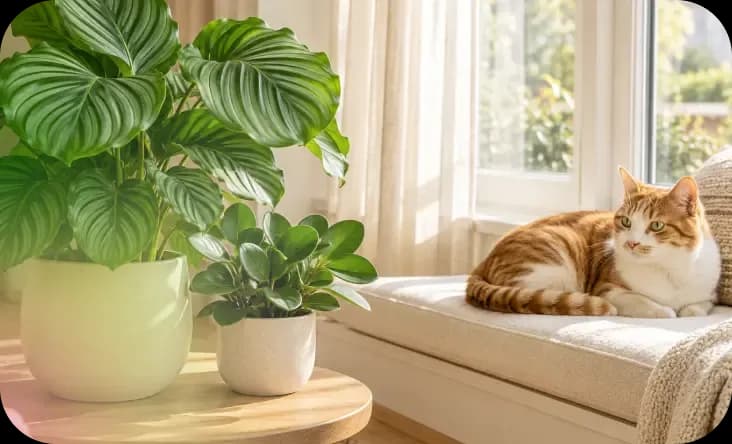
A monstera’s broad leaves often extend beyond its pot, putting them within reach of cats walking past floor planters or climbing nearby furniture.

  • Choose a closed room

    Keep this large, upright plant in a room the cat cannot enter. A tall stand alone may leave leaves accessible from nearby furniture.

  • Collect fallen leaves

    Check beneath the pot and surrounding furniture for fallen leaves. Put them in a closed trash container so the cat cannot retrieve them.

  • Contain pruning waste

    Keep the cat outside the room during pruning. Bag cut leaves as they are removed rather than leaving them on the floor or work surface.

Check Your Next Plant

Botan App identifies plants from one photo, instantly revealing their toxicity to cats.

Available on iOS and Android

FAQ

Yes, it still warrants veterinary advice, even if the cat appears comfortable. Tooth marks alone cannot show how much was swallowed, and acting normally does not rule out irritation from chewing the leaves.

More Plant Toxicity Guides for Cats

Are Your Other Plants Cat-Safe?

Botan App identifies your windowsill plants from photos and explains their potential effects on cats.

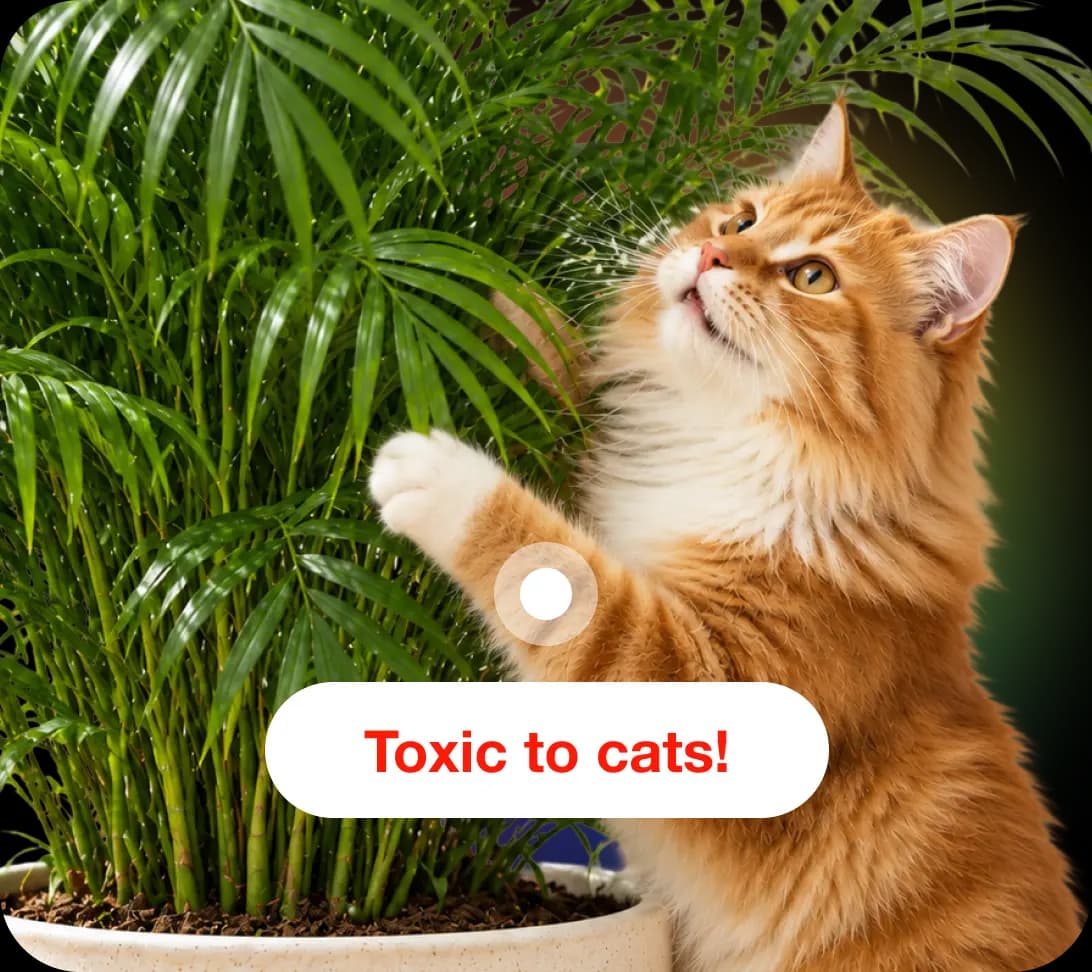
An orange cat reaching for a houseplant

Toxic to cats!

How to Bottom Water Plants: Complete Guide

6 min read · 13 Jul 2026

How to Bottom Water Plants: Complete Guide

Bottom watering helps soil absorb moisture evenly and keeps foliage dry, reducing the risk of missed dry spots or root problems. Place the pot in a tray of water for a short time, then let it drain well.

Plant Care
How to Bottom Water Plants: Complete Guide
Planting Grass Seed in Summer – What Works and What Fails

7 min read · 6 Aug 2026

Planting Grass Seed in Summer – What Works and What Fails

Summer seeding succeeds when the grass type suits the season, and the soil stays moist. Find out how to prepare the seedbed and choose a safe window for planting.

Plant Care
Planting Grass Seed in Summer – What Works and What Fails
8 Glow-in-the-Dark Plants and Fungi That Really Exist

8 min read · 6 Nov 2026

8 Glow-in-the-Dark Plants and Fungi That Really Exist

Plants that glow in the dusk really exist. Some of them produce their own light, while others need UV exposure or special treatments. Explore eight fascinating examples, including glowing petunias, bioluminescent mushrooms, fluorescent flowers, and experimental succulents.

Plant Recommendations
8 Glow-in-the-Dark Plants and Fungi That Really Exist