

Is Wandering Jew Toxic to Cats?Tradescantia zebrina

Toxicity level

Toxic to Cats
Toxic compound
not identified
Toxic parts
leaves & sap

Wandering Jew is mildly toxic to cats, with exposure possible through chewing its leaves or skin contact with its sap. Its trailing stems can dangle within reach from shelves or hanging baskets, so keep them inaccessible and contact a veterinarian if exposure is suspected.

The toxic compound in Tradescantia zebrina has not been identified. The leaves and sap can irritate tissues in cats through different routes of exposure: sap affects the skin through direct contact, while chewed or swallowed leaves can irritate the digestive tract. Both skin contact and eating are relevant to its toxicity.

Toxic componentWhere foundHow it acts
Not identified
Found in: Leaves and sap
Leaves and sapCan irritate skin on contact and digestive tissues when eaten.

Tradescantia zebrina is mildly toxic to cats, with exposure involving its leaves and sap. Contact a veterinarian if signs persist or worsen after the cat chews the leaves or touches the sap.

  1. Remove loose leaves

    Remove easily reachable, loose leaf pieces without forcing the mouth open. Do not make the cat vomit unless a veterinarian says to.

  2. Wipe away sap

    If sap from broken leaves is on the coat or paws, gently wipe it away with a plain-water dampened cloth before grooming.

  3. Check chewed growth

    Look along the trailing stems for chewed or missing leaves. Note roughly how much is missing and whether pieces remain on the floor.

  4. Move the plant

    Move the pot and all trailing stems away from the cat. Pick up fallen leaves and broken pieces from nearby furniture and flooring.

Signs of exposure to the plant may involve a cat’s skin or digestion. Changes in grooming, the appearance of the skin, or litter box habits can help an owner notice a problem.

  • Skin irritation

    Skin may look red or irritated, with more scratching or repeated licking of one area than usual.

  • Stomach upset

    A cat may vomit or pass stools that are softer or more watery than its usual stools.

Cat Signs by Stage

  1. 0–24 hours

    Skin irritation or mild stomach upset may develop; onset timing is uncertain.

  2. 1–2 days

    Irritation may persist; a typical peak time has not been established.

  3. 2–3 days

    Mild signs may ease, but recovery timing is not established.

Long, trailing stems can bring this houseplant’s leaves within reach of cats resting on window ledges, climbing nearby furniture, or exploring beneath hanging baskets.

  • Position baskets beyond perches

    Hang the basket away from cat trees, shelves, and furniture used as launching points. Keep the longest trailing stems beyond pawing and chewing distance.

  • Collect fallen leaves

    Check the floor and nearby furniture beneath the basket for fallen leaves. Remove them promptly so they do not become accessible playthings.

  • Contain pruning debris

    Prune long stems in a room closed to the cat. Bag leafy cuttings immediately, and clean sap from tools and work surfaces before reopening access.

Let Identification Guide Your Choice

Discover plant names and cat toxicity instantly with one photo through Botan App.

Available on iOS and Android

FAQ

Yes. Sap from broken leaves or stems can irritate a cat's skin or paws. Playing with its trailing growth can expose a cat to sap even without chewing or swallowing the leaves.

More Plant Toxicity Guides for Cats

Know Which Houseplants Need Cat-Free Spots

Balcony photos let Botan App identify your plants and explain their effects on cats.

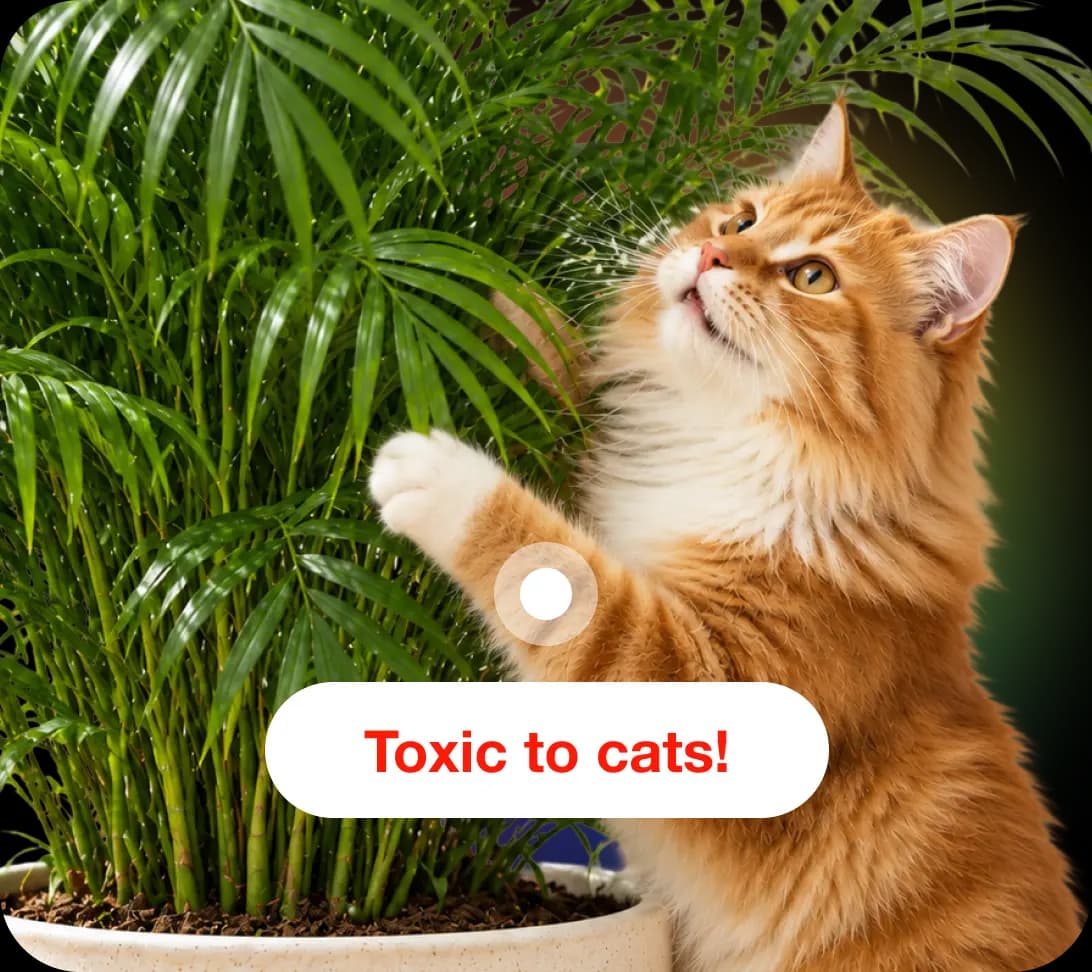
An orange cat reaching for a houseplant

Toxic to cats!

15 Best Scary Halloween Plants and Fungi for a Spooky Garden

8 min read · 9 Oct 2026

15 Best Scary Halloween Plants and Fungi for a Spooky Garden

Want a garden that looks eerie in October? Here are 15 Halloween plants and fungi, from carnivorous traps to bleeding mushrooms. For each species, we cover its appearance, care requirements, and potential uses in your landscape.

Plant Recommendations
15 Best Scary Halloween Plants and Fungi for a Spooky Garden
How Often to Water Fruit Trees

7 min read · 11 Aug 2026

How Often to Water Fruit Trees

Irrigation needs change as roots establish and weather shifts. This guide gives practical starting intervals, explains how soil and tree type change them, and shows how to recognize both excess moisture and drought stress.

Plant Care
How Often to Water Fruit Trees
8 Glow-in-the-Dark Plants and Fungi That Really Exist

8 min read · 6 Nov 2026

8 Glow-in-the-Dark Plants and Fungi That Really Exist

Plants that glow in the dusk really exist. Some of them produce their own light, while others need UV exposure or special treatments. Explore eight fascinating examples, including glowing petunias, bioluminescent mushrooms, fluorescent flowers, and experimental succulents.

Plant Recommendations
8 Glow-in-the-Dark Plants and Fungi That Really Exist