



Is Philodendron Toxic to Cats?Philodendron 'Prince of Orange'

Toxicity level

Toxic to Cats
Toxic compound
insoluble calcium oxalates
Toxic parts
all parts

Keep philodendron 'Prince of Orange' out of cats' reach: all parts are toxic, though chewing usually causes mild effects. Its upright foliage can be accessible on low tables or plant stands, so contact a veterinarian if a cat chews it.

The toxic substance in Philodendron 'Prince of Orange' is insoluble calcium oxalate, present as microscopic, needle-shaped crystals called raphides. These crystals occur in all parts of the plant. When a cat chews the tissue, damaged plant cells release the crystals, which pierce the delicate lining of the mouth and throat. This physical injury triggers local inflammation without requiring the crystals to enter the bloodstream.

Toxic componentWhere foundHow it acts
Insoluble calcium oxalates
Found in: All parts
All partsReleased crystals pierce mouth and throat tissues and trigger inflammation.

Damage to a 'Prince of Orange' philodendron releases irritating material from its leaves or stems. Effects are usually mild, but contact a veterinarian if signs persist or worsen.

  1. Remove the plant

    Move the pot out of reach and collect fallen leaves, including orange new growth. Do not make the cat vomit unless a veterinarian directs it.

  2. Check for damage

    Inspect the upright plant for chewed leaf edges and damaged stems. Photograph the damage and estimate how much foliage is missing.

  3. Identify other exposure

    If other cats shared access to the pot, check whether they also chewed its leaves or carried fallen pieces elsewhere.

Cats that chew the plant may show changes centered on the mouth and swallowing. Watch for unusual mouth movements, wet fur around the chin, or changes in how the cat approaches food and water.

  • Mouth irritation

    The cat may paw at its mouth, shake its head, or repeatedly lick its lips rather than settle normally.

  • Drooling

    Saliva may drip from the mouth or leave the chin and chest fur noticeably wetter than usual.

  • Vomiting

    The cat may retch with visible belly contractions and bring up food or fluid, rather than simply spit it out.

  • Difficulty swallowing

    The cat may make repeated swallowing attempts, gag, or stop eating after trying to take a bite.

Signs Over Time

  1. 0–1 hour

    Oral irritation and drooling often begin within minutes of chewing.

  2. 1–24 hours

    Drooling may continue, with vomiting or difficulty swallowing in some cats.

  3. 1–2 days

    Most mild cases improve within a day or two as oral irritation fades.

The upright leaves of Philodendron 'Prince of Orange' are within chewing distance when its pot sits on a table, windowsill, or plant stand.

  • Enclose the whole plant

    Use a stable, ventilated plant cabinet with a secure door. Leave room for upright growth, and choose ventilation openings that prevent paws from reaching leaves.

  • Collect fallen leaves

    Check the enclosure floor and surrounding area for fallen leaves. All parts are toxic, so discard detached pieces where the cat cannot retrieve them.

  • Isolate plant care

    Keep the cat outside the room during pruning or repotting. Bag trimmings and loose plant material, then return the pot before reopening the room.

Identify First, Decide Next

In stores, Botan App names plants from one photo, instantly flagging cat toxicity.

Available on iOS and Android

FAQ

Yes. It belongs to the arum family, alongside pothos, monstera, and peace lilies. These plants share similar irritation risks for cats. Despite their name, peace lilies are not true lilies, which cause a different type of poisoning.

More Plant Toxicity Guides for Cats

Your Plants, Your Cat: A Good Match?

Across your collection, Botan App identifies plants from photos and explains their effects on cats.

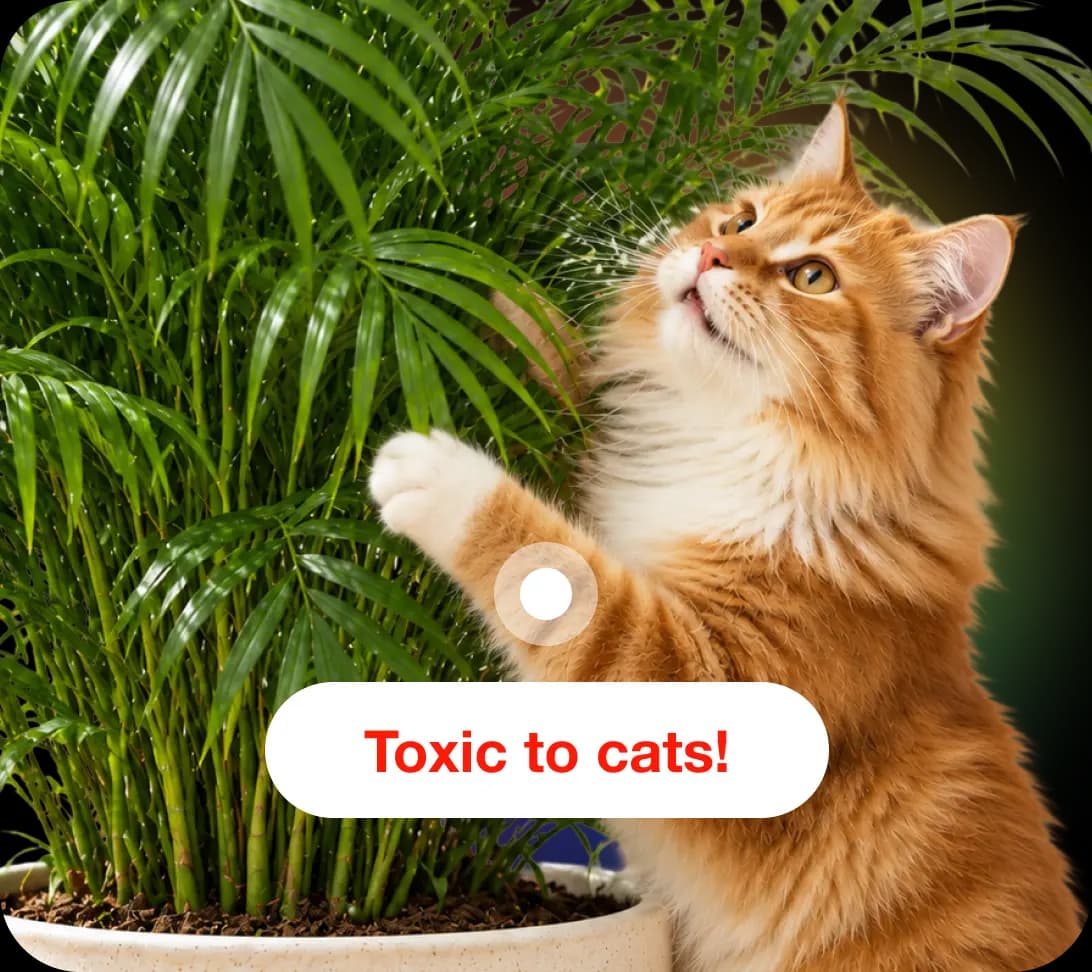
An orange cat reaching for a houseplant

Toxic to cats!

Plants That Repel Bugs – 20 Effective Options

12 min read · 16 Jul 2026

Plants That Repel Bugs – 20 Effective Options

Mosquitoes on the patio? Gnats in the kitchen? Some plants keep them away with the scent of their own leaves. Here are 20 that deal with mosquitoes, flies, aphids, and more, plus where to put them so they help.

Plant Recommendations

Plants That Repel Bugs – 20 Effective Options
Can Plants Grow With Artificial Light?

6 min read · 15 Sept 2026

Can Plants Grow With Artificial Light?

Plants can grow under artificial light when the setup provides a suitable spectrum, enough intensity, and sufficient daily exposure. This guide explains how artificial lighting compares with sunlight, which options work indoors, and how to match a setup to houseplants.

Plant Care
Can Plants Grow With Artificial Light?
How to Tell if a Plant Is Dead

6 min read · 19 Aug 2026

How to Tell if a Plant Is Dead

A plant can lose its leaves, stop growing, or collapse and still remain alive. A closer look at the stems, roots, bulbs, and tubers can show whether the plant still has a chance to recover.

Beginner Guides
How to Tell if a Plant Is Dead