


Is ZZ Plant Toxic to Cats?Zamioculcas zamiifolia

Toxicity level

Toxic to Cats
Toxic compound
calcium oxalates
Toxic parts
leaves

The leaves of a ZZ plant are mildly toxic to cats. Cats may chew its lower leaves when it is kept on the floor, so keep it out of reach and contact a veterinarian if chewing occurs.

The leaves of Zamioculcas zamiifolia contain insoluble calcium oxalates arranged in tiny, needle-shaped crystals called raphides. When a cat chews the leaves, damaged plant cells release these crystals. They penetrate the delicate tissues lining the mouth and throat, causing irritation and inflammation. The toxic effect comes from direct contact with these crystals rather than a poison circulating through the bloodstream.

Toxic componentWhere foundHow it acts
Insoluble calcium oxalates
Found in: Leaves
LeavesNeedle-shaped crystals penetrate and irritate tissues lining the mouth and throat.

The thick leaves of a ZZ plant can irritate a cat’s mouth when chewed. Effects are usually mild, but contact a veterinarian if signs persist or worsen after exposure.

  1. Stop further chewing

    Separate the cat from the upright plant and any torn leaves. Do not make the cat vomit unless a veterinarian directs it.

  2. Check missing leaves

    Look along the upright stalks for freshly bitten or missing leaflets. Note roughly how much is missing and whether pieces remain nearby.

  3. Collect fallen pieces

    Pick up detached leaflets around the pot and beneath its shelf or stand. Move the plant out of the room during cleanup.

Cats that chew the leaves may show discomfort around the mouth and changes in eating behavior. Stomach upset is another possible sign, so watch for unusual behavior at the food bowl or afterward.

  • Mouth pain

    A cat may paw at its mouth, lick its lips repeatedly, or pull away from food it normally eats.

  • Drooling

    Saliva may drip from the mouth or leave the chin and chest noticeably wetter than usual.

  • Vomiting

    A cat may retch with visible belly contractions, then bring up food, fluid, or foam rather than a hairball.

How Signs Develop

  1. 0–1 hour

    Oral pain and drooling can begin within minutes of chewing.

  2. 1–24 hours

    Drooling may continue, and vomiting can occur as irritation persists.

  3. 1–2 days

    Mild signs usually fade within a day or two.

Floor pots and low stands put a ZZ plant’s upright, leafy stems within a cat’s reach, especially in shared rooms beside furniture used for climbing.

  • Choose a closed room

    Display the plant in a room the cat cannot enter. Its upright growth does not keep lower leaves beyond reach from nearby furniture.

  • Unpack behind closed doors

    Take newly purchased or gifted pots directly into the cat-free room. Remove sleeves and packaging there rather than leaving the leafy plant accessible during unpacking.

  • Contain leaves during care

    Keep the door closed while removing damaged leaves or repotting. Collect loose leaves from the floor and seal discarded foliage in a cat-inaccessible trash container.

Know the Plant Before Buying

Snap a photo with Botan App for instant plant identification and cat toxicity details.

Available on iOS and Android

FAQ

Yes, a single chewed bite can cause irritation. The number of bites alone does not predict how a cat will react; the amount of leaf tissue chewed and the extent of contact with the mouth also matter.

More Plant Toxicity Guides for Cats

Can You Identify Your Own Plants?

With Botan App, identify inherited plants from photos and learn their effects on cats.

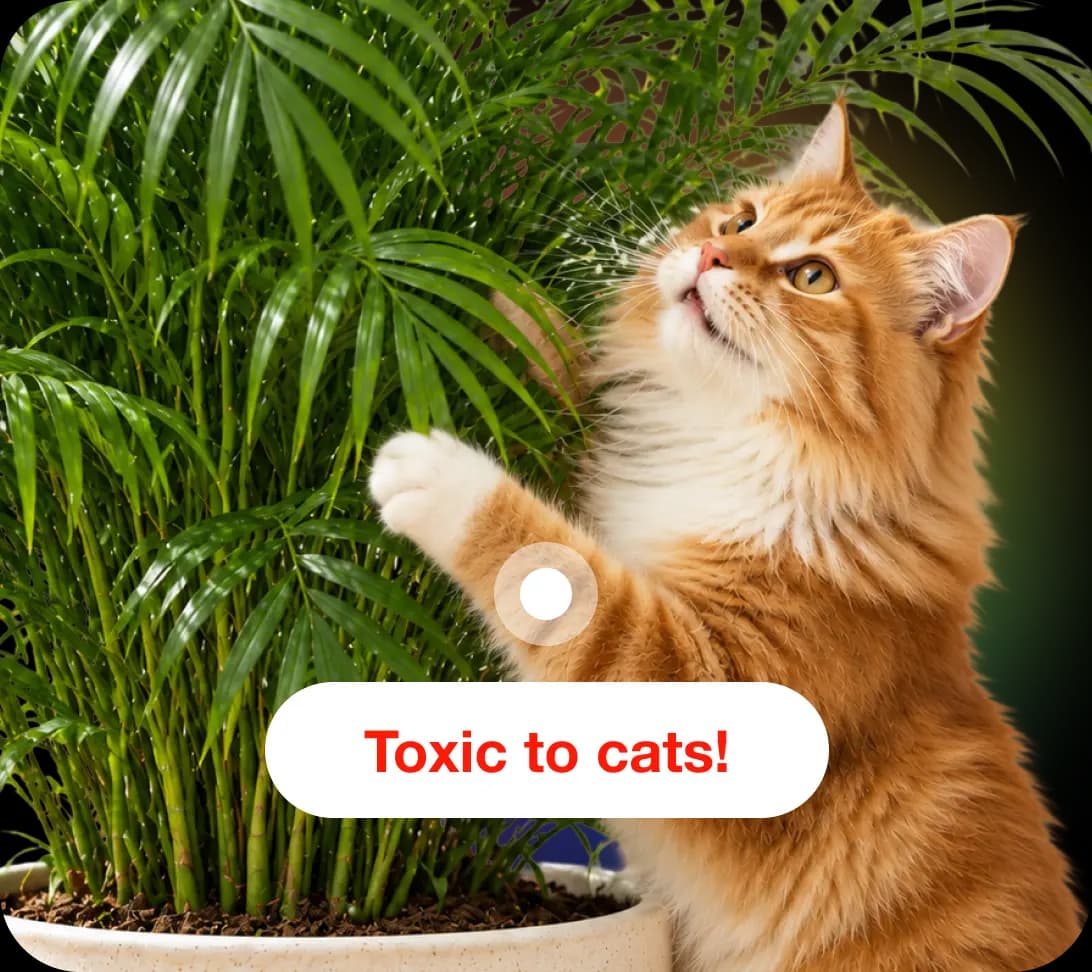
An orange cat reaching for a houseplant

Toxic to cats!

Top 15 Fast-Growing Trees For Your Garden

13 min read · 28 Jul 2026

Top 15 Fast-Growing Trees For Your Garden

Learn which of the 15 fastest-growing trees will suit your area. We’ll share detailed information on each: growth rate, mature spread, key tree demands, and main vulnerabilities. Read on and make the best choice possible.

Plant Recommendations
Top 15 Fast-Growing Trees For Your Garden
Is Sugar Water Good for Plants?

4 min read · 14 Sept 2026

Is Sugar Water Good for Plants?

Sugar water may sound like an easy boost, but most rooted plants do not need extra sucrose. This guide explains how green tissues produce carbohydrates, when a sweetened solution can be useful, and why too much can cause problems.

Plant Care
Is Sugar Water Good for Plants?
12 Best Plants That Repel Spiders For Your Home and Garden

8 min read · 24 Jul 2026

12 Best Plants That Repel Spiders For Your Home and Garden

Spiders constantly appear in places you don't want them. A few common plants can help repel them using scent alone. Here are 12 options suitable for both indoors and outdoors, plus care tips for each.

Plant Recommendations
12 Best Plants That Repel Spiders For Your Home and Garden