
ZZ Plant Identification (Zamioculcas zamiifolia)

Recognize ZZ Plant by its thick, upright leaf stalks that rise directly from the base, each carrying paired, oval leaflets in a feather-like row.

Plants form a clumping base from underground rhizomes and usually stay about 2 to 4 feet (0.6 to 1.2 m) tall indoors.

Zamioculcas zamiifolia Identification

Check Your Plant ID

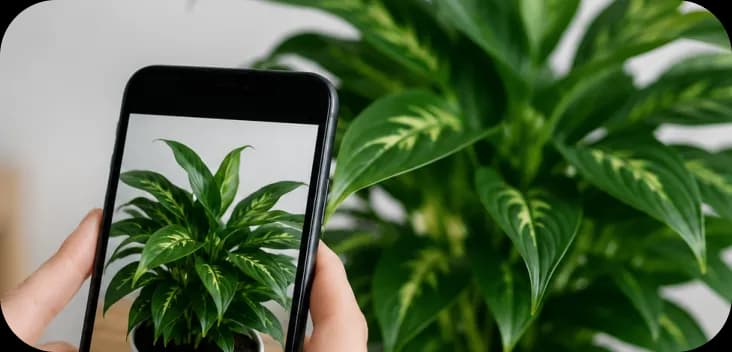
Use a clear photo to confirm what plant you have.

Clear images work best. Avoid photos taken too close or too far away

Check the plant’s leaf structure and the way each shoot rises from the base.

  • Thick, upright, fleshy stalks grow directly from the soil, with no woody trunk or branching stem visible above the pot.
  • Each stalk carries many paired leaflets along a central axis, giving one leaf a feather-like, pinnate shape.
  • Leaflets are oval to elliptic, smooth-edged, and often glossy, usually about 2-6 inches (5-15 cm) long.
  • A full leaf commonly holds about 6-8 pairs of leaflets, plus a single leaflet at the tip.

Zamioculcas zamiifolia usually forms a dense clump of these upright, arching leaves.

ZZ Plant shows clear age-related shifts in leaflet size, spacing, and overall form.

  • Juvenile plant: Juvenile plants have shorter, thinner leaf stalks with fewer, smaller leaflets, giving a tighter upright outline and less arching than older plants.
  • Young plant: As Zamioculcas zamiifolia enters the young stage, leaves lengthen to about 12-24 inches (30-60 cm), and paired leaflets become broader and more evenly spaced.
  • Mature plant: Mature plants form thicker, fleshy leaf stalks from swollen rhizomes, with stronger arching and a wider clump. Individual leaves carry many more leaflets than juvenile growth.

Several named forms of ZZ plant are easy to separate by leaf color and plant stature.

  • 'Raven': New leaflets emerge bright green, then mature to very dark purple-black; the typical form stays medium to deep green.
  • 'Zenzi': A dwarf form with shorter, thicker leaf stalks and tightly packed, slightly curved leaflets, usually staying under about 2 feet (60 cm) tall.
  • 'Chameleon': Fresh growth starts lime to yellow-green and gradually deepens to green as it ages, so one plant often shows two clear foliage colors at once.

A few plants are regularly mistaken for ZZ plant at a quick glance.

cardboard palm(Zamia furfuracea)

Often confused because both have stiff, glossy, pinnate leaves with many leaflets. Cardboard palm forms a short trunk or caudex and its leaflets are thicker, broader, and often fuzzy underneath; Zamioculcas zamiifolia has smooth leaflets on fleshy upright stalks from the base.

sago palm(Cycas revoluta)

Young plants can look similar because both make arching feather-like leaves from the base. Sago palm leaflets are much narrower and more numerous, creating a finer texture, and the plant develops a woody trunk; Zamioculcas zamiifolia has fewer, broader leaflets and no trunk.

Zamioculcas zamiifolia is native to eastern Africa, including Kenya, Tanzania, and nearby countries. It occurs in seasonally dry tropical forest and woodland, often on rocky ground. That setting helps separate it from many houseplants that come from humid rainforest understories. In identification, an eastern African woodland species is a more useful match than a typical jungle aroid.

  • Ingestion risk: All parts, especially leaves and stems, contain calcium oxalate crystals. Chewing or swallowing can irritate the mouth and throat in humans and pets.
  • Skin contact: Sap and crushed tissues can irritate skin in some people because of the same crystals. This is a contact concern for humans more than pets.

Scan. Check. Confirm.

Use Botan to identify or verify a plant from a photo, which helps avoid mix-ups before buying, labeling, or sharing it.

FAQ

Look for upright, arching leaf stalks rising from the base, each lined with thick, glossy, oval leaflets in opposite pairs. This species forms a neat clump and lacks a trunk, a useful ZZ Plant identification clue.

Know Your Plant Better

Identify a plant from a photo with Botan, then review species-specific care information, safety notes, and common problems.

Botan app identifying a plant from a photo
What Plants Don't Like Epsom Salt?

11 min read · 29 Jul 2026

What Plants Don't Like Epsom Salt?

Learn which plants can be seriously damaged by Epsom salt and which will thrive on it. We’ll explain when and how to use it properly, provide tips for indoor & outdoor plants — read on and enjoy a healthy garden.

Plant Care
What Plants Don't Like Epsom Salt?
How to Increase Humidity for Plants – 8 Simple Ways That Work

8 min read · 14 Aug 2026

How to Increase Humidity for Plants – 8 Simple Ways That Work

Dry indoor air stresses a lot of houseplants. You usually notice it first in the browning leaf tips. This guide describes 8 simple ways to raise the moisture around your plants, from humidifiers to pebble trays.

Plant Care
How to Increase Humidity for Plants – 8 Simple Ways That Work
Rice Water for Plants – Which Plants Love It and How to Make It

8 min read · 14 Jul 2026

Rice Water for Plants – Which Plants Love It and How to Make It

Rice water can be an ideal DIY solution for orchids, roses, or fruiting plants. It supports growth, leaf count, and height. We’ll share how to make and apply it correctly for your plant.

Plant Care
Rice Water for Plants – Which Plants Love It and How to Make It