


rhododendron (Rhododendron ponticum) Light Needs

rhododendron grows best in partial shade, with bright filtered light and protection from harsh afternoon sun.

Light Preference

Partial Shade

Rhododendron ponticum Light Requirements

rhododendron is native to humid woodland and mountain-edge habitats in parts of southern Europe and western Asia. It often grows near forest margins, beneath open canopies, and on sheltered slopes where light is filtered for much of the day. This background explains its garden preference for bright shade or partial sun rather than hot, exposed sites. It prefers partial shade.

  • Ideal exposure:

    rhododendron needs about 6–8 hours of bright filtered light or partial shade daily, including up to 2–3 hours of gentle direct morning sun.

  • Direct sun limit:

    Short morning sun is usually tolerated, but full sun through the hottest part of the day can scorch leaves.

  • Shade tolerance:

    Open shade is suitable, especially in warm climates, but very deep shade can reduce flowering and create looser growth.

  • Afternoon risk:

    West-facing, heat-reflective, or exposed sites need screening from strong afternoon sun.

Strong sun stress is most likely in hot, exposed sites.

Sun-facing scorch:

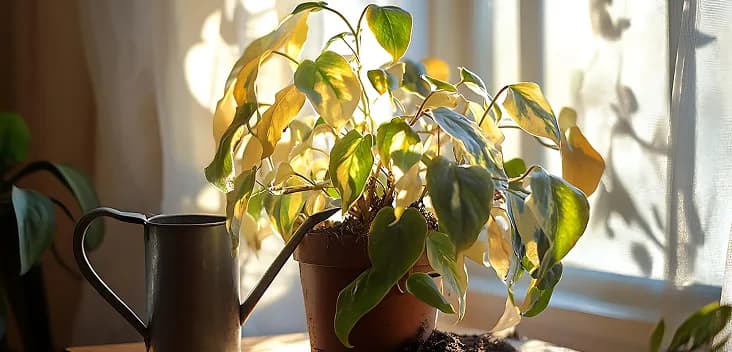
Leaves exposed to the strongest sun may develop pale tan patches or dry scorched areas.

Midday curling:

Foliage may curl or droop during hot afternoon light, especially on exposed outer growth.

Bleached leaf tone:

Deep green leaves may look washed out where sun is most intense.

Faded buds:

Flower buds or open blooms can fade faster when exposed to harsh sun and reflected heat.

Shift container-grown plants into bright shade or add afternoon screening. For planted shrubs, use shade cloth or nearby structure to reduce the strongest direct sun.

Low light usually affects flowering and growth shape before it causes obvious leaf damage.

  • Sparse flowering:

    Few buds or weak bloom can occur when shade is too dense during the growing season.

  • Open growth:

    New stems may stretch with wider spacing between leaves as they reach toward brighter areas.

  • Leaning habit:

    A one-sided lean toward the light suggests the plant is not receiving even exposure.

  • Smaller new leaves:

    New foliage may stay smaller and less vigorous when light is consistently weak.

Move container-grown plants to brighter open shade, or improve nearby light gradually. Avoid shifting a shaded plant straight into strong afternoon sun.

Choose an open-shade site if ideal filtered light is not available. Pick a place with morning sun and afternoon protection rather than an exposed all-day sun position.

Improve light by clearing dense overhead growth enough to brighten the area without removing all shade. Rotate container-grown plants every few weeks for even exposure.

Avoid heat-reflective walls and paved areas in full afternoon sun, because they intensify light and leaf temperature.

Get Personalized Care Plan

Scan your plant to receive care tips personalized for your specific plant

FAQ

This plant does best in partial shade with bright filtered light. Gentle morning sun is useful, but hot afternoon exposure can scorch foliage and stress buds.

More Plant Light Guides

Get the Botan App

Discover how to care for your plants with Botan.

Botan app identifying a plant with a phone camera
What Do Plants Need to Grow – 5 Things Every Greenery Can't Live Without

8 min read · 31 Jul 2026

What Do Plants Need to Grow – 5 Things Every Greenery Can't Live Without

To keep plants healthy and thriving, provide the right balance of light, humidity, nutrients, airflow, and quality soil. This guide covers the essentials of year-round plant care.

Beginner Guides
What Do Plants Need to Grow – 5 Things Every Greenery Can't Live Without
Plant Pot Sizes: How to Choose the Right Plant Container

7 min read · 20 Aug 2026

Plant Pot Sizes: How to Choose the Right Plant Container

Plant pot sizes can be confusing because the number on the label only tells you part of the required information. A container may look spacious but actually be too shallow. So, how to choose pot size for plant species?

Beginner Guides
Plant Pot Sizes: How to Choose the Right Plant Container
How to Group Plants in Landscaping: A Practical Layout Guide

8 min read · 31 Aug 2026

How to Group Plants in Landscaping: A Practical Layout Guide

Good plant grouping can mean the difference between a well-planned garden and one that looks sloppy. This guide explores layers, spacing, cluster shapes, and the plants that thrive when you group them.

Plant Care
How to Group Plants in Landscaping: A Practical Layout Guide