How to Use a Plant Identifier App – Step-by-Step Guide
Learn how to get the most out of a plant identifier app. Here, you’ll find direct instructions on how to use the app and take the right photos, a list of common mistakes to avoid, and bonus tips for evaluating the app’s features.

On this page
- What Is a Plant Identifier App?
- How to Identify Plants with Your Phone – 6 Steps
- How to Take the Perfect Photo to Identify a Plant
- 5 Common Mistakes When Identifying Plants Using an App
- What Features Should a Good Plant ID App Have?
- Large Plant Database
- Care Plan
- Pest and Disease Identification
- Review Toxicity for Pets
- Chat with a Botanist
- How Plant Identification Works Behind the Scenes
Modern identifier apps can tell you the name of an unknown plant in seconds, without hours of research. However, you need to know how to use the plant identifier correctly to get the most accurate results.
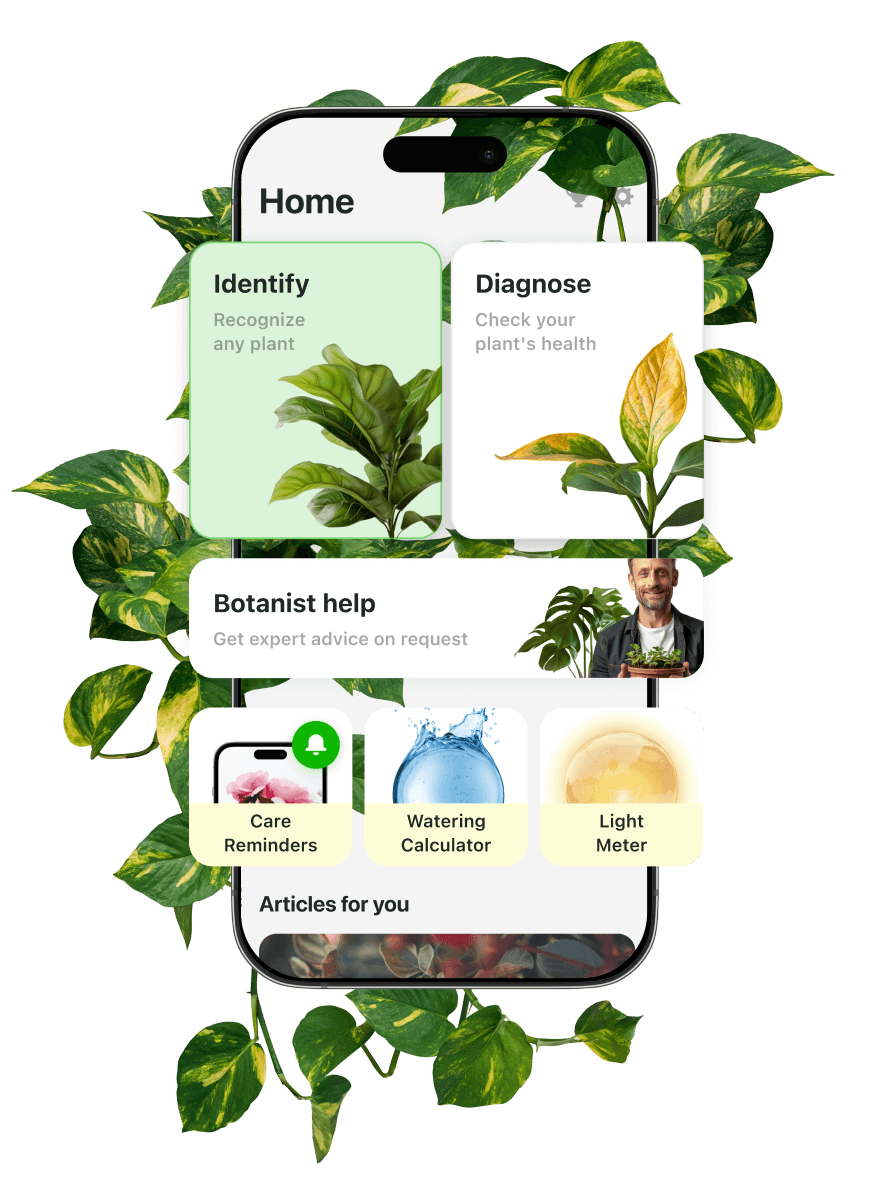
We’ll walk you through every stage of the ID process using the Botan app as an example, so you can recognize any plant instantly, on the very first try.
What Is a Plant Identifier App?
This is a mobile application designed to help users identify their plants within 3-10 seconds just by uploading a photo. The system connects to plant databases and AI to compare species and find the right match. Top apps give 98%+ accuracy.
An app that identifies plants can and should be multifunctional. Best tools on the market also offer care tips after ID, instant disease diagnostics, expert help, environmental tools, and reminders.
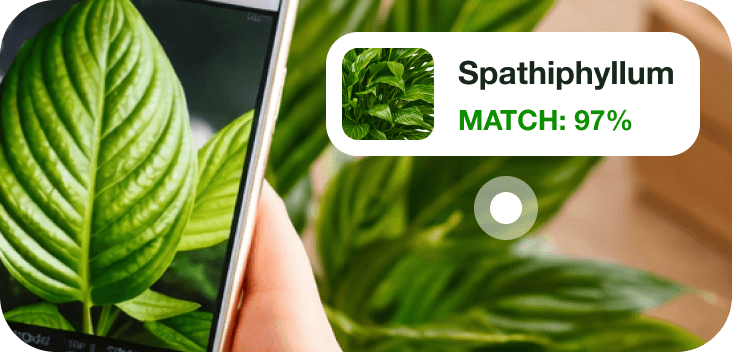
Identify Your Plant
Scan the plant and get a result with 98% accuracy
How to Identify Plants with Your Phone – 6 Steps
The identification algorithm is quite similar across the top ID tools. We’ll take the Botan plant identifier as an example to cover the main steps.
So, here’s how to identify plants with your phone using the app:
- Download the app. It’s available on Google Play and the App Store.
- Open Camera. The icon is right in the middle of the screen (bottom menu).
- Take or upload a photo. Allow access to the camera or upload a photo of your plant from your gallery.
- Wait a few seconds. The identification process may take 1 to 5 seconds.
- Review the ID result. You’ll see the exact species. The app has 98% accuracy, but still review it.
- Get your care tips. Scroll down the screen to see all environmental recommendations, care tips, and facts about the species, and set reminders if necessary.
You can try Botan for free — just download the app and test it to see how it works in practice. The interface is fully intuitive, so you’ll hardly experience any difficulty.

How to Take the Perfect Photo to Identify a Plant
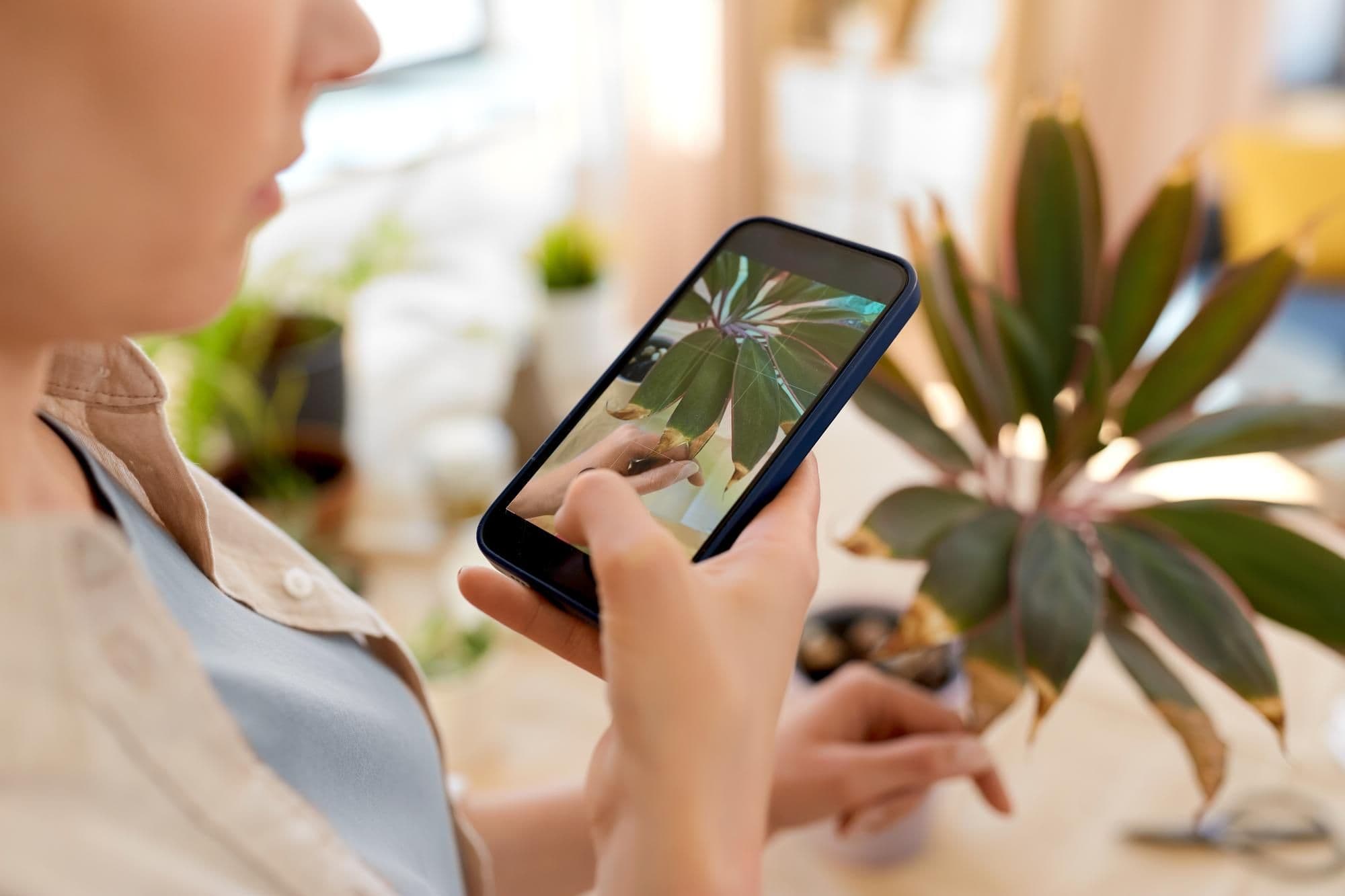
Even the best plant identification apps can struggle with low-quality photos or photos where the distinctive elements are not clearly visible. Good photos, on the other hand, automatically increase accuracy.
What to do:
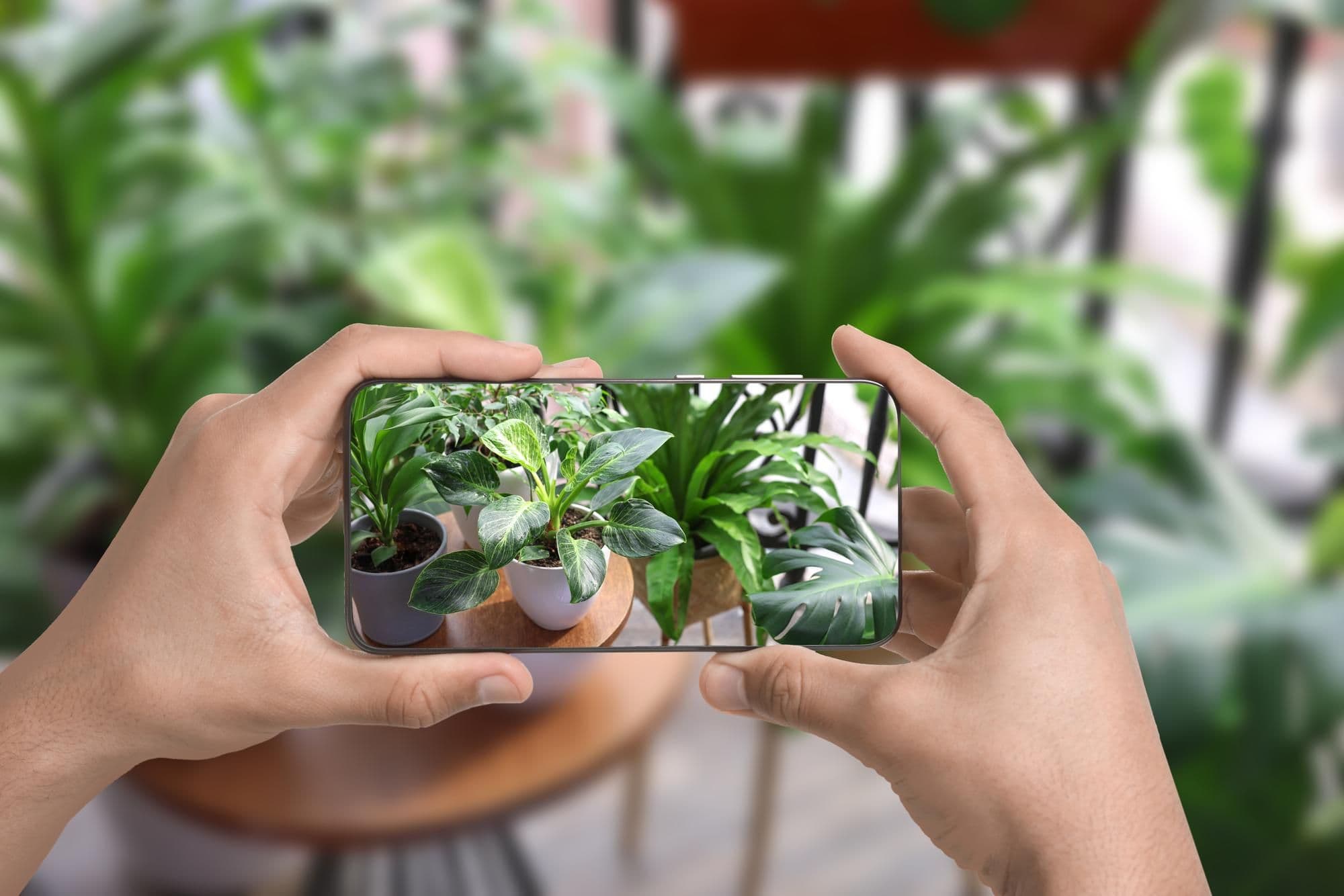
- Take a photo of one plant at a time.
- Ensure the background is plain (crop the photo if necessary).
- Photograph your plant from the side, not from above.
- Get close — ensure only the plant is in focus.
- Capture leaves from the middle of the canopy.
- Try to capture all distinctive elements: leaves, their attachment to the stem, flowers, fruits, and bark.
What to avoid:
- Don’t use flash.
- Don’t shoot through a window.
- Don’t submit blurry photos.
- Don’t shoot in harsh, direct sunlight.
- Don’t use any filters.
Also, allow access to your geolocation. That’s how you can speed up the process: the app will focus on species native to your region first.

5 Common Mistakes When Identifying Plants Using an App
An app for identifying plants can make mistakes, and so can users. Here’s what to watch out for:
- Taking a photo at the wrong time of the year, for example, in winter, when there are no flowers or leaves.
- Relying on the app too much to make high-stakes decisions, for example, whether to eat a mushroom.
- Photographing a very damaged or sick plant (unless you are using a Disease ID feature).
- Not double-checking the result, especially for hard-to-identify species, such as nearly all grasses.
- Not consulting a specialist when you have any doubts (of course, if the app offers this function).
ID apps are not always 100% accurate, but they are continually improving. You can expect top tools to be effective — just keep the practical recommendations in mind to get the most out of the app.
What Features Should a Good Plant ID App Have?
Users expect specific benefits from ID apps. Those include overall convenience, useful knowledge, and practical features:
Feature | Why It Matters |
Plant Database | Determines the overall effectiveness of the app |
Care Plans | Eliminates all the guesswork, lets you access reminders on when & how to water, fertilize, repot, etc. |
Pest & Disease ID | Offers a ready-to-go solution for cases when something goes wrong |
Toxicity ID | Helps create a safe environment for pets, children, and adults |
Expert consultations | Solves problems with unclear results, unusual species, or something involving risks |
There’s no need to search for a simple app to take a picture of a plant and identify it. Modern apps have much more to offer, so let’s see how they work in practice.

Large Plant Database
The more species in the database, the more easily the system finds matches. These are not just pictures and basic descriptions. Information about each species includes pretty much everything: multiple images, distinctive features, growth-stage patterns, and more.
Botan has over 30,000 plants and integrates with larger databases and AI for more accurate IDs, even beyond the initial range of species.
Care Plan
The process doesn’t stop with identification. Once the species is identified, the app can provide you with a step-by-step care plan and environmental tools.
For example, Botan provides comprehensive care information, a watering calculator, a light meter, and care reminders, so you never miss watering, repotting, or fertilizing. All advice is science-backed.
Pest and Disease Identification
When something is wrong, the app can let you know the reason with a single tap. That’s Disease ID — one of the key tools. For example, if your Monstera has black spots, you can take a photo and learn whether it's heat damage, a fungal infection, or a bacterial infection, and get a step-by-step treatment guide.
Pest ID works the same way. If you see pests or suspect they’re there, the app, like Botan, will analyze the symptoms and suggest an insecticide.
Review Toxicity for Pets
With Botan, you’ll see the plant's toxicity status right after identification. It’s included in the Info section. Of course, the feature works for houseplants, too, but it’s especially useful when you come across unfamiliar wild plants.
Chat with a Botanist
That’s the best feature an app can have. When you have any questions about the plant, care, fertilizer, or pretty much anything else, you can just open a live chat and connect with a botanist via the Botan system. There’s no need to submit the request via email and wait for 24-48 hours.

How Plant Identification Works Behind the Scenes
The algorithm will largely depend on the app. Again, let’s take Botan as an example.
What is this plant app based on? The answer is simple — it’s based on science and a lot of data. The app has 30,000+ species in its database, and when you upload a photo, it starts comparing your image to them.
The system evaluates each potential match by dozens of criteria. For example, it doesn’t just consider the overall shape of the leaf; it also considers leaf structure, edges, surface, texture, arrangement on the stem, venation pattern, etc.
If the system doesn’t find a match, it switches to AI mode and uses a specialized model to find the exact species. When it’s found, you get the plant's common and scientific names, care plan, and environmental tips.
FAQ
If you believe the result is incorrect, retry. Take another photo, if possible, and ensure that the lighting is natural and that the most distinctive elements (leaves, flowers, fruits, bark, stem) are visible. Then, just let the scanner process this new photo.
Dariia Plaksina
Botanist
5 years of botanical research experience
Dariia Plaksina is a biologist, botanist, and writer of informational articles with over 5 years of experience exploring the world of plants, nature, and biology. She studied at Taras Shevchenko National University of Kyiv, Educational and Scientific Center “Institute of Biology and Medicine,” where she built a strong scientific foundation for her future work.
For Dariia, writing is a hobby, a calling, and a way to make reliable knowledge easier to understand. Her articles focus on plant care, plant health, and natural processes, helping readers learn more about the living world through clear, accessible, and science-based explanations.
Related Articles
7 min read · 17 Aug 2026
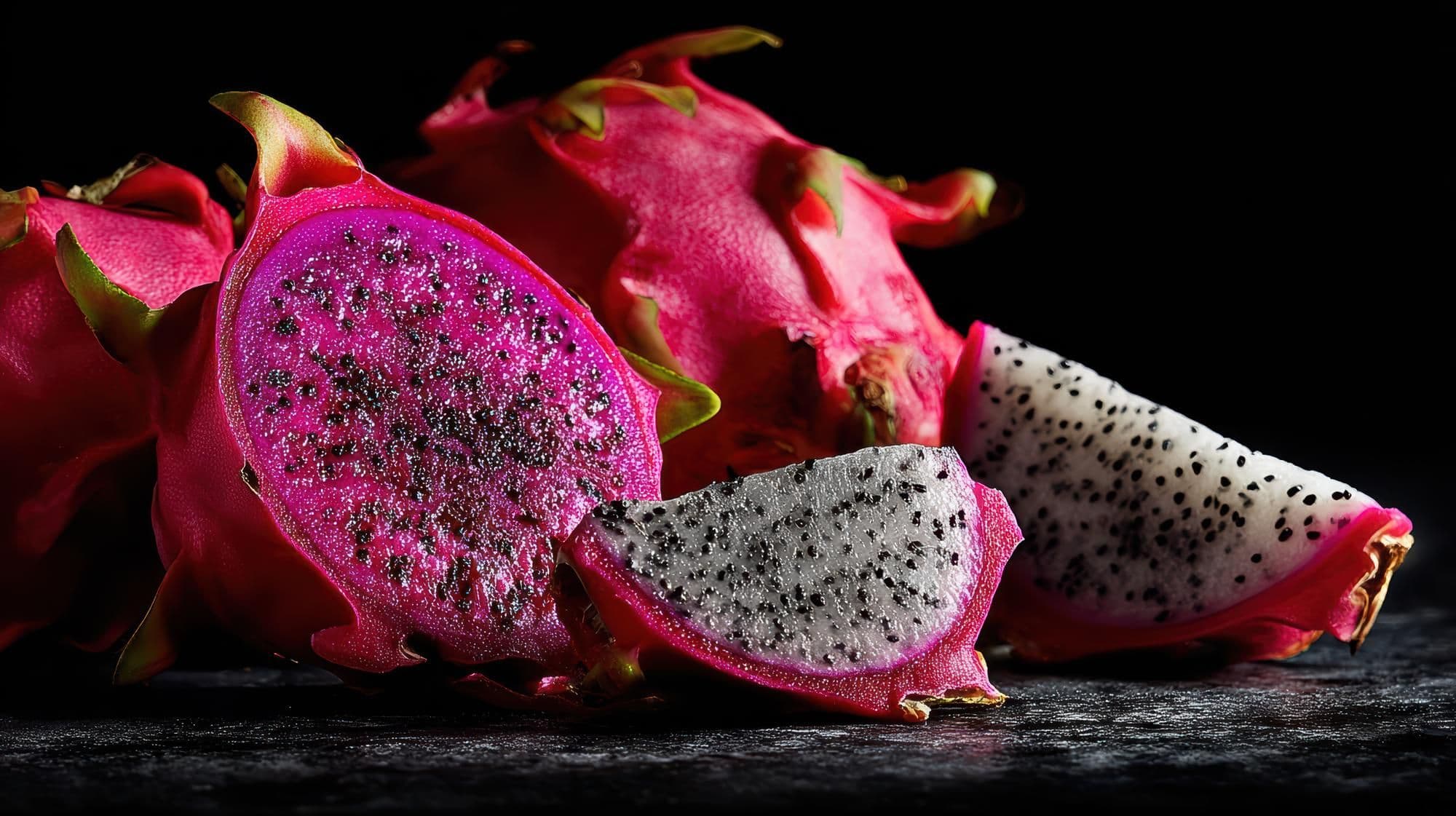
How to Tell If Dragon Fruit Is Ripe – Key Signs of Ripeness
A quick, practical guide to reading dragon fruit ripeness by color, firmness, and wing condition — plus how to pick a good one at the store and ripen an underripe fruit safely at home.
7 min read · 3 Aug 2026
What Is Plant Identification – A Complete Guide
Learn all about the 5 major plant identification methods and choose the one that fits you best. Find out which plant features to focus on, how to simplify the process, and how to avoid the most common ID mistakes.
8 min read · 1 Oct 2026
Lemon Tree Leaves Turning Yellow: Causes and How to Fix It
Yellow leaves are one of the most common lemon tree problems. This guide explains eight causes of lemon tree leaves turning yellow, from overwatering to root rot, with a fix for each.
Explore Plants by Care Needs
 POPULAR
Needle Stonecrop
Sedum lineare
 POPULAR
Woodland sage
Salvia nemorosa
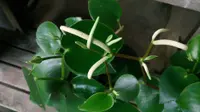 POPULAR
Raindrop Peperomia
Peperomia polybotrya
-1-200x150.webp) POPULAR
POPULARHydrocotyle Japan
Hydrocotyle tripartita
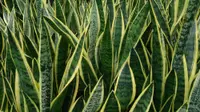 POPULAR
Snake plant
Dracaena trifasciata
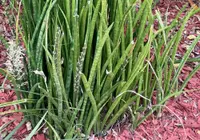 POPULAR
Cylindrical snake plant
Dracaena angolensis
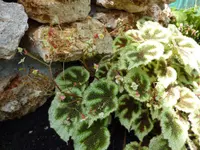 POPULAR
Iron Cross Begonia
Begonia masoniana
 POPULAR
Gerbera daisy
Gerbera jamesonii
Identify the plant and problem. Help your plant recover
Identify plant problems early, understand what's wrong, and get clear care guidance. Botan helps you turn guesswork into confident plant care