Plants That Look Like Aloe Vera
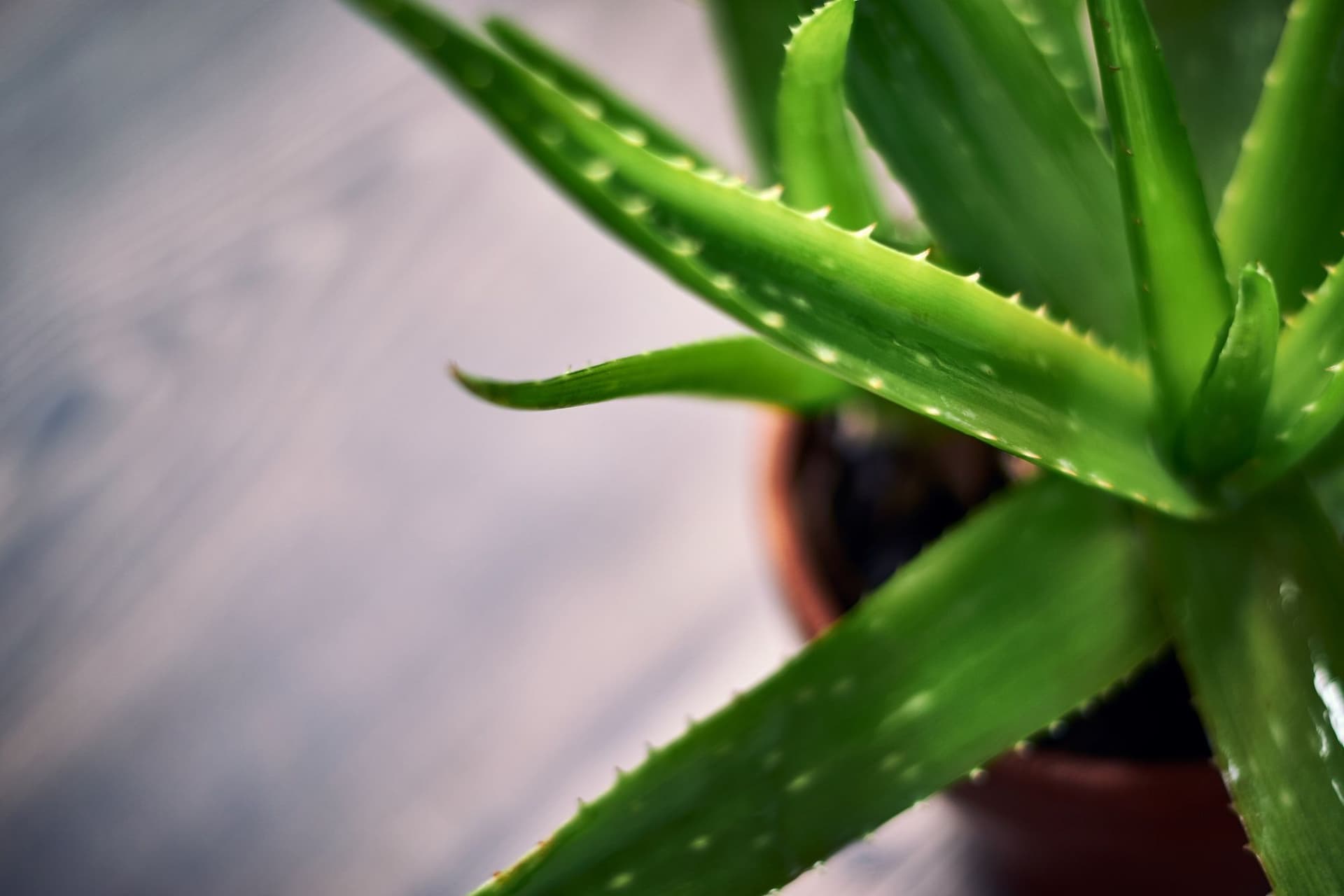
Aloe vera has a familiar rosette of thick, pointed leaves, but many other plants look similar at first glance. This guide compares 15 look-alikes and highlights the visual traits that distinguish each one from Aloe vera.

On this page
- Succulent That Looks Like Aloe
- Zebra Haworthia (Haworthiopsis attenuata)
- Ox Tongue (Gasteria obliqua)
- Lace Aloe (Aristaloe aristata)
- Century Plant (Agave americana)
- Molded Wax (Echeveria agavoides)
- Cactus That Looks Like Aloe Vera
- Agave Cactus (Leuchtenbergia principis)
- Ariocarpus agavioides
- Star Rock (Ariocarpus retusus)
- Ariocarpus trigonus
- Artichoke Cactus (Obregonia denegrii)
- Other Aloe-like Plants
- Spanish Bayonet (Yucca aloifolia)
- Bird's Nest Snake Plant (Dracaena trifasciata 'Hahnii')
- Mauritius Hemp (Furcraea foetida)
- Pineapple (Ananas comosus)
- Desert Spoon (Dasylirion wheeleri)
- How to Identify Aloe Vera
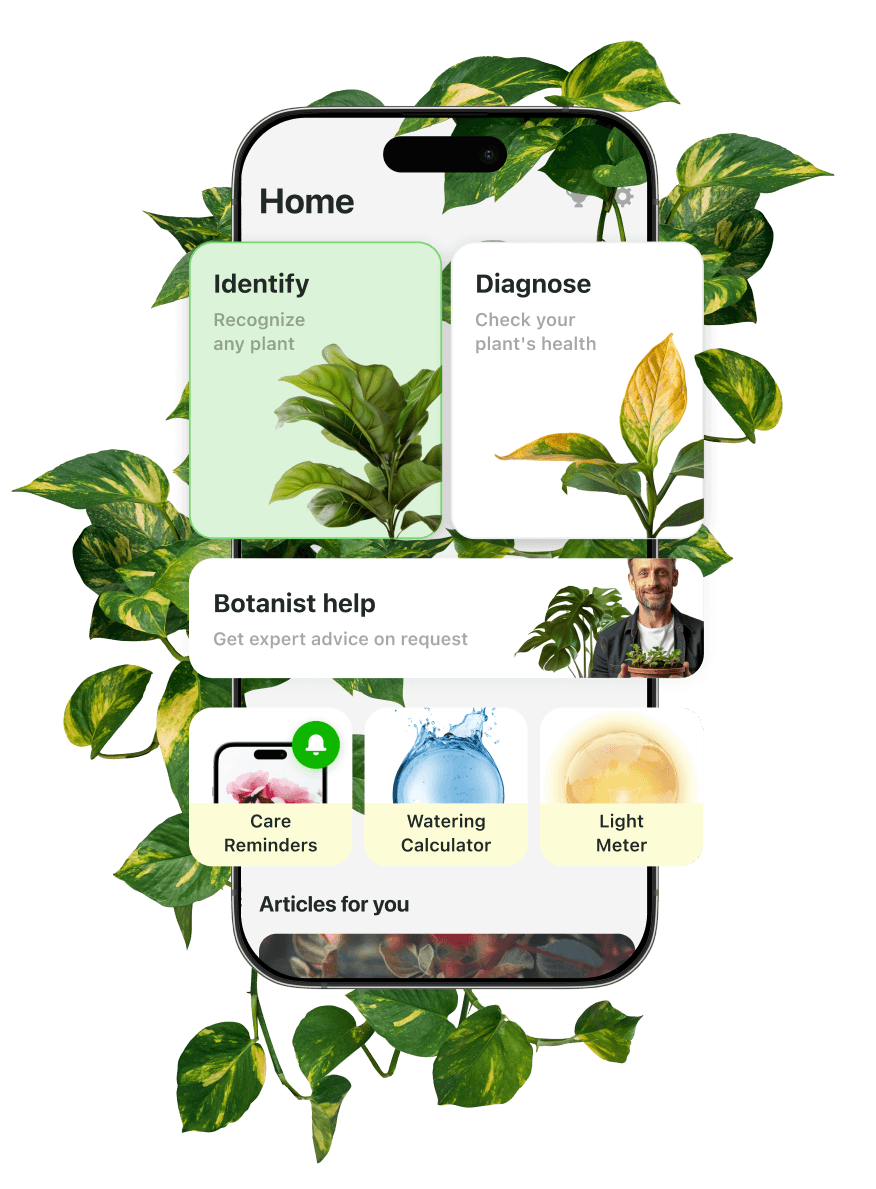
Plants that look like Aloe vera can be difficult to separate at a glance. Succulents, cacti, yuccas, and even pineapples can mimic its rosette-like silhouette. Botan can help identify an unfamiliar plant, while the clues below show what to check first.
This table compares the main similarities and differences. Use it to narrow the options before checking each plant in detail. Use the table to compare plants like Aloe vera by rosette shape, leaf texture, spines, and tubercles.
Plant | Category | Aloe-like Trait | Key Difference |
Succulent | Pointed fleshy rosette | Raised white bands | |
Ox Tongue | Succulent | Thick fleshy rosette | Broad speckled leaves |
Succulent | Spotted pointed rosette | White terminal bristle | |
Succulent | Large blue-green rosette | Rigid leaves, strong spine | |
Molded Wax | Succulent | Tight fleshy rosette | Short broad leaves, red tips |
Cactus | Long triangular growth | Papery cactus spines | |
Ariocarpus agavioides | Cactus | Miniature rosette | Tubercles, not leaves |
Cactus | Star-shaped rosette | Woolly areoles | |
Ariocarpus trigonus | Cactus | Pointed rosette-like form | Curved tubercles |
Cactus | Triangular rosette | Woolly areoles | |
Other | Sword-shaped rosette | Woody stem | |
Other | Dense pointed rosette | Horizontal bands | |
Mauritius Hemp | Other | Large sword-shaped rosette | Fibrous leaves |
Other | Dense basal rosette | Central fruiting stalk | |
Desert Spoon | Other | Narrow pointed rosette | Hooked leaf teeth |
Succulent That Looks Like Aloe
If you're trying to identify a succulent that looks like aloe, start with leaf texture and surface markings rather than color alone. A succulent identifier can help sort through similar species before you compare individual traits.
Zebra Haworthia (Haworthiopsis attenuata)

At first glance, the compact rosette can pass for a miniature aloe. Zebra Haworthia stands out once you notice the stiff dark green leaves and raised white tubercles arranged in distinct bands.
- Hardiness Zone: USDA 10-11
- Size: 4-12 in tall
- Exposure: Bright indirect light
- Water Needs: Low
- Toxicity: Non-toxic to cats and dogs
- Key Features: Raised white tubercles
Ox Tongue (Gasteria obliqua)

Young plants can be easy to confuse with aloe on first inspection. Ox tongue has broader, blunter leaves, often marked with pale speckles or raised dots across the fleshy surface.
- Hardiness Zone: USDA 10-11
- Size: Up to 20 in tall
- Exposure: Bright indirect light
- Water Needs: Low
- Toxicity: Not well documented
- Key Features: Broad speckled leaves
Lace Aloe (Aristaloe aristata)

Among the closer aloe look-alikes, lace aloe has fleshy lance-shaped leaves packed into a dense rosette. White spotting, fine teeth along the leaf edges, and a soft bristle at each tip make it easier to recognize.
- Hardiness Zone: USDA 8-10
- Size: Up to 8 in tall
- Exposure: Partial sun
- Water Needs: Low
- Toxicity: Harmful if ingested
- Key Features: White terminal bristles
Century Plant (Agave americana)

An oversized aloe-like silhouette can make century plant confusing at a glance. Up close, the much stiffer blue-green leaves, pronounced marginal teeth, and strong terminal spine distinguish it from aloe.
- Hardiness Zone: USDA 8-11
- Size: 6-10 ft tall and wide
- Exposure: Full sun
- Water Needs: Low
- Toxicity: Sap may irritate skin
- Key Features: Strong terminal spine
Molded Wax (Echeveria agavoides)

A tight rosette gives molded wax an aloe-like outline, but its foliage stays shorter, broader, and more triangular. Strong light may bring reddish tones to the tips or margins, another feature that sets it apart.
- Hardiness Zone: USDA 9-11
- Size: 4-20 in tall and wide
- Exposure: Full sun to bright filtered light
- Water Needs: Low
- Toxicity: Not well documented
- Key Features: Triangular leaves, reddish tips
Not Sure What Plant It Is?
Scan with Botan to help identify your plant
Identify Your Plant
Scan the plant and get a result with 98% accuracy
Cactus That Looks Like Aloe Vera
If you come across a cactus that looks like Aloe vera, check whether the leaf-like parts are actually enlarged tubercles. Areoles or spines at their tips can confirm that the plant is a cactus.
Agave Cactus (Leuchtenbergia principis)

Despite its leafy appearance, agave cactus is built from long blue-green tubercles rather than true leaves. Papery spines and small areoles at the tips reveal its cactus structure even when the plant forms a loose rosette.
- Hardiness Zone: USDA 9-11
- Size: Up to 28 in tall
- Exposure: Full sun to light shade
- Water Needs: Low
- Toxicity: Not well documented
- Key Features: Long triangular tubercles, papery spines
Ariocarpus agavioides

Low to the ground, this small cactus forms a compact rosette that can look surprisingly leaf-like. Its narrow tubercles mimic miniature succulent leaves, but the tiny areoles near their tips give away its cactus identity.
- Hardiness Zone: USDA 9b-11
- Size: Up to 3 in. wide
- Exposure: Full sun to partial shade
- Water Needs: Low
- Toxicity: Not well documented
- Key Features: Narrow agave-like tubercles
Star Rock (Ariocarpus retusus)

Seen from above, star rock can look like a rosette of thick fleshy leaves. The smooth triangular tubercles and woolly growth between them show that the plant has no true aloe foliage.
- Hardiness Zone: USDA 9-11
- Size: Up to 10 in wide
- Exposure: Full sun
- Water Needs: Low
- Toxicity: Not well documented
- Key Features: Smooth triangular tubercles, woolly center
Ariocarpus trigonus

The leaf-like effect comes from long triangular tubercles that curve upward toward the center. On mature plants, pale yellow or cream flowers add a second feature to check.
- Hardiness Zone: USDA 9b-11
- Size: 10-12 in wide
- Exposure: Bright light; protect from harsh afternoon sun
- Water Needs: Low
- Toxicity: Not well documented
- Key Features: Long incurved tubercles, pale flowers
Artichoke Cactus (Obregonia denegrii)

Overlapping triangular tubercles give artichoke cactus its flattened, layered rosette. Woolly areoles near the tips and short spines on younger growth distinguish this structure from the fleshy leaves of an aloe.
- Hardiness Zone: USDA 10-11
- Size: 4-6 in wide
- Exposure: Partial sun
- Water Needs: Low
- Toxicity: Not well documented
- Key Features: Broad triangular tubercles, woolly areoles
Other Aloe-like Plants
Aloe-like growth also appears outside familiar succulent groups. These five aloe-like plants share a rosette form or pointed foliage but differ in structure and mature growth. Some can also be found among easy care plants, though similar foliage does not mean the same care requirements.
Spanish Bayonet (Yucca aloifolia)

On younger plants, the dense crown of stiff sword-shaped leaves can look deceptively aloe-like. Age makes the difference clearer: Spanish bayonet develops a woody stem, sharp leaf tips, and fine serrations along the margins.
- Hardiness Zone: USDA 7-11
- Size: 10-15 ft
- Exposure: Full sun to partial shade
- Water Needs: Low
- Toxicity: Toxic to pets and humans
- Key Features: Woody stem, sharp leaf tips
Bird's Nest Snake Plant (Dracaena trifasciata 'Hahnii')

The short, stiff leaves of bird's nest snake plant gather in a funnel-shaped rosette. Pale horizontal bands cross the dark green foliage, while the plant lacks the soft, gel-filled texture associated with aloe.
- Hardiness Zone: USDA 10-12
- Size: 4-8 in
- Exposure: Bright indirect light
- Water Needs: Low
- Toxicity: Toxic to cats and dogs
- Key Features: Horizontal bands, compact rosette
Mauritius Hemp (Furcraea foetida)

Scale is part of the confusion with Mauritius hemp: long, sword-shaped leaves create a broad rosette with the proportions of an oversized aloe. The foliage itself is strongly fibrous, and mature plants may produce a tall flower stalk with numerous bulbils.
- Hardiness Zone: USDA 9-11
- Size: 3-4 ft tall before flowering
- Exposure: Full sun to partial shade
- Water Needs: Low to moderate
- Toxicity: Potentially toxic; saponin-rich leaves
- Key Features: Fibrous leaves, bulbils
Pineapple (Ananas comosus)

Before flowering, a young pineapple can be mistaken for an aloe-like rosette of stiff pointed leaves. The foliage stays narrower and more strap-like, and maturity brings a central flower spike followed by fruit.
- Hardiness Zone: USDA 10-12
- Size: 3-4 ft
- Exposure: Full sun
- Water Needs: Moderate
- Toxicity: Low severity; sap may irritate
- Key Features: Narrow leaves, central fruit
Desert Spoon (Dasylirion wheeleri)

From a distance, desert spoon has the same dense, pointed outline that can suggest an aloe. Its foliage is much narrower, though, with a blue-gray surface and hooked reddish teeth lining the margins.
- Hardiness Zone: USDA 8-10
- Size: 4-6 ft
- Exposure: Full sun
- Water Needs: Low
- Toxicity: No known toxicity concern
- Key Features: Blue-gray leaves, hooked teeth
How to Identify Aloe Vera
Start with the overall shape. Aloe vera forms a basal rosette of thick, gray-green, lance-shaped leaves with small teeth along the margins. The leaves are fleshy, easy to break, and contain a clear gel-like sap, while mature plants may produce tall stalks of orange to yellow tubular flowers.
Check several features rather than relying on color alone, since light and growing conditions can change leaf appearance. For a plant that looks like aloe but isn't, check leaf margins, texture, and growth habit.
If the plant is still unclear, a plant identifier app can compare clear photos of the full rosette and close-up leaf details. When the identifier suggests several plant names, compare leaf shape, margins, and growth habit before choosing the closest match.
FAQ
Bird's nest snake plant is an aloe-like plant without spiny leaf margins. Its short, stiff leaves form a compact rosette, but the edges are smooth rather than toothed. Pale horizontal banding across the dark green foliage also helps separate it from Aloe vera.
Anastasiia Vasylchyshyna
Botanist
5+ of botanical experience
Anastasiia Vasylchyshyna studied biology at Taras Shevchenko National University of Kyiv, at the Educational and Scientific Center "Institute of Biology and Medicine." That academic grounding shaped how she approaches every article: start with the science, end with something a plant owner can actually act on.
Over the years, she's written dozens of articles on plant care and plant pathology — covering everything from seasonal plant picks, garden prep, propagation and pruning guides, and the everyday mistakes that harm houseplants. Her goal isn't just to answer a question, but to help readers understand why a plant behaves the way it does, so they can spot problems on their own next time.
Related Articles
7 min read · 17 Aug 2026
How to Tell If Dragon Fruit Is Ripe – Key Signs of Ripeness
A quick, practical guide to reading dragon fruit ripeness by color, firmness, and wing condition — plus how to pick a good one at the store and ripen an underripe fruit safely at home.

7 min read · 5 Aug 2026
How to Use a Plant Identifier App – Step-by-Step Guide
Learn how to get the most out of a plant identifier app. Here, you’ll find direct instructions on how to use the app and take the right photos, a list of common mistakes to avoid, and bonus tips for evaluating the app’s features.

7 min read · 3 Aug 2026
What Is Plant Identification – A Complete Guide
Learn all about the 5 major plant identification methods and choose the one that fits you best. Find out which plant features to focus on, how to simplify the process, and how to avoid the most common ID mistakes.
Explore Plants by Care Needs

Identify the plant and problem. Help your plant recover
Identify plant problems early, understand what's wrong, and get clear care guidance. Botan helps you turn guesswork into confident plant care