How to Tell If Dragon Fruit Is Ripe – Key Signs of Ripeness
A quick, practical guide to reading dragon fruit ripeness by color, firmness, and wing condition — plus how to pick a good one at the store and ripen an underripe fruit safely at home.

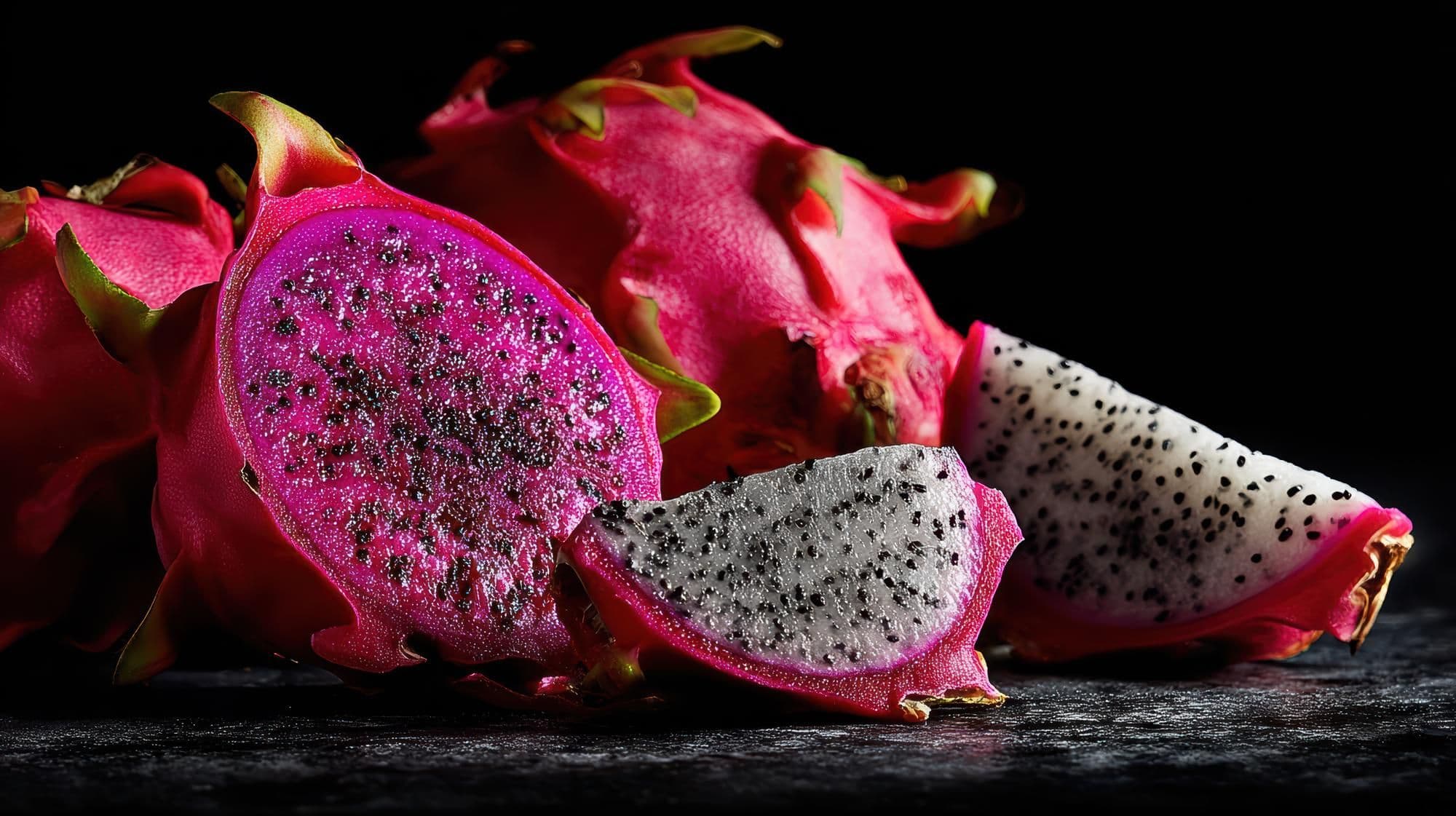
How to tell if dragon fruit (a.k.a. pitaya) is ripe comes down to three checks: color, give, and the state of its wings. Working with tropical fruiting plants, we’ve found that most shoppers overthink it.
Signs That Dragon Fruit Is Ripe
Ripe pitaya has bright, evenly colored skin, gives slightly when gently pressed, and shows wings that have begun to dry and wither. Color alone isn't enough, though: a fruit can look fully colored yet feel rock-hard, or look patchy yet press like a ripe avocado.
Red dragon fruit turns a deep magenta pink at its peak, yellow pitaya goes canary yellow, and white-fleshed types stay a paler rose even when ripe. A duller shade from a shadier plant doesn't automatically mean it needs more time — firmness and the wings confirm what color only suggests.
If you want to know when pitaya is ripe, either on the vine or on your kitchen counter, the same three tests apply. The chart below breaks these signs down side by side, along with two more worth checking once the fruit is cut open.

Identify Your Plant
Scan the plant and get a result with 98% accuracy
Dragon Fruit Ripeness Chart: Color, Firmness, and Texture
Here's how a ripe vs unripe pitaya compares with an overripe one across the cues that matter most, along with what to expect if you cut one open at each stage.
Sign | Ripe | Underripe | Overripe |
Skin color | Bright, even pink, red, or yellow, depending on variety | Green-tinged or patchy, duller overall | Very dark, sometimes with brown or black spotting |
Firmness when pressed | Slight give, similar to a ripe avocado | Hard, with almost no give | Soft to mushy, may feel wrinkled |
Wings or scales | Tips starting to dry and turn brown | Bright green, plump, upright | Mostly dry, brown, or shriveled |
Stem | Slightly dry where it meets the fruit | Fresh and green, tightly attached | Dry and shrunken, sometimes detaching |
Flesh if cut | Deep, even color (white, pink, or red), with evenly distributed seeds | Pale, sometimes with a harder, less juicy center | Watery in spots, occasionally with a faint fermented smell |
None of these signs works perfectly on its own, which is why checking two or three together gives a more reliable read than color alone. According to postharvest guidance from the University of Hawai'i's College of Tropical Agriculture and Human Resources, overripe dragon fruit typically shows softening, wilting scales, and browning of the outer flesh — the same cluster of signs reflected in the chart above.


With these visual markers in mind, the next step is applying them while you're actually standing in front of a bin of fruit at the store.
How to Pick a Good Dragon Fruit at the Store
A few quick checks at the store can save you from bringing home a fruit that's either underripe or already past its best, and they're the fastest way to learn how to know when dragon fruit is ripe without cutting into it first. If you're not sure which variety you're holding, try to identify the fruit with the Botan app, which can help confirm it first, since ripeness cues shift slightly from one type to the next.
Check the Skin Color
Ripe pitaya should have bright, even coloring in shades of pink, red, or yellow without large green patches or heavy blotching. A little unevenness is normal, especially near the stem, but broad green areas usually mean the fruit needs more time.
If a few fruits in the same bin look noticeably brighter and more uniform than the rest, that's usually the freshest of the group and worth picking over the others.

Confirm Your Dragon Fruit Variety
Snap a photo to check color and variety
Press Gently to Test Firmness
Ripe fruit gives slightly under gentle pressure, similar to a ripe avocado or a ripe peach. Press with your thumb rather than your fingertips, since fingertips are more likely to bruise the delicate skin. Very hard fruit usually needs a few more days at home, while fruit that feels mushy or leaves a lasting indent is likely overripe and best used soon, or skipped in favor of a firmer one.
Look at the Wings
The leafy wings, sometimes called scales, often begin to dry and brown at the tips as the fruit ripens. Bright green, plump wings usually mean the fruit still needs time on the vine or the shelf.
This is one of the signs shoppers overlook most, since it's easy to focus on the skin and miss the wings entirely — even though they can be the clearest tell on a fruit with an unusual skin tone.
Pitaya varieties can differ enough in skin tone and wing shape that these checks shift slightly from one type to the next, especially with less common hybrids showing up at specialty grocers.
Confirm a fruit or plant's identity from a photo, including wide varieties within the list of tropical plants. It's a quick second opinion if you come across a color pattern you don't recognize.
How to Ripen Dragon Fruit at Home
Ripening underripe fruit at home isn't complicated, but a few small details separate a fruit that turns out right from one forgotten in the fruit bowl.
- Counter, not windowsill. Direct sun pulls moisture out faster than it speeds up ripening, so a shaded corner of the kitchen works better. Most fruit gets there within two to four days.
- Smell often shows up before color does. A faint sweetness near the fruit bowl is usually the first real clue, sometimes a day or so before the wing tips visibly start browning.
- Test with a thumb once the color has caught up. A slight give under light pressure means it's ready; anything closer to rock-hard needs another day or two.
- Refrigerate as soon as it's ripe. Cold slows things down from there, and the fruit holds well for several days without much further change.
Patience is more important than temperature, because you cannot speed up this process.
Ripening store-bought fruit is often what gets people curious about growing a dragon fruit cactus of their own, and it's worth knowing the plant itself has spines along its stems, not just on the fruit. Before adding one to a shared space, it's worth checking the safe-for-kids plants list, particularly if that space doubles as a play area.

Ripe vs. Overripe Dragon Fruit: How It Tastes
The first bite of a properly ripe one tends to surprise people with how little sugar actually comes through — more melon-water than dessert, with the seeds popping faintly like poppy seeds in a good bagel.
An overripe pitaya tastes flatter and less distinct, sometimes with a faint fermented or sour note as sugars begin to break down. The texture turns mushy rather than tender, and in more advanced cases the flesh can feel slippery or slightly stringy near the skin.
If you catch it at this stage, it's usually still fine to eat once any off-smelling or discolored sections are removed, but the eating experience is noticeably worse than a fruit picked at its peak.
Most people who say they "don't like dragon fruit" have likely only tasted one picked too early or too late.
These ripeness checks are one small piece of identifying and caring for the plants around you. If you're building out a wider collection of all edible plants and ornamental varieties, our identification tools are here to support the process, alongside guides like this one.
FAQ
No. Dragon fruit belongs to the cactus family, while kiwifruit grows on a woody vine. The two look similar inside but are not botanically related.
Alex Yar
Plant Expert
7+ years of experience studying plants, researching their diseases, and examining their characteristics.
Alex is a plant expert and writer with more than 7 years of experience studying plants, their growing requirements, and their responses to environmental conditions. His areas of expertise include plant care, disease recognition, stress diagnosis, pest-related problems, and the distinctive characteristics of different species.
Over the years, Alex has developed a strong practical understanding of how light, temperature, humidity, watering, soil conditions, and nutrition affect plant health. He combines careful observation with in-depth research to explain effective care and recovery methods.
Alex has extensive hands-on experience caring for houseplants. His articles translate complex botanical topics into clear guidance that helps you better understand your plants and recognize early warning signs.
Related Articles

7 min read · 5 Aug 2026
How to Use a Plant Identifier App – Step-by-Step Guide
Learn how to get the most out of a plant identifier app. Here, you’ll find direct instructions on how to use the app and take the right photos, a list of common mistakes to avoid, and bonus tips for evaluating the app’s features.

7 min read · 3 Aug 2026
What Is Plant Identification – A Complete Guide
Learn all about the 5 major plant identification methods and choose the one that fits you best. Find out which plant features to focus on, how to simplify the process, and how to avoid the most common ID mistakes.
8 min read · 1 Oct 2026
Lemon Tree Leaves Turning Yellow: Causes and How to Fix It
Yellow leaves are one of the most common lemon tree problems. This guide explains eight causes of lemon tree leaves turning yellow, from overwatering to root rot, with a fix for each.
Explore Plants by Care Needs





Identify the plant and problem. Help your plant recover
Identify plant problems early, understand what's wrong, and get clear care guidance. Botan helps you turn guesswork into confident plant care