Orchid Yellow Leaves: How to Tell If It’s Normal or a Warning Sign
Orchid leaves can turn yellow from natural aging, but they may also signal overwatering, root rot, light stress, or other care issues. In this guide, we’ll help you tell the difference and explain what to do next.

On this page
- Is It Normal for Orchid Leaves to Turn Yellow?
- When It Is Normal
- When It Is a Warning Sign
- Diagnose the Yellowing Pattern Before You Treat It
- What Your Orchid’s Roots Reveal About Yellow Leaves
- What to Do When You See the Problem
- Overwatering
- Underwatering
- Sunburn
- Root rot
- Fungal diseases
- Pests
- Nutrient deficiency
- How to Prevent Yellow Leaves on Orchids
Your exquisite orchid certainly decorates the windowsill of your bedroom, the coffee table in the living room, the kitchen, or the beauty salon where you work. After all, this exotic plant has fragrant flowers with speckled or patterned petals that look elegant and luxurious.
But one day, the Orchid's yellow leaves begin to bother you. This could be due to the natural aging of leaves or a sign of overwatering, root rot, light stress, or other care-related problems detected by the Botan scanner.

Is It Normal for Orchid Leaves to Turn Yellow?
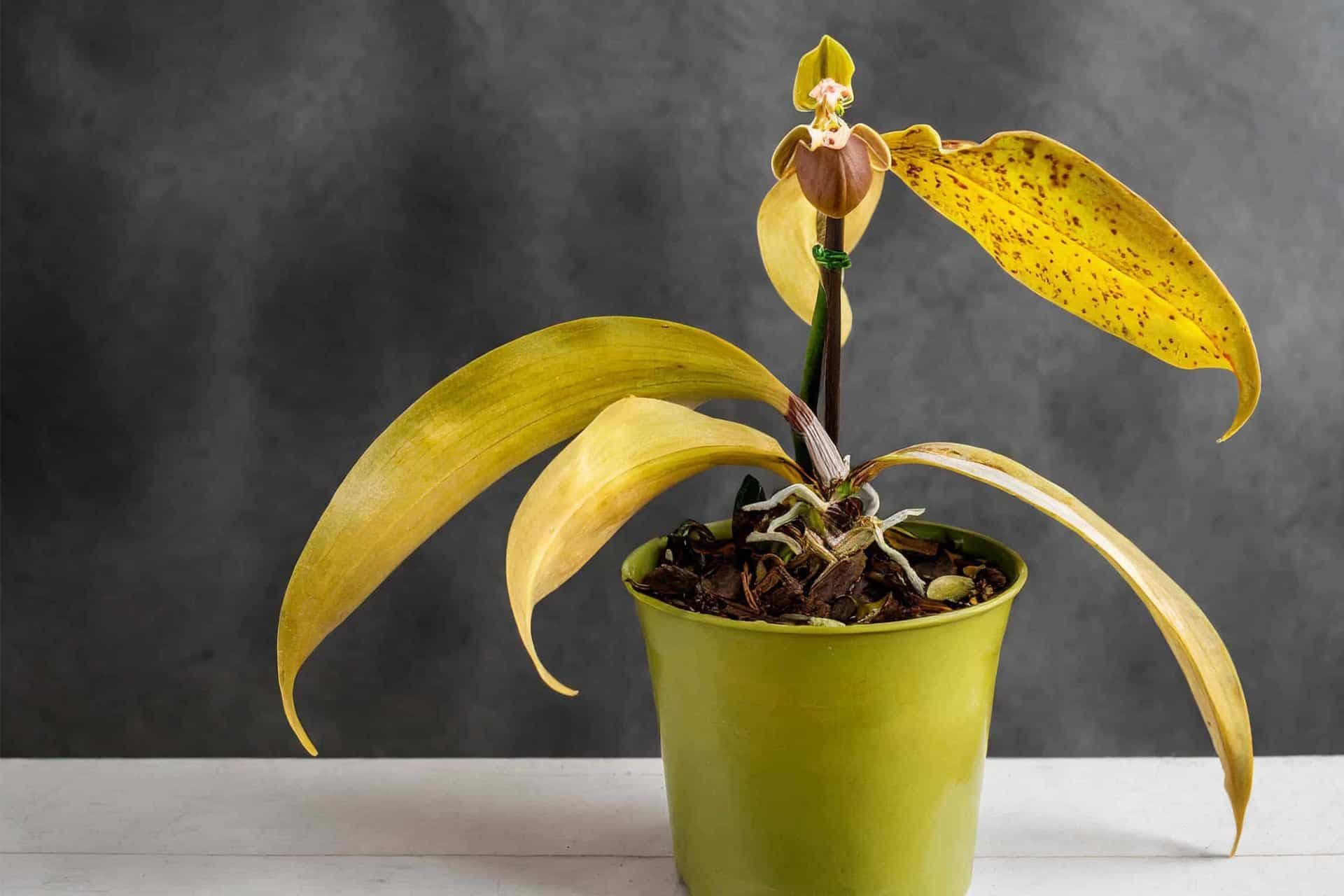
Orchid leaves are turning yellow due to natural aging and stress. Distinguishing between these two factors is easy. If yellowing is visible on one or two bottom leaves, and the plant is otherwise healthy, this is part of the orchid's natural life cycle. And if most of the foliage is turning yellow, the plant is wilting and looking weak, it is a sign that something is wrong. Below, we’ll take a closer look at both cases.
When It Is Normal
Some orchid species, such as monopodial, grow vertically. In this case, new shoots emerge at the tip of the crown, while the lower leaves age, turn yellow, and die off, eventually falling off.
If you notice just one yellow leaf or even two, but all the other leaves look green and healthy, especially during the dry and cold winter, this is part of the plant’s growth cycle. So, this is not a big issue. Simply remove the dead leaves with secateurs to prevent the spread of rot and restore the plant’s neat appearance.
When It Is a Warning Sign
If several leaves turn yellow and fall off at the same time, it can be a warning sign. Especially, you need to pay attention to these symptoms, such as poor flowering, brown patches in the middle of leaves, curling, and weakening of the stem.
Yellow orchid leaves that manifest themself along with other signs indicate not natural aging but stress resulting from improper care. It can be due to overwatering, underwatering, direct sunlight, inappropriate room temperature, nutritional deficiencies, pests, bad air circulation, and other factors.


Your Personalized Care Plan
Get personalized plant care recommendations in the app
Diagnose the Yellowing Pattern Before You Treat It
If the cause of yellowing leaves lies in improper care, the logical next step is to begin treatment. It’s better to do it along with AI tools, such as Botan, which specializes not only in succulent identification and detection of other plants but also in recognizing symptoms, tracking watering, noting changes in lighting, and providing step-by-step treatment advice.
But first, you need to carefully inspect the plant with your eyes and hands and pay attention to how yellowing manifests. The table below will help you with this.
Yellow pattern | Likely reason | What to check first |
Yellowing several leaves at once, edema, moldy spots, shriveling, slow growing | Overwatering, root rot | Wet soil, brown or black roots, soft to the touch |
Yellow leaves with dry edges | Underwatering, dry air, too much light | Dry potting mix, high room humidity level, or direct sunlight |
Yellowing with scorching | Sunburn | Direct sunlight near the window or in the place where the plant stands |
Yellow areas on the leaves' undersides | Fungal diseases, pests | Webbing, spots, the availability of pests, or sticky residue on the leaves' undersides |
Yellow patches, pale coloring, or yellowing between the veins | Calcium, magnesium, or iron deficiency | Old potting mix, irregular fertilizing, or poor-quality water |
What Your Orchid’s Roots Reveal About Yellow Leaves
Before choosing a treatment method, it’s also worth taking a look at the orchid’s roots. After all, as practice shows, the cause of yellowing often lies underground. Roots are responsible for absorbing water and nutrients.
If they are in wet soil for too long, it creates an environment without oxygen, which promotes their rotting. And in these damaged conditions, they are simply unable to deliver moisture and nutrients to the leaves. As a result, leaf cells produce less chlorophyll (a natural pigment responsible for the green color), and they turn yellow.

So, to check whether roots are healthy or rotting, carefully take the plant out of the pot and examine the roots. If they are white or light beige, firm to the touch, and have a normal earthy smell, it means that they are healthy, and the problem of yellowing leaves lies elsewhere.
But if roots are brown or black, soft, crumble when touched, and smell musty, sour, or swampy, this indicates that they have begun to rot, that is, decomposition of organic matter. Another sign you should pay attention to is dehydrated roots, which also cause yellowing orchid leaves. They look shriveled, pale, and thin.
What to Do When You See the Problem
The first step that is the same for all cases is to remove the affected orchid leaves, as they are unable to recover. The further treatment will depend on the cause of the leaves' yellowing.
After all, there are step-by-step methods for every case. Below, we’ll look at the most common causes of yellowing leaves and what to do about the problem.

Overwatering
Give your orchid’s roots some time to dry out, and do not water the plant until the soil is almost dry and the water from the pot is completely in the saucer. Be sure to drain excess water into a sink to prevent the appearance of fungi and root rot.
Underwatering
If the orchid is overdried, water it more often and monitor the plant closely. Signs of sufficient watering include a moist but not soggy soil to the touch and water draining freely through the drainage holes in the bottom of the pot to the saucer.
Sunburn
This problem often occurs in the summer when the orchid is mostly on a windowsill and exposed to direct sunlight and heat. To solve it, remove the plant a foot or two away from the window or place a special protective screen in front of it.
Root rot
After removing the plant from the pot, gently rinse rotten roots under warm water and cut off any damaged areas with sterilized scissors. Rinse the pot itself and disinfect it as well. Repot the plant in a clean container filled with fresh orchid potting soil and water thoroughly.
Fungal diseases
Cut off the fungus-affected leaves with sterilized scissors to healthy tissue and treat the plant with fungicides. Be sure to move the orchid away from other plants so that they do not become infected with the fungus.
Pests
Orchids like Lonopsis utricularioides are quite resistant to pest infestations due to their thick leaves. But if you forget about proper ventilation, the plant can become infected with scales, mealybugs, aphids, mites, and other pests.
If there are only a few, you can kill them by simply wiping the leaves with a swab dipped in 70 % isopropyl alcohol. In the case of a lot of pests, an insecticidal soap or refined horticultural oil will be a more effective solution.
Nutrient deficiency
If your orchid is lacking nutrients, feed it with a balanced water-soluble fertilizer every 3-4 weeks. It is important to choose a fertilizer that is specifically designed for orchids and follow the instructions on the label.
How to Prevent Yellow Leaves on Orchids

It’s better to prevent yellow leaves than waste time treating them. Here are practical tips that help your orchid be healthy with green leaves and colorful flowers:
- Light. Orchids like bright light. But it should not be direct sunlight. Place the pot with the plant on the windowsill facing east or north.
- Humidity. Make sure that the humidity in the room is sufficient. If not, regularly spray the plant with water from a spray bottle.
- Watering. Water the orchid with warm boiled water or rainwater that dissolves the salts. Do it regularly, as this tropical plant likes a moist environment. But do not flood it. If the water has completely drained into the saucer, drain it into the sink immediately, as leaving it for a long time will inevitably lead to the rotting of the roots.
- Fertilizer. Make sure that your plant grows in a special orchid compost based on bark, which is well-permeable to air, allowing the roots to breathe, has good drainage properties, and imitates natural growing conditions.
- Air circulation. Ventilate the room where the orchid is located regularly to prevent stagnant air and pests from breeding.
As you can see, an orchid does not require special and difficult care. All you need is to follow the above-mentioned simple tips to prevent yellowing leaves and other problems.
FAQ
Yellow leaves cannot be turned green again, as this process is irreparable. The next stage is their falling out. However, you can correct the care for health leaves to prevent this problem.
Dariia Plaksina
Botanist
5 years of botanical research experience
Dariia Plaksina is a biologist, botanist, and writer of informational articles with over 5 years of experience exploring the world of plants, nature, and biology. She studied at Taras Shevchenko National University of Kyiv, Educational and Scientific Center “Institute of Biology and Medicine,” where she built a strong scientific foundation for her future work.
For Dariia, writing is a hobby, a calling, and a way to make reliable knowledge easier to understand. Her articles focus on plant care, plant health, and natural processes, helping readers learn more about the living world through clear, accessible, and science-based explanations.
Related Articles
8 min read · 1 Oct 2026
Lemon Tree Leaves Turning Yellow: Causes and How to Fix It
Yellow leaves are one of the most common lemon tree problems. This guide explains eight causes of lemon tree leaves turning yellow, from overwatering to root rot, with a fix for each.
5 min read · 16 Sept 2026
How to Keep Cats Away From Plants: 7 Safe and Effective Methods
Cats may dig in potting soil, chew leaves, or knock containers over. These seven methods combine safer placement, physical protection, a suitable chewing alternative, and play to help protect your plants without putting your cat at risk.
5 min read · 7 Sept 2026
Overwatering vs Underwatering: How to Tell the Difference
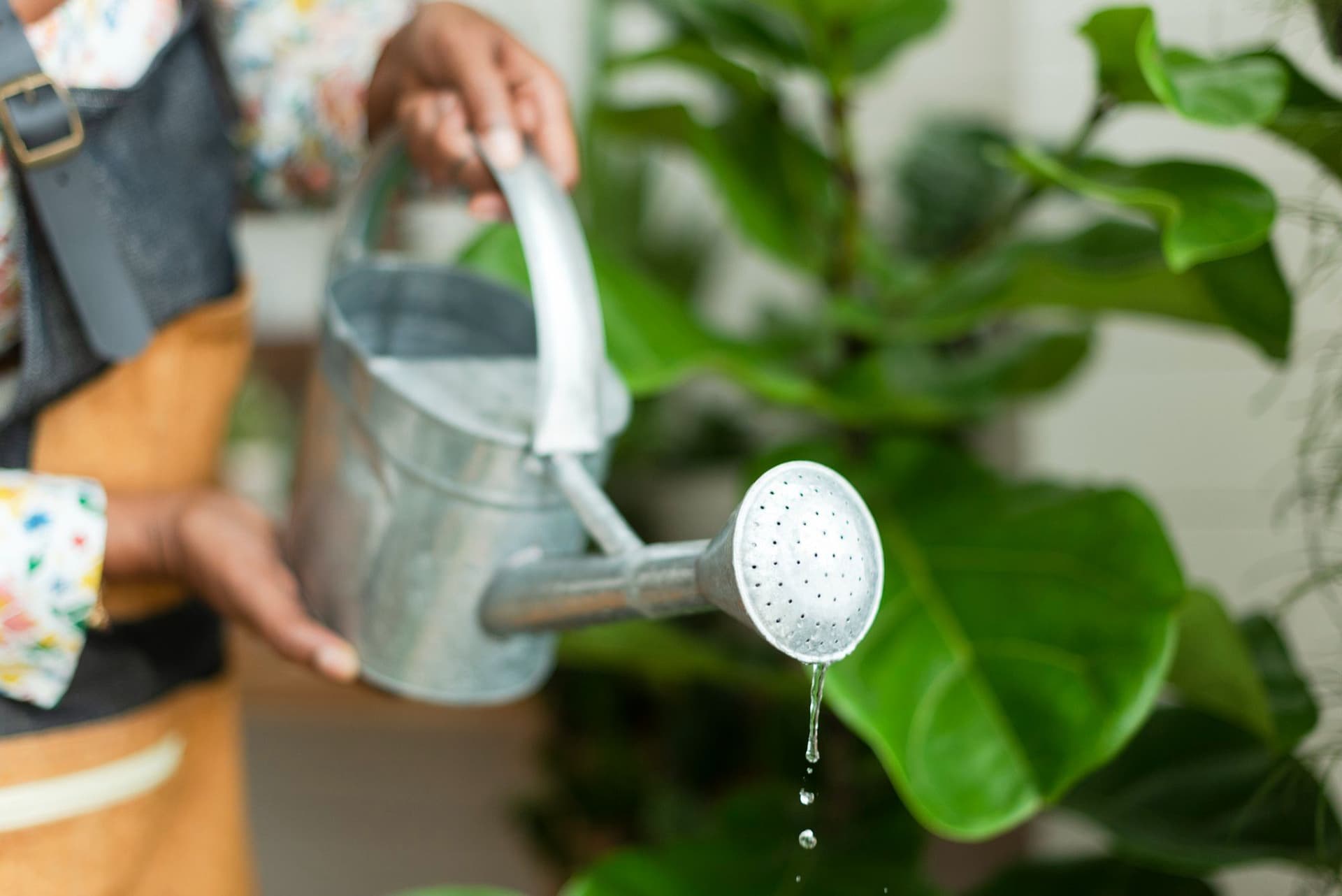
Overwatering and underwatering can look almost identical, so they're easy to confuse. In this guide, we'll cover the signs of each, simple ways to tell them apart, and how to treat your plant once you know what's wrong.
Explore Plants by Care Needs
Darwin’s orchid
Angraecum sesquipedale
pigeon orchid
Dendrobium crumenatum
 POPULAR
Pink Rock Orchid
Dendrobium kingianum
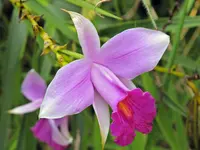
bamboo orchid
Arundina graminifolia
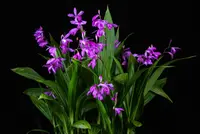 POPULAR
Chinese ground orchid
Bletilla striata
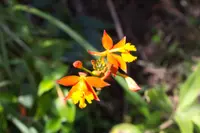 POPULAR
Fire-star orchid
Epidendrum radicans
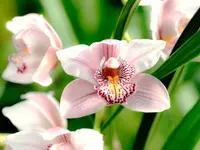
Four-Season Orchid
Cymbidium ensifolium
 POPULAR
Ghost orchid
Dendrophylax lindenii
Identify the plant and problem. Help your plant recover
Identify plant problems early, understand what's wrong, and get clear care guidance. Botan helps you turn guesswork into confident plant care