How Microbes Shape Plant Growth and Health
Every plant, from a windowsill Monstera to a field of wheat, hosts billions of microorganisms that influence its health and growth. These ancient partnerships also play a critical role in global food security.

Every plant you grow, from a Monstera on your windowsill to a field of wheat, is never truly alone. Its roots, leaves, and stems are colonized by billions of microorganisms: bacteria, fungi, and oomycetes that have coexisted with plants for hundreds of millions of years. This relationship is one of the most consequential forces shaping global food security.
The Scale of the Problem
By 2050, the world's population is expected to reach nearly 10 billion people. According to the UN Food and Agriculture Organization, feeding that many will require about a 70% increase in food production. That challenge is about growing smarter, with less chemical input, in a changing climate, and on land already under pressure.
One of the most overlooked levers in this equation is the microbial world that surrounds every plant. Understanding how microbes interact with crops could reshape how we breed disease-resistant varieties, reduce pesticide use, and protect harvests at scale.


Keep Plants Thriving
Get simple care guidance tailored to each plant’s needs in the app
Mutualists, Pathogens, and Everything In Between
Not all microbes are enemies. Some bacteria and fungi form mutualistic relationships with plants, helping them access nitrogen from the air or phosphorus locked in the soil. These beneficial microbes (mutualistic symbionts) are essential partners in natural ecosystems and important in agriculture.
Others, however, are pathogens. And the way they interact with plants is far more nuanced than a simple attack-and-destroy model.
Scientists classify plant-microbe interactions by what happens to the plant's cells during infection. When a microbe feeds on a living plant without killing its cells, the interaction is called biotrophic. When the microbe kills plant tissue and feeds on the remains, it is necrotrophic. Many pathogens fall somewhere in between and are called hemibiotrophic.
A Major Research Effort
In 2017, more than 200 researchers contributed to a landmark collection of 34 studies published across Frontiers in Plant Science and Frontiers in Microbiology, led by Dr. Ralph Panstruga (RWTH Aachen University) and Dr. Pietro Daniele Spanu (Imperial College London).
The goal was to map the molecular dialogue between plants and biotrophic microbes, and use that knowledge to develop new crop protection strategies.

When a Killer Turns Invisible
One of the most striking findings came from Dr. Michael W. Shaw and colleagues, who studied Botrytis — the fungus responsible for grey mould, a disease that devastates strawberries, grapes, lettuce, and dozens of other crops worldwide. Botrytis had long been considered a classic necrotrophic pathogen: it kills, then feeds.
But Shaw's research revealed something unexpected. In many plant species, Botrytis cinerea can colonize internal tissues without causing any visible symptoms at all. Infection rates in some samples exceeded 50%, yet the plants appeared completely healthy. The fungus only becomes destructive when the plant is stressed, aging, or approaching the end of its life cycle.

What This Means for Plant Owners
The science of plant-microbe interactions has direct implications for everyday plant care — even if you are growing houseplants rather than crops. Here is what the research suggests for home gardeners:
- Healthy soil microbiome = healthier plants. Beneficial fungi (mycorrhizae) and bacteria in the soil help roots absorb water and nutrients more efficiently. Overusing chemical fertilizers or fungicides can disrupt this balance. Compost and organic matter support microbial diversity.
- Stressed plants are more vulnerable. The Botrytis research confirms what experienced growers already know: a plant weakened by overwatering, poor light, or root damage is far more likely to develop visible disease — even if the pathogen was already present. Stable care conditions are your best defense.
- Grey mould on your plants is not always a new infection. If you see Botrytis on a Monstera, Begonia, or Primula, the fungus may have been living inside the plant asymptomatically for weeks or months. Removing affected tissue and improving airflow and light conditions is more effective than reaching for a fungicide immediately.
- Not all fungi are threats. Mycorrhizal fungi — which form symbiotic relationships with the roots of most plants — are beneficial. Avoid sterilizing your potting mix or using antifungal treatments unnecessarily, as this can eliminate helpful organisms alongside harmful ones.
Plants and microbes have been co-evolving for hundreds of millions of years. The immune systems plants have developed to detect and resist microbial invasion are extraordinarily sophisticated, but so are the counter-strategies microbes have evolved to evade them. Every time plant breeders develop a disease-resistant crop variety, pathogens are under evolutionary pressure to overcome that resistance.

Alex Yar
Plant Expert
7+ years of experience studying plants, researching their diseases, and examining their characteristics.
Alex is a plant expert and writer with more than 7 years of experience studying plants, their growing requirements, and their responses to environmental conditions. His areas of expertise include plant care, disease recognition, stress diagnosis, pest-related problems, and the distinctive characteristics of different species.
Over the years, Alex has developed a strong practical understanding of how light, temperature, humidity, watering, soil conditions, and nutrition affect plant health. He combines careful observation with in-depth research to explain effective care and recovery methods.
Alex has extensive hands-on experience caring for houseplants. His articles translate complex botanical topics into clear guidance that helps you better understand your plants and recognize early warning signs.
Related Articles

3 min read · 11 Sept 2026
How Plant Roots Could Protect Crops from Drought
Plant roots push the soil, and as droughts intensify, this underground machinery holds the key to feeding the world.
3 min read · 8 Sept 2026
Cacti Could Help Solve a Long-Standing Evolutionary Mystery
A new study of cactus flowers suggests that the speed of evolutionary change may help explain why some lineages produce far more species than others.

3 min read · 2 Sept 2026
Can plants hear? Latest Research Offers New Insights
Is it possible for plants to hear? Let's discuss it.
Explore Plants by Care Needs
 POPULAR
Friendship Plant
Pilea involucrata
 POPULAR
Panda Plant
Kalanchoe tomentosa
 POPULAR
Hoya
Hoya australis
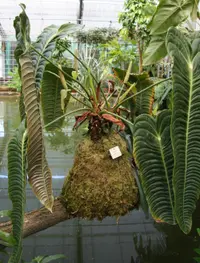 POPULAR
King Anthurium
Anthurium veitchii
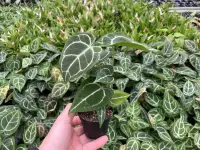 POPULAR
Crystal Anthurium
Anthurium crystallinum
 POPULAR
Blushing Philodendron
Philodendron erubescens
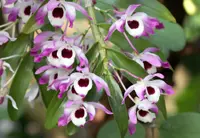 POPULAR
Noble Dendrobium
Dendrobium nobile
 POPULAR
Flamingo Flower
Anthurium andraeanum
Identify the plant and problem. Help your plant recover
Identify plant problems early, understand what's wrong, and get clear care guidance. Botan helps you turn guesswork into confident plant care