3 Steps to Identify Flowers with Botan
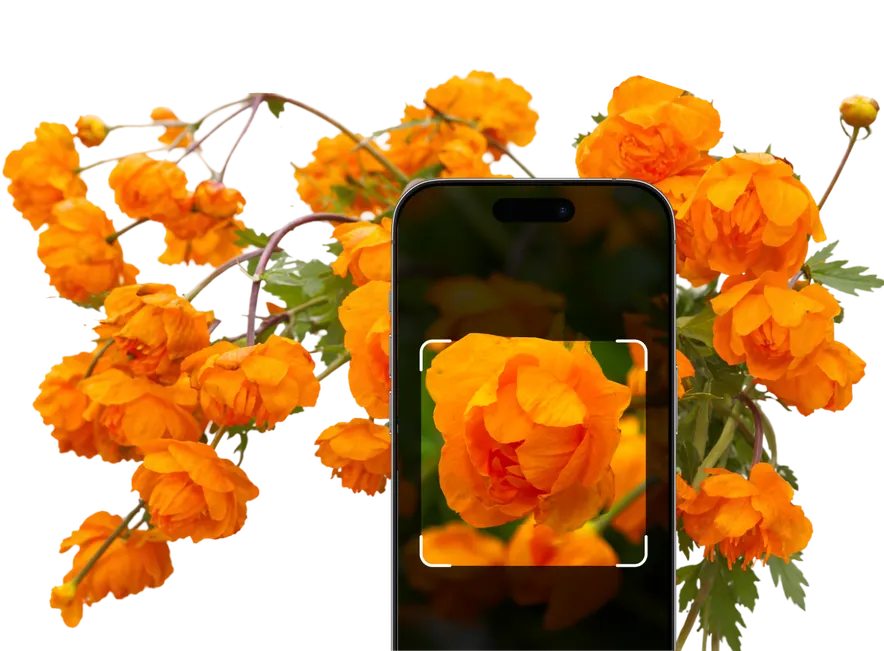
Botan turns orange flower identification into a quick, three-step process. No field guide, no scrolling through endless image searches, no guessing. Here’s a simple tutorial:
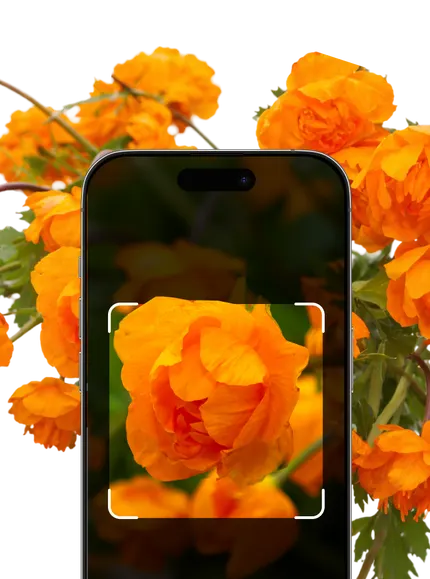
- Snap or upload a photo. Take a clear picture of the flower with your phone, or upload one from your gallery. A close-up of the bloom gives the most confident results, though including a leaf in the frame helps to improve accuracy.
- Let the scanner do the work. Botan's recognition engine analyzes petal shape, color gradient, leaf structure, and overall form, then compares the image against a botanical database that covers thousands of species.
- Read the result. You'll see the common and botanical name, a confidence score, similar species to rule out, and a personalized care plan if the flower is one you're growing.
In order to achieve the most confident result, it's best to shoot during the daytime and position your phone at a hand's width distance in front of the blossom.
Do not use a lot of back lighting or dark shadows, and give the screen a tap to focus the picture on the flower, and then press the shutter button.
Key Characteristics for Orange and Yellow Flower Identification
Many orange and yellow flowers share a family resemblance, and two species can look nearly identical at a glance. Reliable yellow flower plant identification depends on combining several visual elements, starting with the petals and working down to the leaves and stem.
Use this table as a starting point, then narrow down by looking at the features below.
Petal Shapes and Counts
If you don’t know what flowers are yellow or orange, petal structure often provides the fastest way to recognize a correct species ID. This is because counts and symmetry stay consistent within a family. They can be fused, separate, layered, or arranged around a central disc. Here you can find the most typical cases:
- Round or cup-shaped. Petals curve inward to form a bowl, as you can see in buttercups and tulips. These blooms usually face upward and hold pollen in a visible cup.
- Tubular. Petals fuse into a long, narrow tube, typical of honeysuckle and trumpet vine. This shape attracts long-tongued pollinators like hummingbirds.
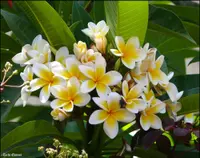
- Star-shaped. As a rule, 5-6 pointed petals that radiate outward in clear symmetry are common in yellow jasmine and some lilies.
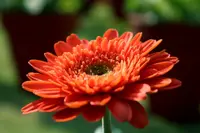
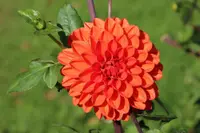
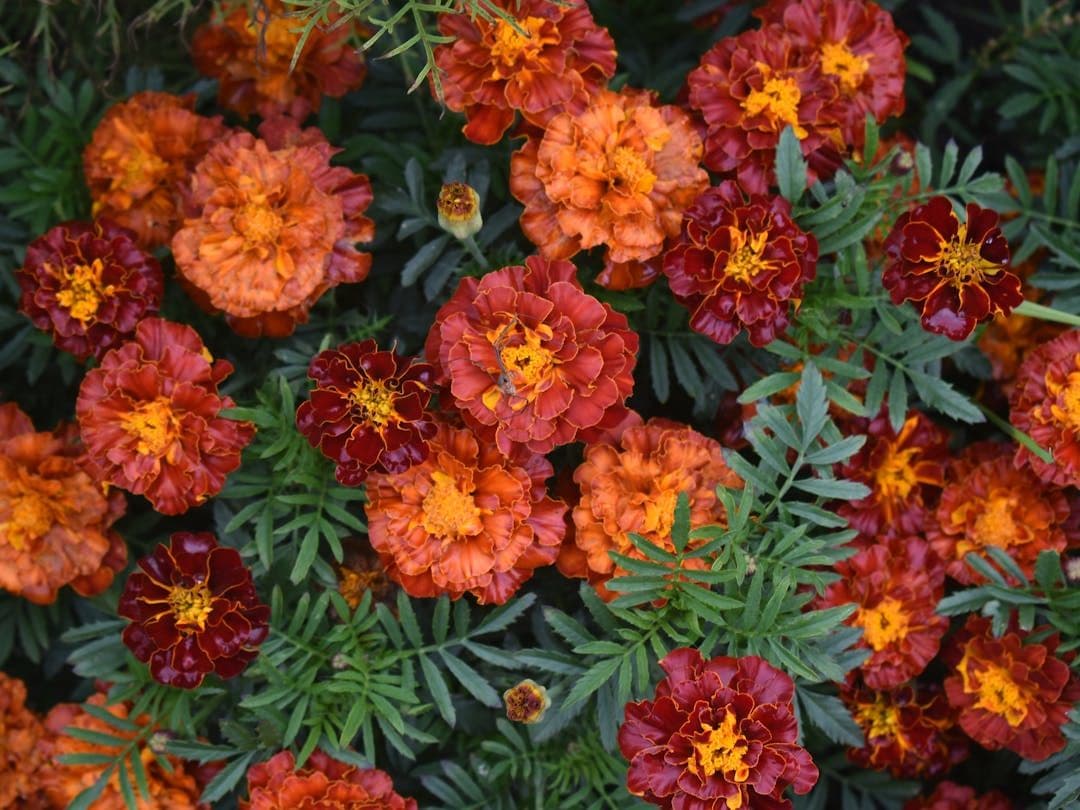
- Daisy-like. A ring of ray petals surrounds a dense central disc, a characteristic feature of the Asteraceae family that includes sunflowers, black-eyed Susans, and marigolds.
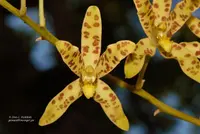
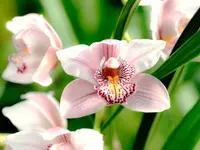
- Irregular or asymmetrical. Petals differ in size or shape, as in snapdragons and orchids. These blooms often have an upper and lower "lip".
When you photograph petals, focus on a single bloomed flower from the front to see complete symmetry and the exact number of petals.
Stem
Stem structure is a useful marker for big or small orange flower identification, especially when they have similar petals. This is because the texture of the stem and growth habits vary widely between families.
For example, a hollow stem, easily felt by gently pinching, points to plants in the carrot or poppy families, while a solid stem is typical of lilies and sunflowers. At the same time, smooth stems suggest tulips or daffodils, whereas a hairy or bristly surface often signals a cinquefoil or certain daisies.
Finally, a single unbranched stem usually carries one bloom at the top, while branching stems support flower clusters, a clue that considerably narrows the results of the detector.
In order to get it in focus, stand back and shoot from the side to see the entire length. Use a solid background if possible. A hand, a notebook, or even the sky behind the stem will help the scanner to distinguish the texture and branches among the rest of the greenery.
Leaves
Leaf shape confirms the ID facts the petals suggest, and can separate two similar blooms that grow side by side. This, in turn, will increase the likelihood of successful tall orange flower identification that grows in your garden. These are the most common leaf shapes:
- Oval. Smooth-edged, egg-shaped leaves appear on many garden flowers, including primroses and evening primrose.
- Rounded lobes. Leaves with soft, curving divisions are typical of buttercups and some poppies.
- Compound. A single leaf made of several leaflets on one stalk indicates roses, cinquefoils, or marigolds.
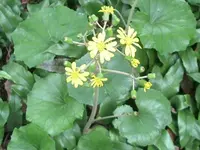
- Heart-shaped. Leaves with a rounded base and pointed tip are common in violets and some nasturtiums, where they grow on long, slender stalks.
- Long and narrow. Strap-like leaves point toward lilies, daffodils, and irises, most of which grow from bulbs.
To capture a high-quality photo of a leaf, select a healthy, undamaged leaf and place it flat over a contrasting surface, such as a piece of paper or your palm. Photograph the entire leaf, including the tip and petiole, so that the outline, edges, and pattern of the veins are in the picture.
How Botan Makes Flower Identification Easy
Botan is created for people who want to make a quick orange or yellow flower identification. Our recognition model is trained on a verified botanical dataset and returns results in seconds. Plus, we guarantee 98%-accuracy results.
Beyond the name, every ID is supplemented with detailed guidance tailored to the species you scanned. Here are features that set our app apart:
- High-accuracy recognition. A botanical dataset and deep scanner work together to compare petal, leaf, and stem details against thousands of species.
- Fast identification. Scan a bloom and get a confident species ID in 2-3 seconds, without image searches or field guides.
- Personalized care plans. Every flower that you find includes tips on watering, light, soil, and seasonal care.
- Weed or keeper, clearly labeled. If a bloom is invasive or unwanted, Botan notifies it and explains further steps.
- Offline scanning and a plant library. Identify flowers without a signal, then save each find to your personal collection with reminders for feeding and repotting.
With Botan, flower identification becomes faster, clearer, and more practical. Just scan the flower, get an accurate ID, and follow simple care tips to help it thrive.