Blue and Purple Flower Identification
Try Blue And Purple Flower Identification
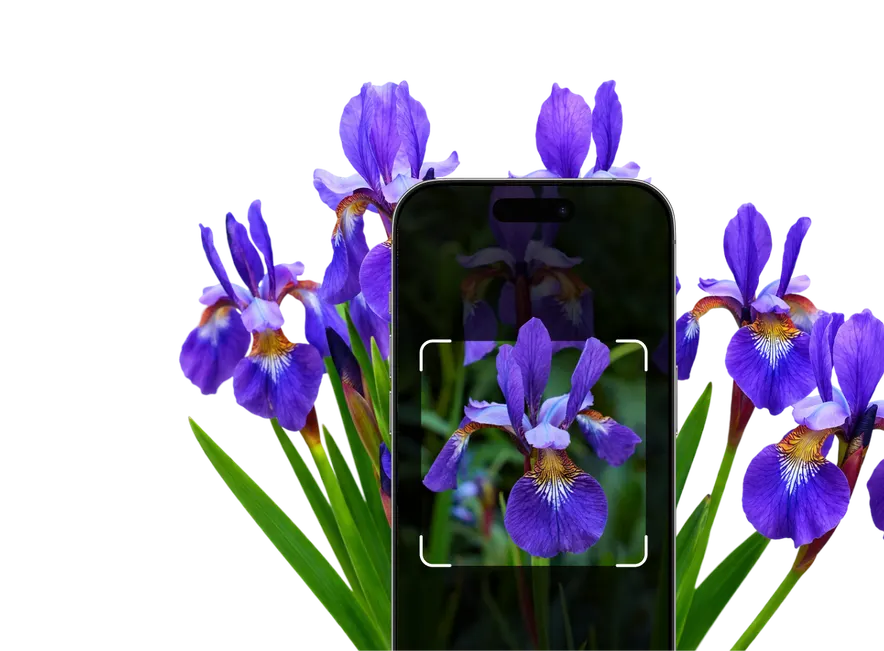
Found an unfamiliar flower? Take a photo, and Botan’s scanner will analyze the image, match the plant’s features, and find an accurate result.


Try Blue And Purple Flower Identification
Found an unfamiliar flower? Take a photo, and Botan’s scanner will analyze the image, match the plant’s features, and find an accurate result.

Plant Identifier Online for Free
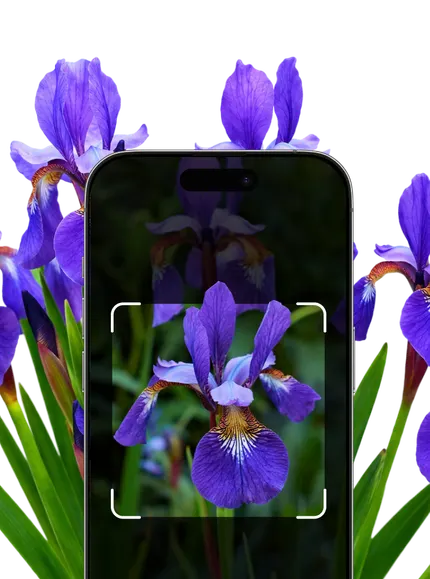
Use easy-to-see images for the best plant ID results. Try not to take photos from very far away.
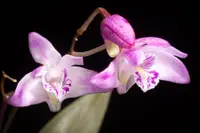 POPULAR
Pink Rock Orchid
Dendrobium kingianum
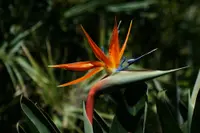 POPULAR
Bird of paradise plant
Strelitzia reginae
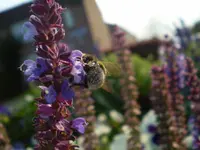 POPULAR
Woodland sage
Salvia nemorosa
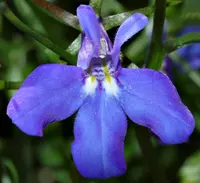
Trailing Lobelia
Lobelia erinus
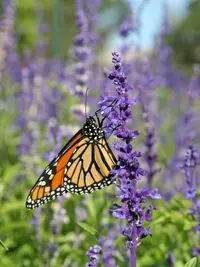
Mealycup sage
Salvia farinacea
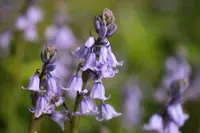
Spur Flower
Plectranthus Mona Lavender
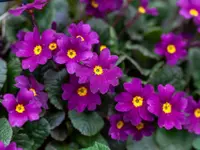
Poison Primrose
Primula obconica
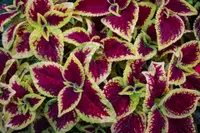
Painted Nettle
Coleus scutellarioides
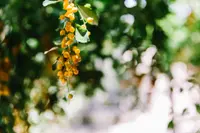
Sky flower
Duranta erecta
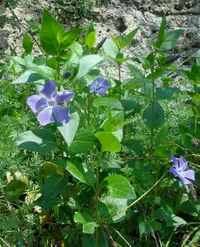
Greater periwinkle
Vinca major
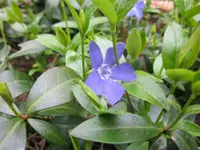
Creeping myrtle
Vinca minor
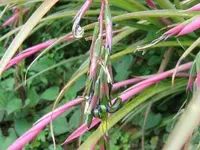
Queen's tears
Billbergia nutans
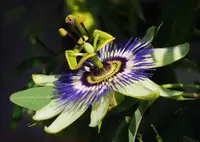
Blue Passion Flower
Passiflora caerulea
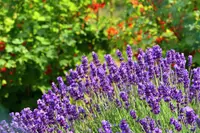
French lavender
Lavandula stoechas
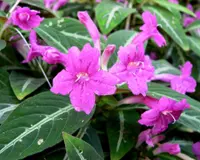
Trailing Velvet Plant
Ruellia makoyana
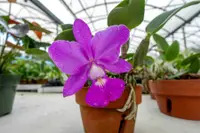
Walker's Cattleya
Cattleya walkeriana
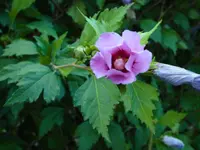
Rose of Sharon
Hibiscus syriacus
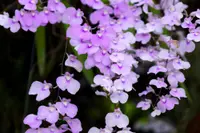
Delicate violet orchid
Ionopsis utricularioides
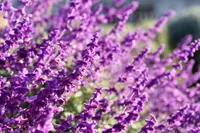
English lavender
Lavandula angustifolia
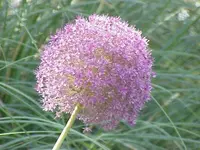
Giant allium
Allium giganteum
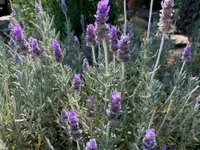
Fringed Lavender
Lavandula dentata
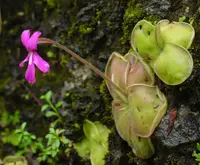
Mexican Butterwort
Pinguicula moranensis
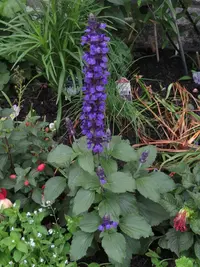
Sage
Salvia Mystic Spires
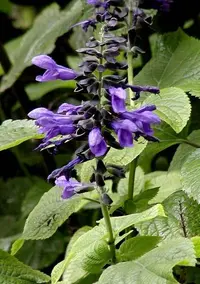
Blue Anise Sage
Salvia guaranitica
Blue flower identification in Botan is powered by a multi-layered recognition system. It analyzes the photo step by step:
The detector works well for common garden varieties and for species that can be considered rare in your area.
A common mistake in purple flower plant identification is relying on the overall shape and color. Stem texture, leaf arrangement, and petal structure often differ between similar plants. Each of these features is explained below.
It is the petal structure that most often indicates a plant’s family.
These five types cover most species found in gardens or parks. Paying attention to petal shape is especially important when several species grow close to each other.
When the petals and leaves of two types look very similar, the stem structure can help determine whether the flowers are purple or blue. It is fairly consistent within a species.
A hollow stem has no inner core, like in rocket larkspur. It gives slightly when pressed. In contrast, a solid one, like that of sage, feels firm. The surface also varies depending on the level of adaptation, as stiff hairs indicate protection against insect pests. Dense fine hairs can be found on common borage, while a smoother stem is typical of African lily.
Depending on the growth type, it can be single, with one or a cluster of blooms at the top, as in foxglove, or branched, with multiple stems and blooms. A good example of the latter is Italian aster.
All these features are consistent within a species and work well together with other typical plant identifiers.
Leaf shape is rarely used as a single, standalone way to identify plants. However, it helps to confirm your assumptions if you have doubts.
Checking leaf shape is important not only for the formal identification of what flowers are blue. When the bloom has not yet opened or has already faded, it can be a useful criterion.
The variety of petal shades and shapes in the plants covered in this article can significantly complicate purple and blue flower plant identification. The Botan scanner takes over the entire analysis process — one photo is enough.
Feature | Manual Identification | Botan Identification |
Risk of misidentification | High among visually similar species | Reduced through AI-powered recognition and a world database |
Petal shape and count | Depends on the user's botanical knowledge | Automatically assessed from photo data |
Leaf and stem analysis | Often overlooked or misread | Included in the visual analysis |
Post-identification care plan | Requires separate research | Personalized to the identified species and available immediately |
Disease diagnosis | Requires expert consultation | Detector identifies disease signs and provides treatment guidance |
Manual identification requires multiple sources. Botan brings everything together in one tool.
Yes. Botan’s database covers more than 30,000 species, among them both garden and wild-growing ones. Accuracy does not depend on where you found a particular flower.