Bamboo Species List

All bamboo names belong to one grass subfamily, but the species within it range from giant tropical plants to cold-hardy temperate types. Browse the full list here to explore the group's diversity.

View by

Identify any bamboo instantly with our app

Download our free app and get access to thousands of plants database with AI-powered identification

A Grass, Not a Tree: What Makes Bamboo Different

Bamboo belongs to Bambusoideae, a subfamily within Poaceae — the same family as wheat and rice. Scientists currently recognize around 1,662 species across 121 genera worldwide.

Unlike other grasses, bamboo species have woody culms, hollow internodes divided by solid nodes, and a rhizome network that spreads underground to generate new shoots.

It’s the fastest-growing woody plant on Earth, reaching up to 1 m per day. The rhizome system is what makes this speed possible.

Clumping vs Running — Two Ways It Spreads

All plants in the category fall into two main types: clumping and running. 

Clumping species have short rhizomes that curve upward into new culms, forming compact clusters. Running plants send long horizontal rhizomes underground, sprouting new shoots several meters from the parent plant.

Feature

Clumping (pachymorph)

Running (leptomorph)

Rhizome growth

Short, upward-turning

Long, horizontal

Spread per season

Contained, gradual

Several meters

Primary climate

Tropical/subtropical

Temperate

Invasiveness risk

Low

High

Approximate number of plants

860

330

Key genera

Bambusa, Dendrocalamus

Phyllostachys, Pleioblastus

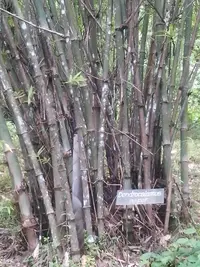
Clumping species like Giant Bamboo form dense contained stands across tropical Southeast Asia. Running plants like Moso bamboo dominate temperate East Asia. 

How Tropical and Temperate Bamboo Actually Differ

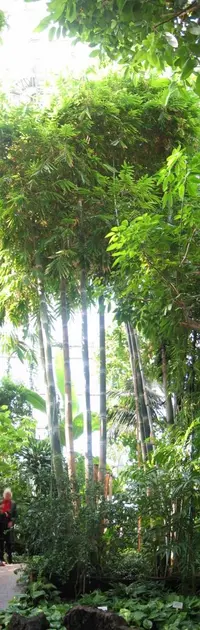
Most bamboo plant names in the tropical category belong to genera like Bambusa (around 153 species), Dendrocalamus, and the South American Guadua — all frost-intolerant, producing culms of 33-98 ft (10-30 m) with thick walls and broad, widely spaced leaves.

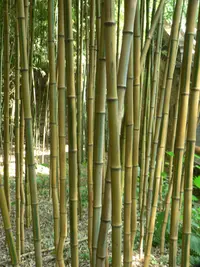
Temperate ones are structurally smaller. Phyllostachys  (around 61 species) and Fargesia (86 species) produce culms of 16–90 ft (5–28 m) with narrower, more densely arranged leaves, and tolerate genuine winters. Some Fargesia survive temperatures as low as -20°F.

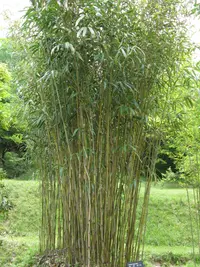
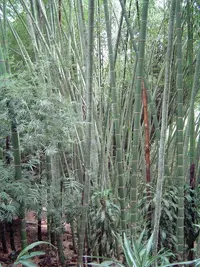
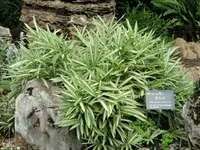
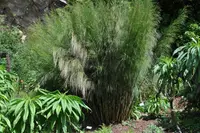
Colombian timber bamboo represents the tropical extreme. Umbrella bamboo is a good example of its temperate counterpart.


Hydrangea Black Leaves: The Warning Sign Your Shrub Is Sending

7 min read · 1 Jul 2026

Hydrangea Black Leaves: The Warning Sign Your Shrub Is Sending

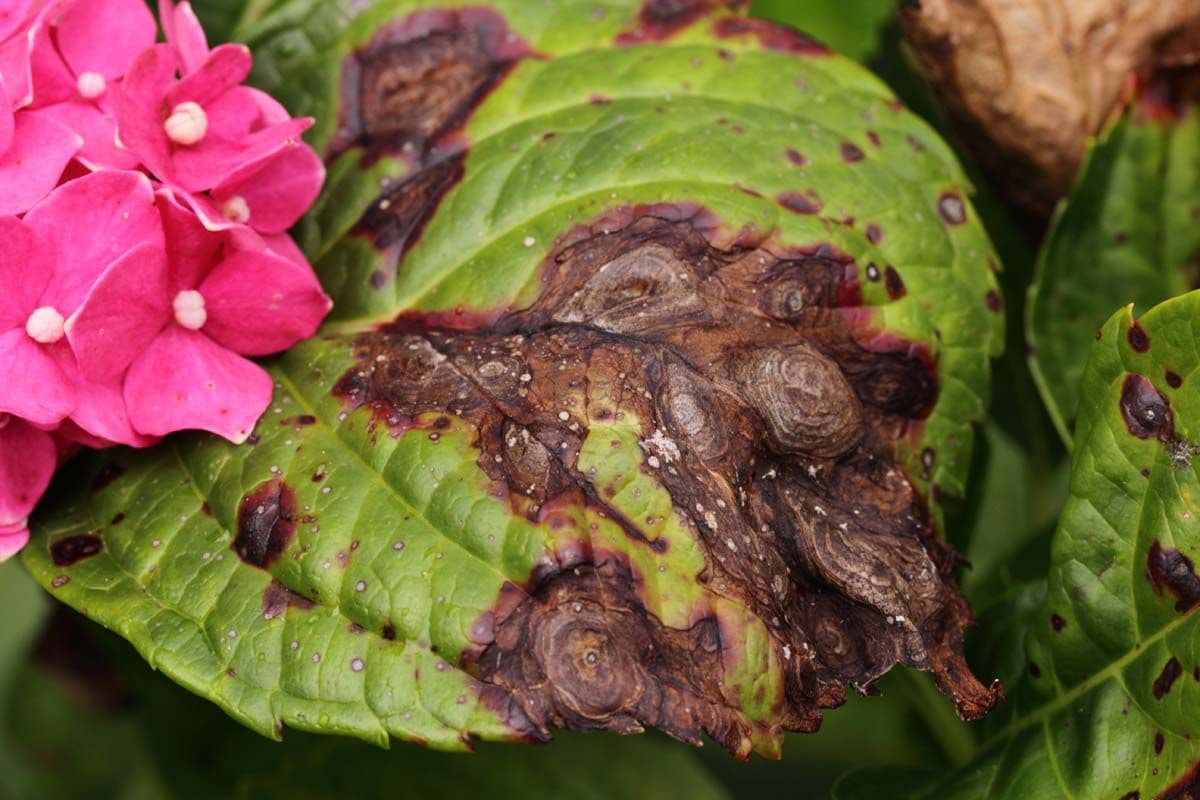
Black leaves on a hydrangea usually indicate one of three things: fungus, cold weather, or roots stuck in wet soil. None of these spells the end for your shrub. This guide will help you find the real cause.

Plant Problems
Hydrangea Black Leaves: The Warning Sign Your Shrub Is Sending
12 Best Plants That Repel Spiders For Your Home and Garden

8 min read · 24 Jul 2026

12 Best Plants That Repel Spiders For Your Home and Garden

Spiders constantly appear in places you don't want them. A few common plants can help repel them using scent alone. Here are 12 options suitable for both indoors and outdoors, plus care tips for each.

Plant Recommendations
12 Best Plants That Repel Spiders For Your Home and Garden
Banana Peel Water for Plants: 5 Things to Know Before Trying It

5 min read · 9 Jul 2026

Banana Peel Water for Plants: 5 Things to Know Before Trying It

Banana water can provide potassium and some nutrients that may support plant growth, but it is not a universal fix. Use it carefully and only when the plant actually shows signs of nutrient deficiency rather than as a routine treatment.
Plant Care
Banana Peel Water for Plants: 5 Things to Know Before Trying It