What Defines Trees as a Separate Category
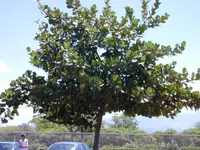
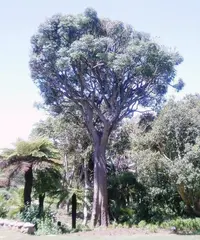
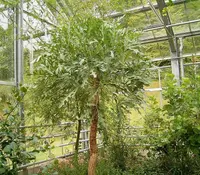
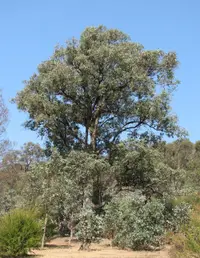
A tree isn’t a botanical category or a taxonomic group. Rather, it’s a growth form. That’s why any plant that has a single woody trunk and reaches at least 16 feet (5 meters) tall at maturity qualifies as a tree.
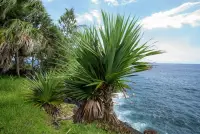
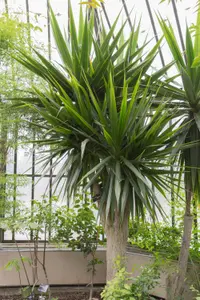
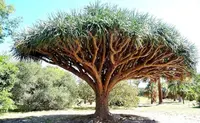
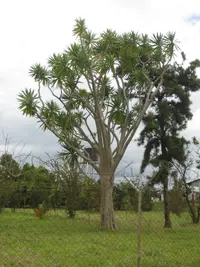
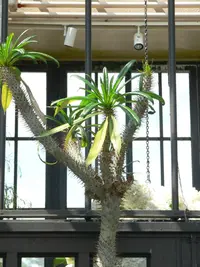
These might be plants from completely different families, such as the Coconut Palm (Arecaceae), the Dragon Tree (Asparagaceae), and the English Yew (Taxaceae).
Shrubs are a different category. They also have a woody trunk, but it consists of multiple stems. Still, some shrubs, such as Hazel, can grow either as a tree or a shrub depending on the conditions. That’s why the line between these two types isn’t always clear-cut.
Main Tree Categories & Their Habitats Explained
All 73,000+ trees are classified by their leaf and reproductive behavior. There are 4 key types in total.
They are deciduous if they shed their leaves in autumn or evergreen if they retain them year-round. Plants that reproduce through cones are called conifers. Those that reproduce through flowers and fruit are typically broadleaf species.
Conifers comprise only 600+ species, which is less than 1% of the group's overall diversity. But they still account for over 44% of the world's individual trees.
How Long Do These Plants Actually Live?
The lifespan depends on the species and growth rate. Ornamentals that typically grow very fast usually live for decades. Slow-growing conifers and some broadleaf species can live centuries and even thousands of years.
The key age categories include:
- Short-lived (15-50 years). Some ornamentals, like the Cherry Plum, live 15–20 years. Others, like the Flowering Dogwood, reach 30–50 years old.
- Moderate (100-500 years). Includes most forest and landscape species, such as Silver Birch, which lives up to 150 years.
- Long-lived (500-3,000 years). For example, the aforementioned English yew can live up to 3,000 years.
- Ancient (4,000+ years). Great Basin Bristlecone Pine can live up to 5,000 years.
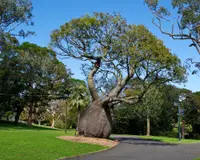
Though conifers and yews typically outlive broadleaf species, the baobab shows that exceptions to the rule exist.
Explore the Full List of Trees with Botan
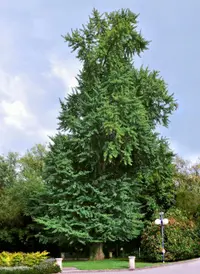
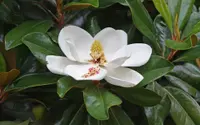
Here, you’ll find familiar tree names like maple and magnolia, fruit-bearing species like apple and walnut, native woodland species, and exotic plants like Ginkgo biloba. They are categorized by multiple criteria — check the list above, apply filters, and discover plants that interest you most.