What Makes a Plant Aquatic?
Aquatic species aren't one botanical family — they're plants from dozens of unrelated lineages that evolved similar solutions to living in or near water.
Their main challenge is oxygen. These species solve it with aerenchyma — internal channels that carry oxygen down from the surface to submerged roots. Flexible stems also let plants survive in moving water without uprooting.
Root systems vary just as much. For example, Umbrella Papyrus drives deep anchoring rhizomes into mud. Amazon water lily anchors to the bottom via a thick rhizome while floating enormous pads above.
Four Types of Aquatic Plants
The classification is based on where each species grows relative to the waterline.
Most aquatic plant names fall into four main groups, each with a distinct structure and ecological role:
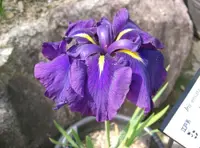
The boundaries between groups aren't always fixed. Yellow iris grows in both marginal and emergent conditions.
Families That Define Aquatic Plant Diversity
The list of aquatic plants spans dozens of families. Nymphaeaceae (the water lily family) is the most recognized, with 65 accepted species globally. Amazon water lily, mentioned above, is one of its most striking members.
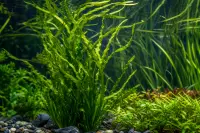
Hydrocharitaceae covers some of the most widespread submerged species, including Tape grass, which forms dense underwater meadows across every continent.
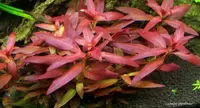
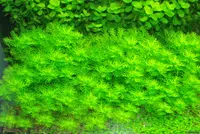
Dwarf rotala from Lythraceae and Indian swampweed from Acanthaceae represent the many smaller families filling out the grid.